A free, open-source skill from Cloudflare turns Claude Code into a whole-repository security auditor, and a test on a production accounting application shows what that looks like in practice. The audit surfaced 26 candidate vulnerabilities in a SaaS codebase that had been under active development for six months and already served paying users. Independent verification agents confirmed 21 of them as real, including a critical flaw that let newly registered, signed-in users read the master database service key. The findings then flowed into 18 tickets, an automated multi-agent repair pipeline, a production release, and a re-audit that found only two low-severity leftovers.
Why this matters right now
The test took place against the backdrop of what the tech community has labeled "Black October": more than 27 major security incidents hitting mainstream software stacks within a single 48-hour window in late October 2026. The affected technologies sit at the foundation of the web.
| Technology | Reported severity (CVSS) | Note |
|---|---|---|
| PHP | 9.2 | Runtime defect affecting software that powers 80 percent of the web |
| GitLab | 10.0 | Maximum score, remote vulnerability |
| Signal | 9.3 | Security incident |
| Node.js 22, 24, 26 | Critical | Flaws allowing remote server takeover |
| Java, WordPress | Not specified | Compromise reports |
CVSS, the Common Vulnerability Scoring System, rates how severe a flaw is on a scale up to 10. A 10.0 is the worst possible rating.
The surge is attributed to automated offensive AI agent swarms that run on both open-weight and proprietary frontier models. UC Berkeley's CyberGym benchmark, which measures how well AI models complete cyber tasks, shows how capable these models have become:
| Model | CyberGym success rate |
|---|---|
| XeKFung-1.5 (Qwen), Alibaba Security | 88.9% |
| Gemini 3.8 Flash Cyber, Google | 86.3% |
| GPT-5.5-Cyber, OpenAI | 85.6% |
| GLM-5.3, Zhipu AI | 84.5% |
| DeepSeek-V4-Pro | 83.3% |
| Claude Mythos Preview, Anthropic | 83.1% |
| GPT-5.5, OpenAI | 81.8% |
| Grok 4.6, xAI | 79.7% |
The notable point is that open-weight models such as XeKFung-1.5 and GLM-5.3 reach hacking success rates comparable to, or above, the top proprietary models. That appears to lower the barrier to large-scale automated attacks considerably. The practical conclusion is a security-first posture: fix vulnerabilities and rotate exposed keys before shipping new features. Cloudflare's security-audit-skill repository on GitHub, which had reached 48.5k stars, has become one of the tools developers are reaching for.
How the Cloudflare skill works
The skill installs through the Skills CLI, a package manager for agent skills, either globally or per project:
npx skills add https://github.com/cloudflare/security-audit-skill --skill security-audit
The installer asks for a scope (project or global), offers symlink linking so updates stay simple, and lets you pick which of 79 supported coding agents should get the skill. Claude Code is one of them. During installation the CLI also offers to add the find-skills utility published by Vercel Labs.
In a Claude Code v2.1.310 session running the Opus 5.5 model, the audit starts either with the natural-language request "security audit this codebase" or with the slash command /security-audit.
Once triggered, Claude Code launches three background "hunter" agents, each with a different beat:
- Hunter h1: unauthorized attack surfaces
- Hunter h2: machine callers, meaning non-human clients such as scripts and integrations
- Hunter h3: tenant isolation, the barriers that keep one customer's data away from another's
The hunters read endpoint setup files, inspect idempotency handling (the logic that keeps a repeated request from producing a duplicate effect), review routing, and write a markdown vulnerability ledger.
The most distinctive design choice is separation of duties. Cloudflare's harness requires that the agent evaluating a finding is never the agent that discovered it. Independent checker sub-agents spin up ephemeral test databases and attempt a real proof of exploit for each candidate. A finding only counts if it reproduces. The reasoning is that a single agent asked to both discover and report a vulnerability tends to produce misleading results; adversarial cross-checking filters out false positives and hallucinations.

▲ Hunter agents and independent checker agents
What the audit found in a six-month-old production app
The test subject was an accounting and receipt-management SaaS that imports data from QuickBooks and Xero, built over six months with real paying users. The reconnaissance pass produced 26 candidates. After verification:
| Outcome | Count |
|---|---|
| Confirmed real vulnerabilities | 21 |
| Rejected as non-issues | 3 |
| Flagged for manual administrator review | 2 |
The confirmed findings, ranked from "Worst" to "High" in the report table, included several serious holes:
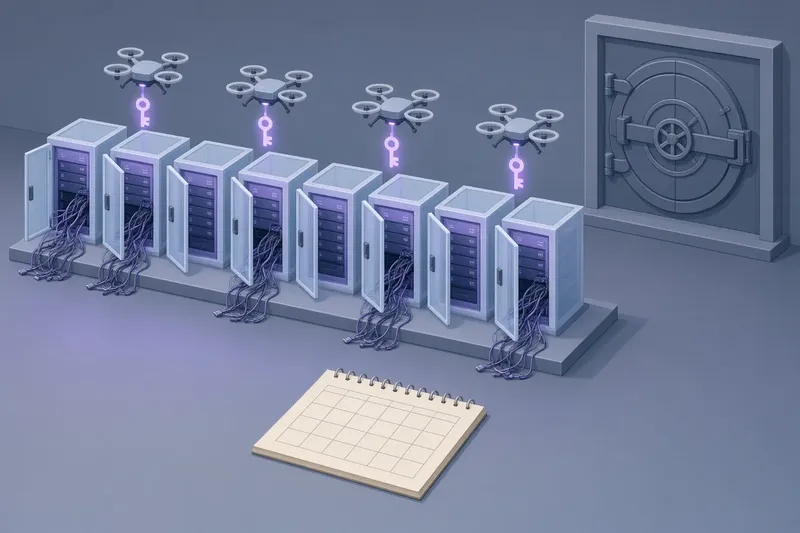
- Master key exposure: newly registered, signed-in users could read the service-role master database key stored in the application settings table.
- Free-credit exploit: an unauthenticated visitor could view and alter the promotional free-credits ledger, which contained 790 customer emails.
- Job hijacking: a tenant isolation flaw let a user claim and inspect another customer's QuickBooks or Xero import jobs.
- Billing exploit: top-up credits added to a user's balance were not revoked after a refund or chargeback.
These are precisely the kinds of flaws that accumulate while a team spends its time on user-facing features. One operational rule follows directly: whenever an audit shows that database environment variables or master keys were readable by unauthorized parties, rotate those credentials immediately, independent of how fast the code fix lands.
From report to tickets to merged fixes
An audit report is only useful if the fixes ship. The skill writes its results to a REPORT.md file, and a second, third-party skill called Wayfinder, written by an independent developer, parses that file and turns each actionable vulnerability into a tracking card on the project's GitHub Kanban board. In this case, 18 structured tickets landed in the "Ready" column, ordered by criticality.
An in-house automated pipeline then picked up the board. Because the Claude API rate limit was running low at the time, the execution leaned on OpenAI Codex in headless mode and GPT models to drive parallel work. Specialized roles collaborated across threads:
- Builder agents implemented each fix.
- QA verification agents generated and ran unit tests.
- Code reviewer agents checked the changes before merge.
The agents closed all 16 primary tickets and 2 related sub-tickets, merged everything in pull request #1174, and deployed release 3.55.2 to production, leaving the "Ready", "Building", "QA" and "Review" columns empty.
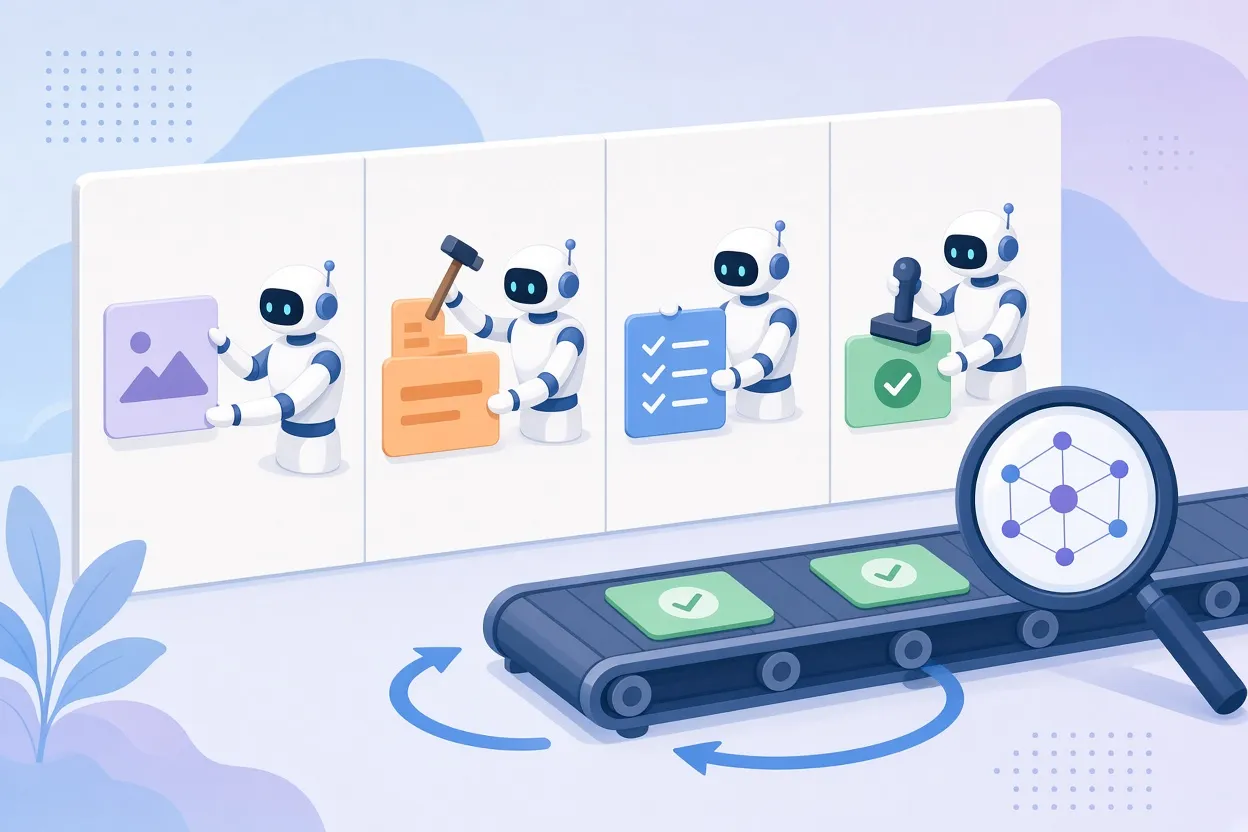
▲ Audit to tickets to fixes to re-audit loop
The final step closes the loop. A fresh run of /security-audit with the instruction to audit the entire repository performed 19 integrity checks: 14 passed immediately and 3 background verification tests finished successfully afterward. All critical-severity vulnerabilities were resolved. Only two minor, low-rated bugs remained, both related to view-only permission checks in the user interface.
The resulting lifecycle is simple to describe: Audit, then Issue Tickets, then AI Agent Execution, then Merge and Deploy, then Re-Audit. The claim is that this compresses remediation from weeks to minutes. That figure comes from one application and one run, so treat it as an illustration rather than a guarantee.
Cloudflare's audit versus Anthropic's claude-code-security-review
Anthropic publishes its own tool, claude-code-security-review, and the two are not substitutes. They operate at different layers.
| Cloudflare security-audit-skill | Anthropic claude-code-security-review | |
|---|---|---|
| Scope | Entire repository | Code diff of one pull request plus surrounding lines |
| Method | Architectural mapping of data access routes, proof-of-exploit attempts in isolated sandboxes | Inspection of changed code for issues such as missing input sanitization or absent rate limits |
| Cost profile | Long compute time, heavy token use | Lightweight, fits per-commit checks |
| Suggested cadence | Once a month or at the end of each two-week sprint | Every pull request, via continuous integration such as GitHub Actions |
Running the deep whole-repository audit on every pull request is impractical given its token usage, API cost and run time. Running only the diff review leaves architectural flaws, like the tenant isolation and key exposure issues above, unexamined because they do not live in any single changed line. The recommended setup is to run both: Anthropic's review as a continuous gate on each pull request, and Cloudflare's audit as a scheduled, comprehensive health check.
Key takeaways and next steps
A free skill and a mainstream coding agent were enough to surface and verify 21 real vulnerabilities in a production app, including an exposed master database key. The verification design, where discovery and validation are handled by different agents with real exploit attempts in throwaway databases, is what separates a usable report from a list of guesses.
If you maintain a web application, a reasonable plan looks like this:
- Install the Cloudflare skill with
npx skills addand run/security-auditin Claude Code against your whole repository. - Rotate any keys or credentials the audit shows as readable by unauthorized users before anything else.
- Convert the report into tickets, whether with Wayfinder or by hand, and fix them in severity order.
- Re-audit after deploying to confirm the fixes hold and no regressions crept in.
- Add Anthropic's claude-code-security-review to your pull request workflow, and put the Cloudflare audit on a monthly or per-sprint schedule.
Given how capable automated offensive agents have become, the balance between feature work and security work appears to be shifting. Tools like these make the security side of that balance far cheaper to carry.