AI Performance
Speed, quality and cost efficiency of AI models and tools, and how to read benchmark results

Recent articles
New articles in this category.
 AI Performance
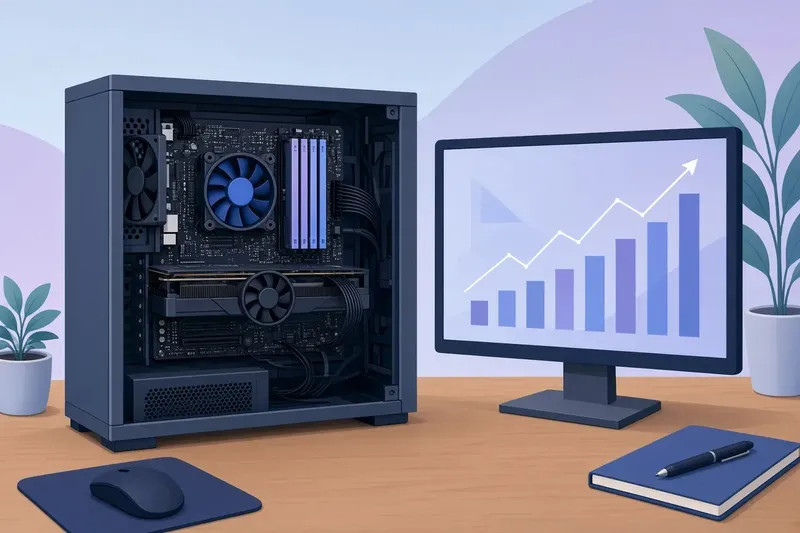
Gyro-M vs. Gyro-S on a 16GB GPU: Higher Scores, Similar Coding Results
Gyro-M passed all six coding tasks on a 16GB GPU, but Gyro-S stayed close. Scores: 15 of 15 on long-context retrieval, 85.4% reasoning, 99% HumanEval Remix. Decode speed held near 48 to 58 tokens per second on the 16GB card. Gyro-M ran Blender tool calls without the crashes seen in the Gyro-S run. With limited VRAM, Gyro-S appears sufficient for most everyday coding work.
 AI Performance
Claude Code Plugins With 1 Million Stars Added Cost, Not Quality, in Tests
None of five top Claude Code plugins beat plain Claude Code in one set of tests. ECC cost $5.12 on one job against $0.91 plain, passing the same 89 hidden tests. Graphify used 12 percent more tokens and scored 89.1 against 93.0 for plain. One line in CLAUDE.md, Answer concisely, cut cost per answer by 23 percent. Test each plugin on identical tasks and keep only those adding new capabilities.
 AI Performance
Fable 5.2 on Open PhD-Level Math: Audited Progress, Hard Compute Limits
In one test on 40-plus open math problems, Fable 5.2 wrote audited, rigorous work. Reported milestone is verification at N equals 2; no N equals 3 proof is reported. 30 commits, 852 files and 542,941 added lines, condensed into a three-page PDF. Weekly Fable quota ran out after about three to four hours of multi-agent work. Plan automated checks up front; no one person can review output this large by hand.
In depth
Longer articles to read at your own pace.
 AI Performance10 min read
Interaction-as-a-Judge: Computer-Use Agents Test AI-Built Games and Web Apps
Arena's method has computer-use agents play AI-built apps, then judges the trace. Code and screenshots from frontier models look alike, hiding runtime bugs. Trained reward model with interaction traces hit 70.8% agreement with human votes. With no source code at all, a trace-only reward model reached 69.0% agreement. Playing the app caught broken requirements 8 to 13.6 points more than code agents.
 AI Performance10 min read
Claude Fable 5.2 Benchmarks and Five Real Tasks: Where the Gains Show Up
Claude Fable 5.2 tops the Artificial Analysis index, six points above Opus 5.5. Standard pricing is $8 per million input tokens and $40 per million output tokens. On FrontierCode 2.0, high effort matches Opus 5.5 at max for about half the cost. In Claude Code it fixed a checkout price mismatch and built a working iPhone app. Four local agents at 40 tokens per second each will not fit under a €10,000 rig.
Earlier articles
Earlier articles in AI Performance, newest first.
 AI Performance
One Claude Model Beats Multi-Agent Teams on Cost and Speed in 82-Run Benchmark
Solo Opus 5.5 tied the viral four-agent team at 8.0 out of 10 on five large jobs. The team cost $47.14 and 176 minutes versus $10.57 and 45 minutes for Opus alone. Builder-tester loops drove most of the extra cost without raising scores. Only eight separate libraries favored a team: 3 minutes faster, nearly double cost. Best value: Sonnet 5.5 on high effort scored 12 of 12 on a data report for $0.68.
 AI Performance
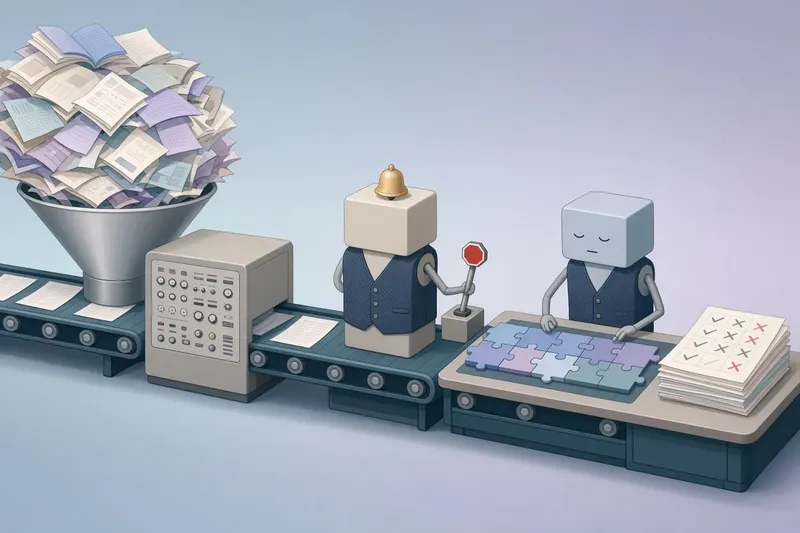
Pre-Training, Fine-Tuning and RL: Where Frontier LLMs Get Their Quality
Frontier LLM quality comes from three stages: pre-training, fine-tuning and RL. Pre-training yields a raw autocomplete engine that cannot stop or hold a persona. Fine-tuning on formatted conversations adds the assistant persona and stop token. GRPO grades 30 to 100 attempts against the group average, so wrong tries also teach. Compare a base and instruct open model for free in Google Colab to see the stages.
 AI Performance
DeepSeek V4.1 Flash Hits 20.7% on Plumbing Takeoff, Far Behind Claude Opus 5.5
DeepSeek V4.1 Flash hit 20.7% on a plumbing takeoff, Claude Opus 5.5 hit 42.7%. On 169 drawing questions it scored 62.7% overall and just 9.1% on measurements. API price of $0.30 per million input tokens, about one tenth of rival list prices. A cost report test turned a $250,000 forecast loss into a $1.03 million profit. Verify every takeoff count and schedule link before using low-cost model output.
 AI Performance
Samaya AI Earnings Benchmark: Frontier Models Edge Out Analyst Consensus
Top models beat analyst consensus on 454 Q2 earnings reports, Samaya AI test finds. GPT-6 Astra error of 1.17 sigma versus 1.57 raw and 1.18 bias-corrected consensus. Earnings picked over stock prices: exact actuals, expert baseline, call transcripts. Point-in-time cutoff enforced by an authentication token, not prompt instructions. Fresh data matters most: stale 55-day-old inputs cut performance by 12 to 15 points.
 AI Performance
RLHF-Heavy Models Write Stiffer Prose; Replay Production Traces Before Swapping
Raindrop's CTO: heavy RLHF makes frontier models stiffer writers that refuse more. In his view, Kimi 2.5 writes more naturally than over-aligned flagship models. Retrieval fixes verify at once; memory storage changes can take 3 to 6 months. Replay production traces with their email, calendar and tool state before a swap. Test cheaper models such as Sonnet against Opus 3.5 in simulation before migrating.
 AI Performance
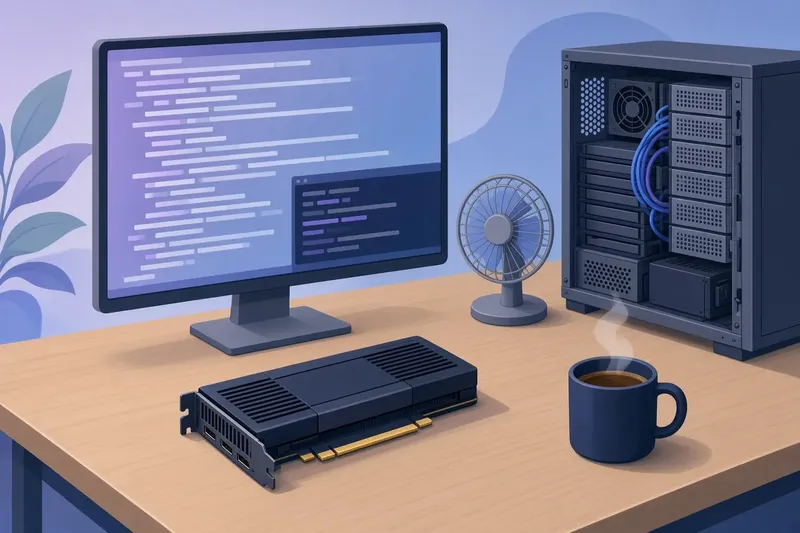
ShapeLearn Qwen3.8-27B on a 16GB GPU: Agent Tests Pass 4 of 5 at 128k Context
ByteShape's IQ3_XS Qwen3.8-27B fits a 128k context in 16GB of VRAM with Q8 KV cache. About 31 tokens per second generation on a 70 watt RTX 2000 Ada running llama.cpp. Perfect recall to 256k tokens, 83 percent reasoning, 77 percent HumanEval Remix. Four of five agent tasks passed; the Godot level failed in thinking loops. Set an output token limit in the system prompt or long code gets truncated.
 AI Performance
Coder's Hybrid AI Gateway: Local Models for Bots, Cloud for Developer Chat
Coder runs automated bots on on-prem models and keeps developer chat in the cloud. Doc-check bot fell from about $1,750 a month on Claude Opus to under $11 locally. Bots are about 20 percent of Coder's coding AI spend, humans the other 80 percent. A 56-hour local audit of 756 GitHub issues cost $130 versus about $1,100 on Sonnet. Two local boxes cannot offset a $5 million budget, so start with async jobs first.
 AI Performance
Construction AI Tests Put Claude Ahead on Drawings, Take-offs Still Near 53%
Claude Sonnet 5.5 in Claude Cowork read construction drawings at 93.3% accuracy. Best quantity take-off score was 53.1%, too low to price bids without checking. Harnesses added up to 32.8 points over raw API calls, so test the app you use. Claude Opus 5.5 scored 65.9 of 100 on management tasks, Gemini 4 Argon 44.1. Claude for deep document reasoning, ChatGPT for about twice the usage per dollar.
 AI Performance
GPT-6.1 Terra vs Claude Opus 5.5: Eight Builds Cost $7.64 Against $60.19
Eight test builds cost $7.64 on GPT-6.1 Terra versus $60.19 on Claude Opus 5.5. Terra averaged 23 minutes 43 seconds per build, about half of Opus 5.5's time. Opus 5.5 still clearly wins on complex 3D scenes, game feel and high-end visuals. On Agents' Last Exam v1, Terra scores 60% to Opus 5.5's 63% at 11% of the cost. Route routine web, 2D and agent work to Terra, keep Opus 5.5 for showcase work.
 AI Performance
Local Qwen 3.8 27B Coding Test: Four Harnesses Fix Nearly the Same Bugs
On local Qwen 3.8 27B, Claude Code fixed 27 of 68 bugs, the other three 22 to 24. 33 bugs beat every harness, 16 fell to all four: bug difficulty mattered most. Pi processed about 44,000 prompt tokens per bug, DeepSeek Harness about 86,000. Rankings shifted with the cutoff: OpenCode led at 20 minutes, Claude Code at 30. Setup first: proxy system messages, strip sampling overrides, preinstall ripgrep.
 AI Performance
OpenAI's New Astra Model Plays Real Chess, Then Falls to a Queen Sacrifice
GPT-6 Astra played a full chess game with no illegal moves and reached a +3.5 edge. Missed key middlegame moves, then lost to a queen sacrifice and mate on h1. About 90 minutes for one game, with two to three minutes on hard moves. Its own post-game rating of its play was far below its real level. Test AI reasoning with positions just off known theory, not memorized lines.
Get new articles by RSS or podcast
Add the RSS URL to your RSS reader or the podcast URL to your podcast app to get every new article as soon as it is published. The podcast reads out the headline and key points.
How to subscribe