#Claude Code
90 articles tagged Claude Code
Tagged articles
Articles tagged Claude Code, newest first.
 AI in Practice
Claude Code Best Practices: Five Jobs to Stop Doing by Hand
Claude Code guidance moves five manual jobs to the model, harness and environment. Anthropic's daily code changes: about 2,500 in May, over 30,000 in September. Anthropic study: auto mode blocked 89% of dangerous commands, humans caught 14%. Hard deny rules and sandboxing for anything that cannot be undone. Failing hook scripts should exit with code 2 so Claude Code fixes the error.
 AI Performance
Claude Code Plugins With 1 Million Stars Added Cost, Not Quality, in Tests
None of five top Claude Code plugins beat plain Claude Code in one set of tests. ECC cost $5.12 on one job against $0.91 plain, passing the same 89 hidden tests. Graphify used 12 percent more tokens and scored 89.1 against 93.0 for plain. One line in CLAUDE.md, Answer concisely, cut cost per answer by 23 percent. Test each plugin on identical tasks and keep only those adding new capabilities.
 AI Performance
Fable 5.2 on Open PhD-Level Math: Audited Progress, Hard Compute Limits
In one test on 40-plus open math problems, Fable 5.2 wrote audited, rigorous work. Reported milestone is verification at N equals 2; no N equals 3 proof is reported. 30 commits, 852 files and 542,941 added lines, condensed into a three-page PDF. Weekly Fable quota ran out after about three to four hours of multi-agent work. Plan automated checks up front; no one person can review output this large by hand.
 AI in Practice
Claude Code's Code Mode Runs Tools From JavaScript and Trims Token Costs
Claude Code's experimental Code Mode has Claude call tools through JavaScript. Only filtered results reach the context window, not raw intermediate tool output. One eight-run test: 53% of normal input tokens and about 71% of normal cost. Off by default; hooks that inspect each tool call must be disabled first. Likely most useful for jobs that chain several tools and return large payloads.
 AI Security
safeagents Proxy Stops Coding Agents Tricked by Hidden README Instructions
Hidden README comment made a coding agent leak five .env secrets in 2 of 3 runs. Hugging Face's safeagents proxy inspects every tool call between agent and model. Three layers: allowlist checks, atif-scan pattern rules, optional LLM judge. Defaults missed the leak; a custom plugin of about 30 lines blocked every attempt. Pair the proxy with Docker sandboxing and tight permissions for unattended agents.
 AI in Practice
Anthropic's Always-On Agent Guide: Five Primitives and a First Agent to Build
Five parts from Anthropic's guide: inbox, timers, memory, permissions, outbox. The agent sleeps most of the day and spends tokens only during short runs. Anthropic reports Opus 5.5 at 78 percent less per solved coding task than Opus 5. Store only what cannot be looked up again and gate risky actions behind approval. Start with one read-only 8 AM summary task, then review its messages weekly.
 AI in Practice
Fable 5.2 Cost Control: Medium Effort, Haiku Subagents, Opus as Default
Fable 5.2 costs $8 in and $40 out per million tokens, twice Opus 5.5. Make Opus 5.5 on Medium effort the default, keep Fable for planning and review. Pin Explore and other search helpers to Haiku 5.5 to cut lookup cost about 50-fold. Medium to High effort nearly triples cost per task for an 8 point benchmark gain. Splitting a small job across subagents cost five times a solo run in one test.
 AI Performance
One Claude Model Beats Multi-Agent Teams on Cost and Speed in 82-Run Benchmark
Solo Opus 5.5 tied the viral four-agent team at 8.0 out of 10 on five large jobs. The team cost $47.14 and 176 minutes versus $10.57 and 45 minutes for Opus alone. Builder-tester loops drove most of the extra cost without raising scores. Only eight separate libraries favored a team: 3 minutes faster, nearly double cost. Best value: Sonnet 5.5 on high effort scored 12 of 12 on a data report for $0.68.
 AI in Practice
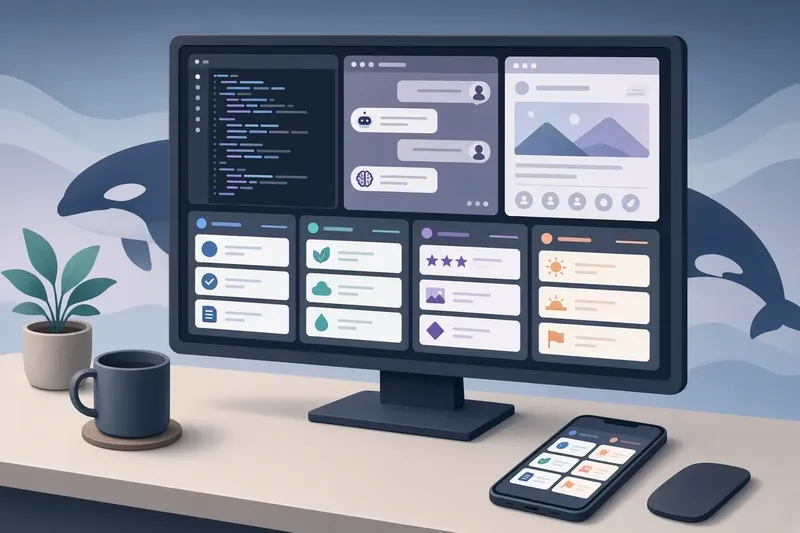
Orca Agent IDE: Why a Terminal Alone Falls Short for Claude Code Workflows
MIT-licensed agent IDE that runs Claude Code, Codex, Gemini and other CLI agents. CLI agent backends run on flat-rate monthly plans instead of per-token API billing. One agent per Git worktree, created in a click from GitHub Issues, Jira or Linear. On a remote VPS, Chat Mode types locally and sends whole prompts, hiding SSH lag. Built-in Chromium browser lets you annotate a live page and send it as one prompt.
 AI Security
AI Agent Governance: Track Sessions by Cost, Time and Risk Before You Block
Most companies cannot count their running AI agents; license counts are no answer. Observe the agent session, not the web request; track cost, duration and risk. Climb four rungs in order: inventory, alerts, in-harness guidance, then hard blocks. Vendor consoles and gateways miss local MCP servers and in-harness shell calls. Allow-list MCP servers, redact secrets locally, cap agents at their owner's access.
 AI in Practice
Claude Code Outreach Agent Emails Trial Dropouts and Checks Its Own Replies
A PM can build a trial-dropout email agent in Claude Code in 30 to 40 minutes. The agent reads a CSV, follows CLAUDE.md rules and sends via a Gmail MCP server. An eval checks each auto reply against docs, retries once, then saves a draft. An Ancestry.com split test showed a 37.3 percent conversion lift from AI outreach. Skip automation before product-market fit and keep two customer talks a week.
Get new articles by RSS or podcast
Add the RSS URL to your RSS reader or the podcast URL to your podcast app to get every new article as soon as it is published. The podcast reads out the headline and key points.
How to subscribe