An AI coding agent can write an application, but the services around that code still need to fit the project. A curated set of 29 tools across 14 categories works best as a menu, not a required installation list. Its selection test has three parts: a free or inexpensive starting point, the ability to support a production application as it grows, and a way for an agent to work with the service directly.
Choose tools the agent can operate
Claude Code from Anthropic and Codex from OpenAI are the coding agents at the center of this approach. Both offer desktop applications and command-line interfaces, so they can work inside an app window or run tasks from the terminal. Both also run on frontier models: Claude Opus 5.5 from Anthropic and GPT-6 Astra from OpenAI.
For each supporting tool, look for a Model Context Protocol (MCP) server, a command-line interface (CLI), or an agent plugin. An MCP server exposes a service’s tools to an AI agent; a CLI lets the agent work with the service through terminal commands. These connections matter when a task extends beyond generating code to deploying it, configuring a service or inspecting a problem. Check that an integration covers the specific actions your project requires.
Start with the kind of site
Cloudflare and Vercel are the two general hosting choices in the collection. Both provide deployment tools, preview environments for testing changes and ways to run code near users. Cloudflare also brings a broader range of infrastructure services. The decision becomes clearer when the project’s website role is defined.
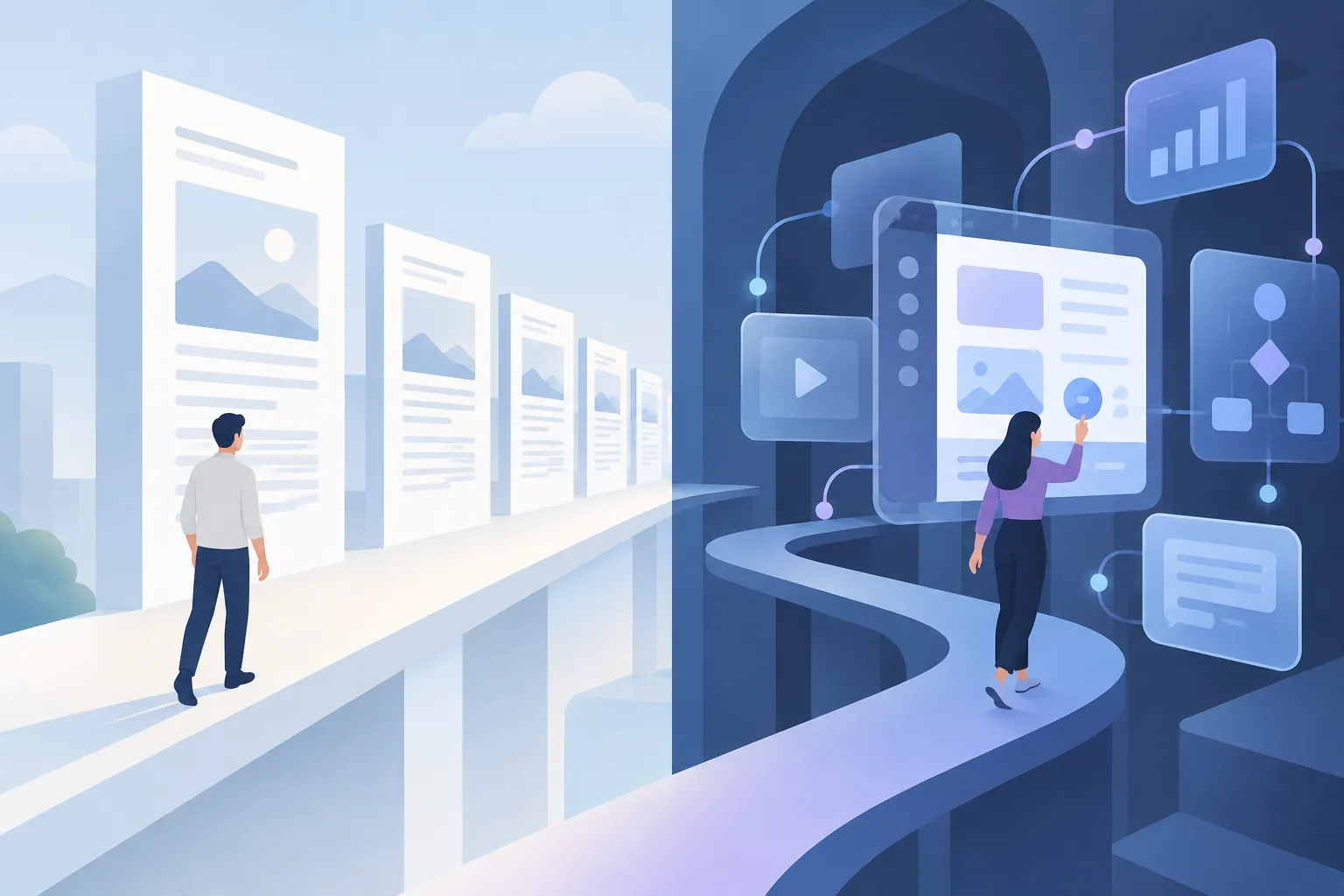
For a landing page, documentation hub or other content-focused site, Astro and Cloudflare Pages form the suggested pairing. Astro builds lightweight pages, while Cloudflare Pages hosts them. This keeps the architecture relatively simple when the main job is publishing content rather than managing complex user interactions.
▲ Content sites and interactive apps
An interactive web app calls for a different combination: Next.js on Vercel, with shadcn/ui components and Tailwind CSS for the interface. Next.js supplies the application framework; shadcn/ui supplies reusable interface components; and Tailwind CSS supplies styling utilities. This pairing fits projects with changing interface state, user accounts and payment flows. A coding agent can assemble and style the components, but those requirements—not the availability of an agent—should drive the architecture.
Give persistent data and identity distinct jobs
A database stores information the application must retain, such as user records or application state. The four database choices serve different data needs:
| Service | When to consider it |
|---|---|
| MongoDB | Records that fit a flexible, document-based data model |
| Supabase | Managed relational data in PostgreSQL |
| Neon | Serverless PostgreSQL, including database branching |
| Tiger Data | Analytics, monitoring data or high-volume time-series records—measurements tracked over time |
These are alternatives to evaluate against the data a project actually holds, not four databases every app needs. MongoDB and Supabase also offer agent-facing tooling. Neon emphasizes a serverless PostgreSQL workflow, while Tiger Data builds on TimescaleDB and PostgreSQL for time-series work.
If people need to register and sign in, Clerk supplies authentication: the login, session and account-management layer. It includes ready-made interface components for social login and account pages, alongside MCP support for coding agents. A content site without user accounts may not need this layer at all.
Add operations when the workload requires them
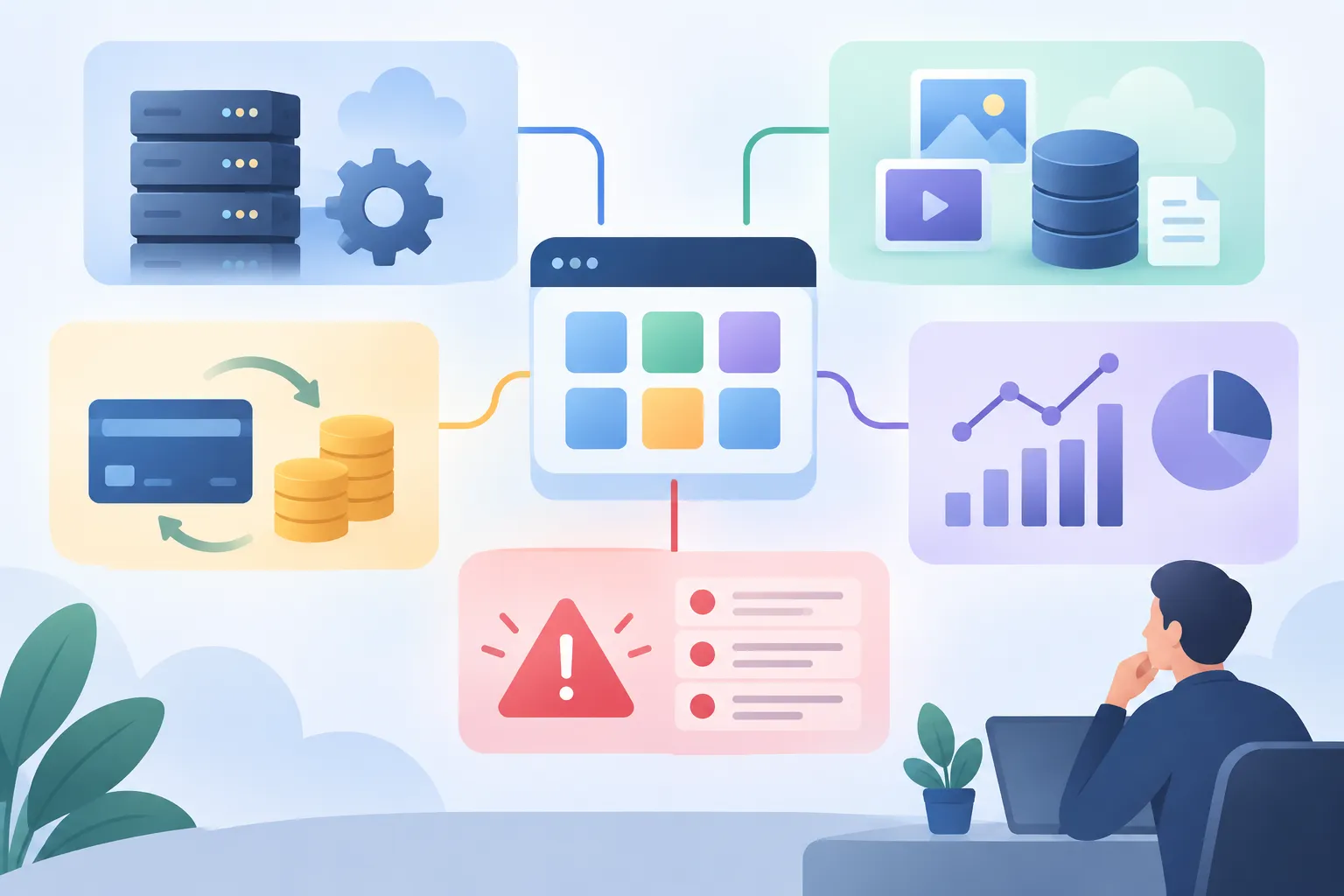
Several categories address jobs that application hosting and a database do not cover. Separating them makes it easier to decide which services to add—and which to leave out.
▲ Separate roles in application operations
For email, first distinguish messages triggered by the product from messages sent to an audience. Resend and Cloudflare Email are choices for transactional email, such as verification messages and application alerts. Kit serves marketing email, lead capture and newsletters. The distinction is the purpose of the message, not just the tool used to send it.
DigitalOcean Droplets are persistent virtual machines: cloud servers that keep running. They suit long-running workers, scheduled jobs and background processes that do not fit the execution limits of serverless services, which run code on demand. For files rather than database records, Cloudflare R2 provides object storage for assets such as photos, videos and generated images. It offers an S3-compatible API and no egress fees.
Stripe fills the payments role, including checkout, subscriptions and billing portals. It belongs in the architecture when the product must collect one-off or recurring payments; it is not a prerequisite for a project without billing.
An app that calls AI models also needs to distinguish its coding agent from the models available to its users. Anthropic and OpenAI are choices for text, reasoning and conversational features inside an app. Gemini and GPT Image 2 are choices for image generation. Supporting more than one model provider can give an app options if a provider is unavailable or a different model better fits a cost-sensitive task.
PostHog and Sentry address two different production questions. PostHog tracks product usage and can be queried through a coding agent to build or inspect analytics dashboards. Sentry tracks application errors and performance problems, helping an agent inspect failures and diagnose stack traces. Analytics about what users do should not be mistaken for error reporting about what broke.
Finally, GitHub Issues and Linear keep work visible to both developers and agents. GitHub Issues fits bugs and tasks tied closely to a code repository. Linear fits broader plans and coordinated initiatives. Their agent-facing tools can help read tasks and update their status as work progresses.
Build a short list, not a full inventory
The practical sequence is to identify the project’s workload, choose its hosting and application framework, then add only the data, identity and operational services it needs. For each candidate, check the starting cost, whether it can support the intended production use, and whether its MCP server, CLI or plugin lets your coding agent perform the relevant work. Ask Claude Code or Codex to propose a combination for the specific project rather than adopting all 29 tools. That keeps the stack tied to the application’s requirements while preserving the agent-friendly workflow.