A search niche with heavy demand and no dedicated website can be filled with a plain directory built from public data, and an AI coding agent can now do most of the heavy lifting. One recent build used Claude Code to create a directory that tells drivers which headlight bulb fits their car, from the first data query to a live site planned at roughly 1,140 pages. The project is a useful map of where the agent carried the work and where a person still had to set the rules: build the data before the pages, fill in what people actually search for first, and avoid publishing tens of thousands of thin pages.
Finding the niche: copy a working model into a neighboring category
The approach does not invent a new kind of website. It takes a directory format that already ranks in search and moves it into an adjacent category. Two reference points were a site that organizes US government fuel economy data by car model and a wiper blade finder that returns blade lengths once you pick a year, make and model. According to Ahrefs, an SEO tool that estimates keyword traffic and competitor strength, the wiper site was drawing about 4,500 organic visitors a month.
Wiper blades, though, are cheap at $20 to $40 and drivers rarely replace them, which keeps affiliate commissions small. Headlight bulbs looked like a stronger fit.
| Metric | Value |
|---|---|
| Monthly searches for “headlight bulb” | 8,100 |
| Monthly searches across all matching terms | About 684,000 |
| Matching keyword terms | 50,228 |
| Standard halogen bulb price | $15 to $25 |
| LED upgrade kit price | $100 to $250 |
Many bulb-size queries such as “H7 headlight bulb” showed a keyword difficulty of zero, and no existing directory covered headlight bulb specs across every make, model and year. Google’s AI Overviews can answer a sizing question, such as a wiper blade length, at the top of results, but people looking for brand options and places to buy appear to still click through to directories.
Data first, and only free public data
The working rule was strict: for a directory, build the database and the data pipeline before any front-end design or local dev server. Accurate data is the real asset of a site like this.
Claude Code was told to treat public sources, such as the National Highway Traffic Safety Administration (NHTSA) vehicle API and Environmental Protection Agency (EPA) fuel economy data, as the source of truth. It came back recommending a paid license for an industry vehicle configuration database, or partnerships with bulb makers. That suggestion was rejected, and a follow-up prompt told the agent never to consider paid subscriptions, licenses or vendor deals. AI assistants can steer toward costly options even when a free route exists, so stating cost limits up front appears to save time.
Vehicle lists came from government data, and bulb specifications came from official owner manual PDFs. An early test on a 2011 Subaru Outback manual confirmed that Claude Code could pull the correct bulb sizes. Merging four public databases produced 12,254 year, make and model combinations from 1990 to 2027. Once motorcycles, buses and heavy trucks were added, the raw list grew to 237,554 vehicle variations, of which 35,847 were passenger cars, SUVs, pickups and vans.
Let search demand set the order
Filling in 237,000 rows before launch would be impractical. Instead, the top 2,500 keywords from Ahrefs were exported to a CSV file, placed in a project folder, and handed to Claude Code with a request to rank brand groups by search share. The keywords did not decide which vehicles belonged in the database. They only decided which vehicles to enrich first.
Claude Code suggested grouping sibling brands that share platforms and bulb hardware, so one verified spec could cover several listings.
| Brand group | Models | Searches per row |
|---|---|---|
| Honda and Acura | 473 | 79.3 |
| Hyundai and Kia | 989 | 55.4 |
| Stellantis brands | 1,399 | 34.2 |
Honda and Acura went first, with sources limited to primary documents such as official manufacturer manuals.

▲ Enriching data in order of search demand
Five days of scraping on a cloud server
Reading thousands of manuals takes days, not hours, so the job ran on an always-on cloud VPS (virtual private server) rather than a laptop. Claude Code ran on an Ubuntu server, accessed from the Cursor editor over SSH. The server kept its state and resumed work each time usage limits reset, and over five days the agent needed only five to seven steering prompts.
The biggest snag was disk space. Saving whole PDF manuals filled 29 GB of a 100 GB disk, so the scraper was changed to keep only the bulb data and the manual URLs.
| Result | Value |
|---|---|
| Headlight bulb rows | 26,403 |
| Vehicle configurations covered | 8,462 |
| Share of target keyword search volume | 97.2% |
| Share of all passenger vehicle lines | About 24% |
| Manufacturer manuals cited | More than 16,300 |
| Error rate across four audits of 1,000 rows | Under 1% |
Covering about a quarter of passenger vehicles captured almost all of the search demand. The rest were mostly pre-1990 cars, rare exotics and commercial conversions with near-zero searches, which can be filled in after launch.
About 1,140 pages instead of tens of thousands
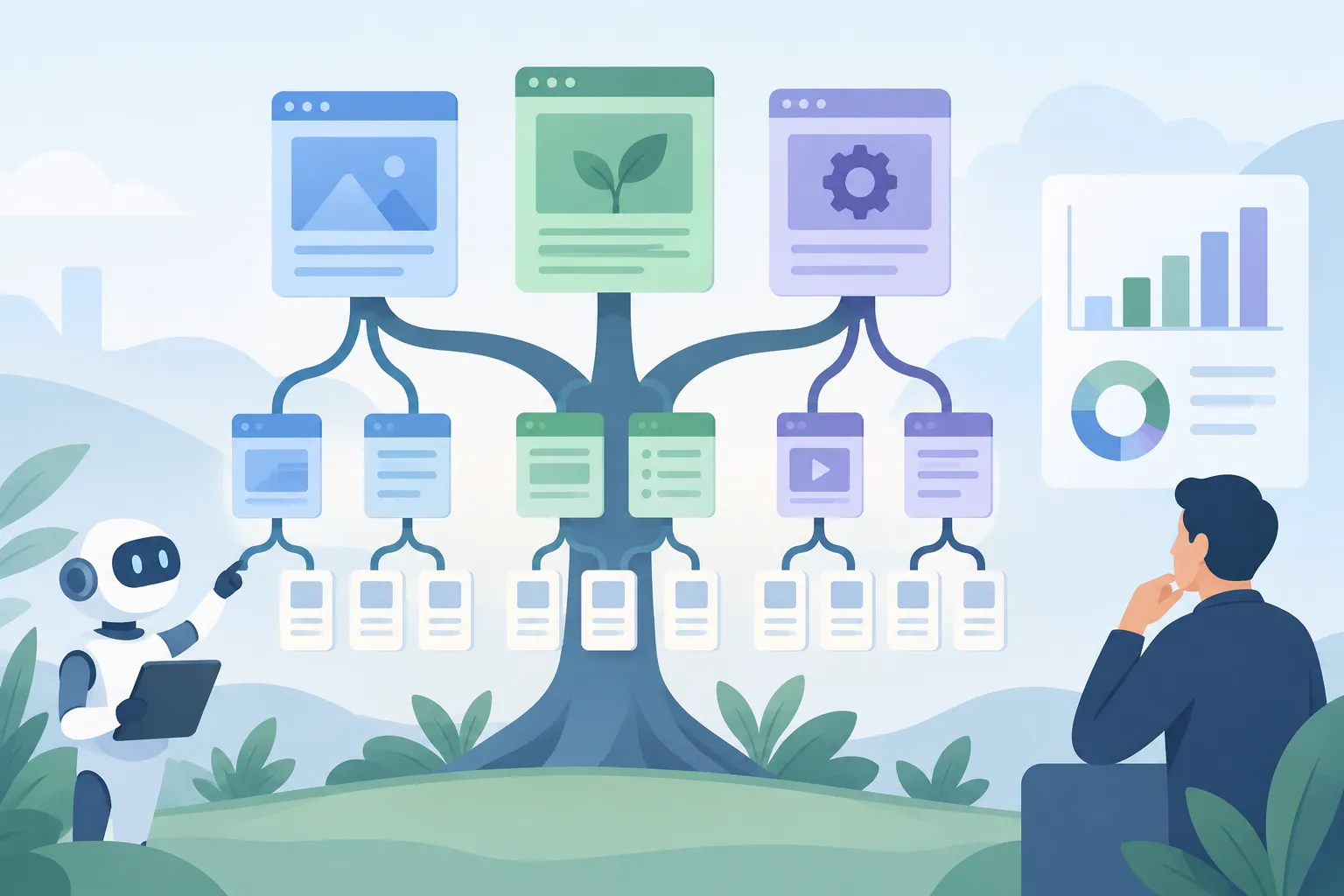
With the data in place, Claude Code was asked how many pages the site should have. One page per model year would create tens of thousands of thin pages that search engines may refuse to index or may penalize. The agent proposed three tiers:
- About 970 make and model pillar pages, each grouping several years with jump links to each era
- About 50 bulb-size hub pages
- About 120 standalone buying guides
A concern about model pages and bulb pages competing for the same keywords was settled once the agent explained that they serve different intents: vehicle lookups versus bulb comparisons. Because the site needs no logins or payments, it was built with the lightweight Astro framework instead of Next.js, and without a hosted database service such as Supabase.
What the first review changed
The first build showed “check your owner’s manual” notices for unverified years, and store buttons only opened a general search instead of a specific product. A second prompt asked the agent to hide unverified years from selectors and tables, add About and Contact pages, make tables readable on phones, and mark the standard replacement bulb as “Recommended.” In under five minutes Claude Code hid 2,577 unverified years across 554 model pages.
The agent also flagged that major retailers such as Amazon, Walmart and AutoZone prohibit automated scraping and unauthorized image use, and pointed to official affiliate programs such as Amazon Associates and their product APIs instead. Monetization was therefore postponed until the site earns rankings and traffic. For now, built-in click tracking records store clicks, vehicle searches and device types inside the site code, with no third-party scripts, and a password-protected admin page shows 7, 30 and 90-day views. Knowing which retailer gets the most clicks tells you which affiliate program to apply to first.
▲ Site structure built around pillar pages
Let the agent handle deployment, but keep secrets in human hands
The code went to a private GitHub repository connected to Vercel, and a domain matching how people phrase their searches cost $11.25 a year. Before launch, Claude Code listed the inputs it needed, and a person created the Google Analytics 4 property and the Google Search Console verification record. Email for the contact form used Resend, whose free tier allows 100 emails a day and 3,000 a month.
Instead of typing DNS records into a dashboard, Claude Code used the Vercel CLI (command-line interface). After a person approved device access once in the browser, the agent added the Search Console TXT record, attached both the root domain and the www version, and set a permanent 301 redirect from www to the root. These are settings that often cause redirect loops when done by hand. The Resend API key, by contrast, was pasted into Vercel’s environment variables by a person as an encrypted secret, with a check for stray spaces. A test email confirmed the contact form, and the sitemap index was submitted to Search Console.
After launch: wait one to two weeks
The plan is to leave a new directory alone for one to two weeks and watch Search Console for impressions on target queries such as “Honda CR-V headlight bulb size.” Once Google appears to understand what the site is about, link building starts. Offering about $50 to a blog that already covers the exact topic tends to work better than asking for a free link, but paying for links on sites with a domain rating of zero and no traffic is not worth it. If Ahrefs or Semrush is out of budget, connecting Claude Code to the DataForSEO API gives data that is less polished but directionally useful.
Key takeaways and what to do
| Handled by Claude Code | Decided or checked by a person |
|---|---|
| Finding and merging public data, collecting manuals | Choosing the niche and the free-data-only rule |
| Analyzing keyword data and proposing the order | Setting priorities and the launch point |
| Proposing site structure, building and revising pages | Reviewing the first build and directing fixes |
| DNS, domain and deployment setup | Entering API keys, approving devices, owning accounts |
If you want to build a similar directory:
- Find a directory that already ranks, and check search volume for a pricier adjacent category
- Tell the agent from the start to use only free public data and primary sources
- Feed it your top keywords so it fills in high-demand records first, and audit samples for errors
- Group years into pillar pages so the site launches at an indexable size
- Watch indexing and impressions for one to two weeks before building links or monetizing