Claude Code is becoming more adaptable, but its present capabilities and its proposed direction are not the same thing. Developers can use Claude Mods to change parts of the coding agent’s workflow, while Artifacts can hold persistent project state that multiple Claude instances access. A broader vision would separate the interface, the model’s reasoning, and code execution so several agents can work together across local and cloud environments. That shift could change how teams coordinate software work, provided they can keep access to code and data properly bounded.
What developers can change today
Claude Code already gives developers ways to guide an agent before it writes code. Its Ask User Question tool can clarify an ambiguous requirement, such as a data schema or an implementation choice. A CLAUDE.md file can hold project instructions across sessions. The useful starting point is not a long list of restrictions: rules written to correct an older model’s recurring mistake may constrain a newer model that no longer makes it. A fresh project can start with an empty file and add instructions when the same failure occurs repeatedly.
Claude Mods extend that control beyond written instructions. Earlier hooks could launch an external script when an event occurred. Mods run inside Claude Code’s TypeScript process, allowing an extension to respond to agent events, inspect scoped session information, work with structured outputs, and alter parts of the terminal interface. The extension architecture spans commands, prompts, agents, tools, output, settings, and configuration, among other hook points.
A custom mod could, for example, track the assumptions an agent makes while implementing a change and present them at the end. Another could run a comprehension check after a task finishes. In that pattern, a sub-agent—a separate agent branch assigned a smaller task—checks whether the work meets completion criteria and returns quiz questions for the developer. These are examples of extensions developers can build, not default steps that every Claude Code session performs.
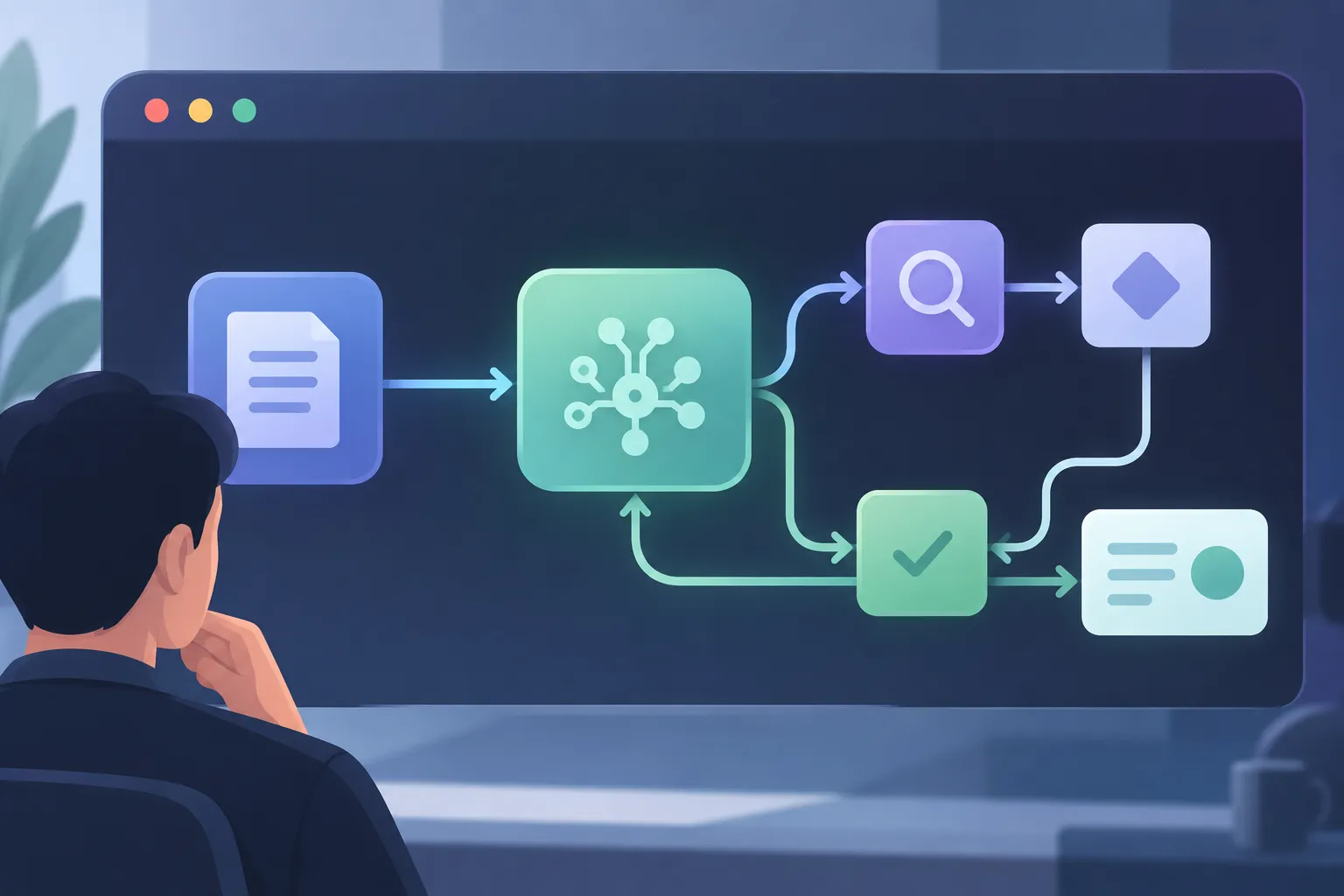
▲ Separate review inside a coding workflow
A forked sub-agent can reuse the parent session’s prompt cache—stored processing of input the model has already read—reducing the cost of an auxiliary check while keeping its evaluation material out of the main conversation. That separation matters when developers want a review or explanation without turning every coding exchange into a longer supervisory dialogue. It still makes sense to test whether an added skill or mod improves results rather than assume more automation always helps.
Other possible mods include a selector for specialized working modes and a router that chooses among Claude models. Automatic routing is not a default because judging task difficulty before work begins remains unreliable. Sending a complex request to a model that cannot handle it can waste time rather than save it. Customization offers power, but it also creates choices that a simpler default workflow avoids.
From a terminal session to a shared workspace
Today, a developer can run Claude Code locally or use remote and cloud execution options. Claude Tag brings an agent into shared team spaces such as Slack, where participants can work from common project context. Claude Projects begins with more focused individual work and is intended to expand toward shared environments.
Artifacts offer a different kind of collaboration surface. An Artifact can provide an interactive interface backed by a persistent database, rather than merely displaying a temporary result. It can send structured information back to Claude. Through a Model Context Protocol integration—MCP is a way to connect an agent with external tools and data—distinct Claude instances can read and update the same underlying Artifact data. A project board that retains tasks across sessions is one potential use.
The more ambitious direction places that shared interface at the center of a project. A person could inspect work, leave comments, and assign tasks there while specialized agents operate concurrently. In the proposed architecture, the interface and its data sit apart from cloud-hosted model reasoning. Execution runs separately, either in a cloud sandbox—an isolated environment for carrying out work—or on a connected local machine. The familiar terminal session becomes one possible way to work, rather than the container for the entire system.
That is a design direction, not a claim that every piece already works as one seamless product. Coordinating multiple agents and continuously producing shared project information can also increase token use (tokens are the units of text a model processes) and latency. Human guidance still matters: an agent cannot reliably infer unstated preferences about architecture, design, or the amount of review a task needs.
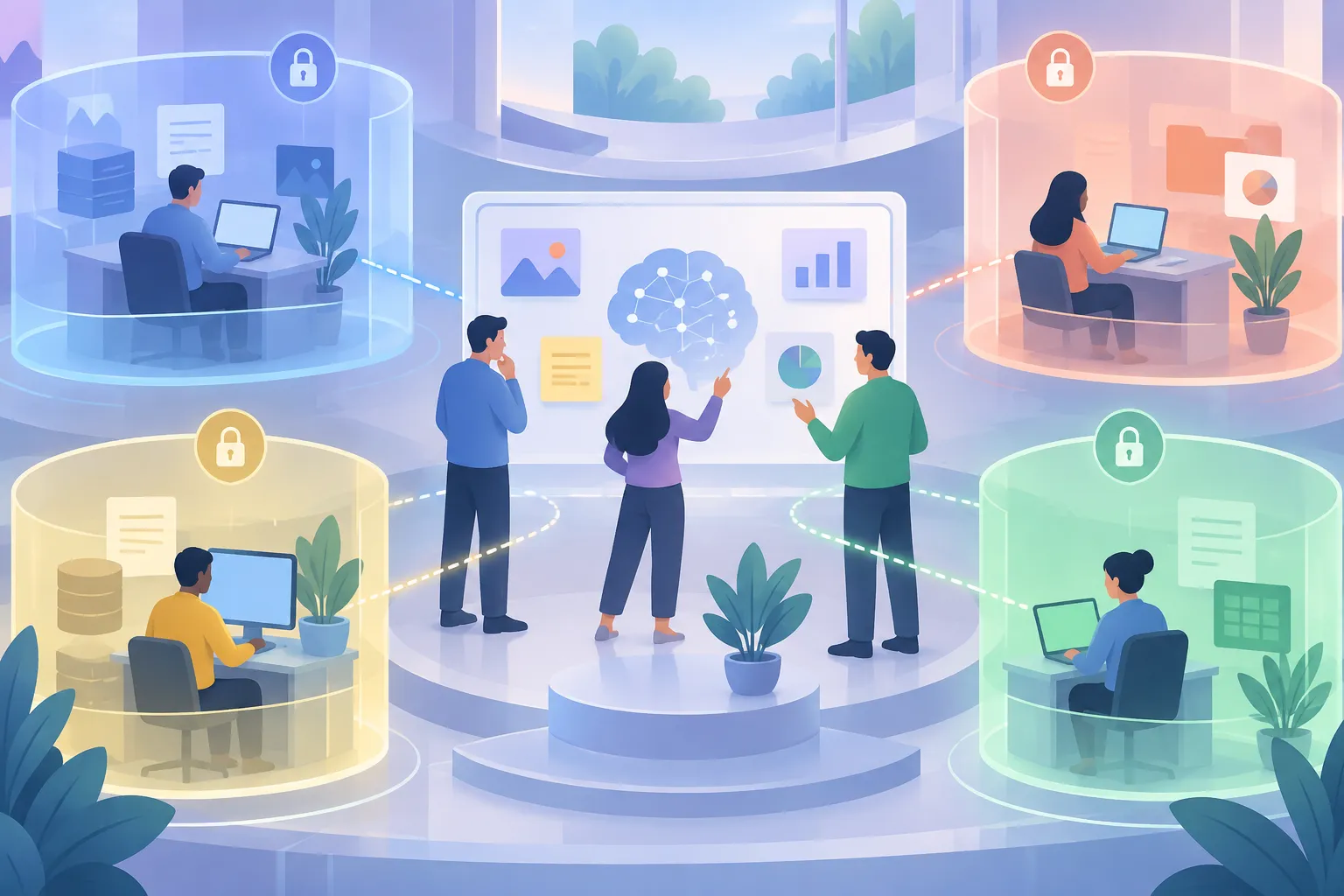
▲ Shared project state with separate access boundaries
Collaboration needs boundaries
Shared agents could reduce the need for developers to relay project details by hand. In a dedicated team channel, for example, a legal or compliance colleague could ask about code changes using the project context available to the agent. During an incident, several responders could work from shared logs and runbooks. Whether either workflow is appropriate depends on what the agent is permitted to see and do.
A team agent needs a distinct identity and clear permissions. People may connect different MCP servers, documents, and local credentials to the same project. Without isolation, information available in one area could be exposed in another. Untrusted material entering a shared channel also presents a prompt-injection risk: text supplied as data may try to redirect an agent with broader access. The defensive principle is to separate external inputs from privileged agent actions and restrict each agent to the access its task requires.
Execution needs its own safeguards. Sandboxes, scoped credentials, and approval or monitoring layers can limit what an autonomous agent may change. These controls become more important as work moves from a short, supervised local run to longer-running agents that use tools across several environments. A shared interface alone does not settle questions of identity, authorization, or data visibility.
What to do now
The immediate opportunity is selective customization, not a wholesale switch to autonomous agent teams. Start coding tasks by clarifying goals and architectural unknowns; keep CLAUDE.md rules tied to repeated problems and revisit them after model changes. If a mod adds review, assumption tracking, or another secondary task, evaluate whether it actually improves the workflow.
For shared projects, map which people and agents can access each data source before connecting tools or channels. Keep untrusted inputs apart from privileged actions, and use scoped permissions for code execution. Claude Mods and persistent Artifacts show how development could move toward adaptable, collaborative workspaces. Permission design and deliberate human direction will determine how much of that direction a team can use responsibly.