OpenAI will go public at some future date. CEO Sam Altman confirmed that plan at a recent Semafor event, where he also explained what he means by "double counting" in AI chip demand, defended the debt-financed buildout of computing infrastructure, and argued that the industry has been selling AI to the public the wrong way. Taken together, his remarks give a clear picture of what OpenAI is prioritizing and how its chief executive reads the pressures on the AI sector.
An IPO is coming, with stated trade-offs
Altman said plainly that OpenAI will hold an initial public offering (IPO), the first sale of a company's shares on a public stock market. He gave no date.
He did not present the move as free of cost. Running a public company brings real downsides and complications, he said, especially in a fast-moving field. The industry is making delicate, highly consequential decisions about safety and about how the public interacts with the technology, and those decisions are easier to handle as a private company.
His reason for going public anyway is access. Altman said public market investors around the world should be able to invest directly in the AI transformation, instead of leaving that exposure to private market insiders.
He also rejected the idea that Anthropic going public first could use up investor demand, calling the concern unfounded. Coverage of AI, he suggested, tends to frame the field as a head-to-head contest in the style of Lyft versus Uber, while the larger story is the expansion of the whole market as computing power and model capabilities grow. He recalled that last year far more investor money was chasing top-tier AI opportunities than there were opportunities to buy.
Why chip forecasts count the same demand more than once
Altman addressed reported remarks he made to Samsung executives about double counting in the semiconductor business. His explanation is about forecasting, not about weak demand.
In the past, the industry relied mostly on one primary chip designer and manufacturer. That supplier could look at total demand from the frontier labs, the companies building the most advanced AI models, and forecast fairly accurately how many wafers to produce. A wafer is the round silicon disc on which chips are made.
Today many more chip companies and custom silicon projects exist. Each one, Altman said, builds its forecast on the assumption that labs such as OpenAI and Anthropic will buy all of its output. The labs cannot do that. They have finite compute needs and finite budgets. The result is a set of paper projections in which the same lab demand appears several times across separate supply chains.
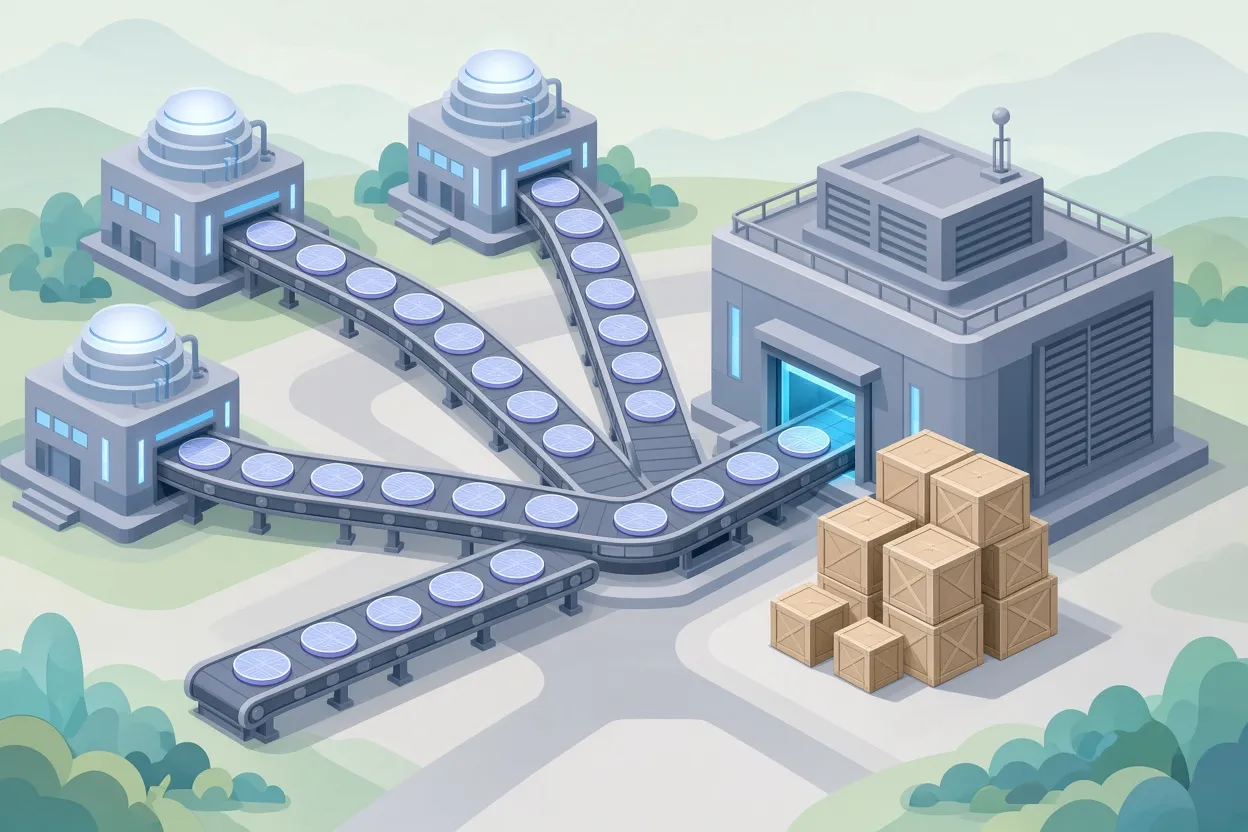
▲ Double-counted chip demand across vendors
Altman was careful to separate this forecasting problem from the underlying trend. He said long-term demand for computing and for physical data center expansion remains solid. What moves around is the bottleneck. He listed several that have shifted over time:
- Memory modules
- Server rack assembly
- Power available to data centers
- Small components, such as printed circuit board (PCB) laminate or niche passive parts, whose shortages can temporarily halt server deployment
His conclusion was that hardware delivery depends on a very large and complex supply chain, and that the balance of supply and demand from quarter to quarter is extremely hard to predict.
Data center opposition and the 'Team Human' argument
Communities across political lines have recently voted down local data center proposals. Altman traced that resistance to the way parts of the tech industry describe AI.
The pitch he criticized promises medical miracles such as curing cancer while asking people to give up control, agency and a voice in their future to autonomous AI. He mocked the vision of humans kept comfortably "like a Labrador" by benevolent machines and said ordinary people are right to reject it.
In his reading, opposition to data centers expresses a wider anxiety about human obsolescence, economic displacement and lost jobs. Data centers draw that anger because they are the visible, physical form of an abstract and intimidating technology.
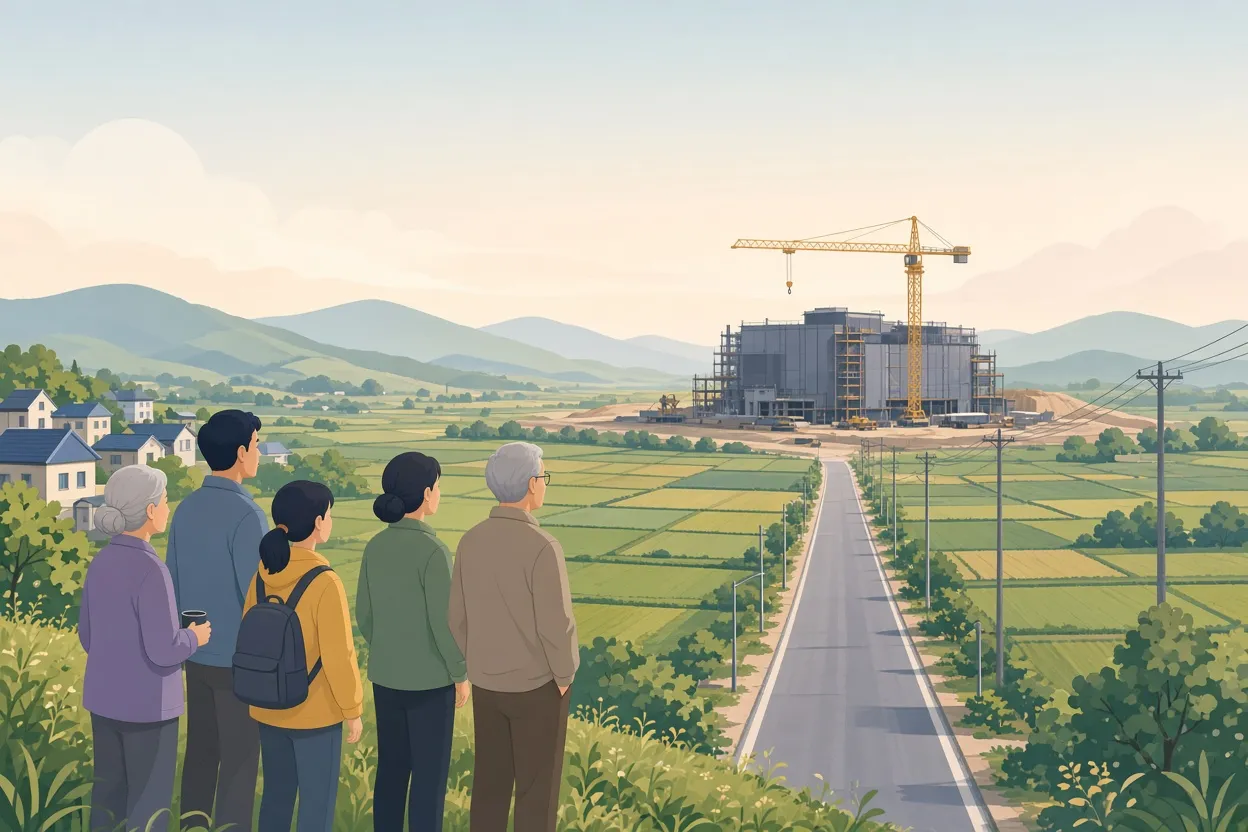
▲ Community distance from the data center buildout
Altman's answer is that the industry must commit, in both words and actions, to AI as a tool that amplifies people. He argued against handing societal decision-making to AI, whether suddenly or gradually, and said humanity must stay in command of its own future. When people sense that technologists are not on what he called "Team Human," he said, political opposition, local bans and regulatory hostility follow.
On the buildout itself, he expressed sympathy for residents who do not want a massive facility nearby. He noted that the United States is a large country with ample room to build away from communities that object, and pointed to strong public appetite for AI services as well as for streaming and internet services that also depend on data centers. He acknowledged that the current way developers engage local communities is imperfect and has to improve as infrastructure scales.
Debt, revenue and froth
Reports that the compute buildout leans heavily on debt have raised worries about a "house of cards." Altman's response rested on revenue. He said he has never seen revenue growth and healthy margins appear so quickly in any earlier technology shift, and he agreed that heavy borrowing would pose real risk without them. He added that the parties structuring this debt are generally sophisticated market participants.
He did not claim the market is free of excess. Like any boom, he said, this one carries speculative froth that will be corrected, along with wasted capital and poor decisions. His claim is narrower: the economic foundation underneath is strong.
How OpenAI builds and releases models
Altman described two commitments in OpenAI's approach.
First, the company rejects building artificial general intelligence (AGI), meaning AI with broad human-level capability, in secret inside an isolated lab. It prefers iterative deployment: releasing technology step by step so society can adapt as capabilities advance. At the same time, he said AI cannot be treated like ordinary software, and certain moments call for decisions a typical technology company would not make.
Second, he addressed recursive self-improvement, the idea of AI systems improving their own successors. Altman confirmed that OpenAI uses its existing models to speed up development of the next ones. He said the company does not run an automated loop in which a model is told to design its next version without human oversight. OpenAI could technically push further in that direction, he said, but it cannot do so safely today.
Security and politics
Altman acknowledged that frontier labs face constant espionage pressure, from reports of listening devices in meeting rooms to attempts to draw information out of employees. After years of scrutiny, he said, OpenAI has developed seasoned security instincts. He admitted its defenses are not perfect and that adversaries may have succeeded in subtle ways in the past. He described the company's stance as pragmatic centrism: neither extreme paranoia nor complacency, with security, model alignment and safety treated as connected operating disciplines.
On politics, he said his view has largely not changed since July 2025, when he described himself as politically homeless. He said he will work with whichever leaders Americans elect, hopes for a political platform that embraces technological optimism, and sees slight positive signals in both major parties. He noted that he last spoke directly with President Donald Trump at a China state dinner, a setting that leaves little room for detailed policy discussion.
Where Altman stands, and what to watch
| Topic | Altman's stated position |
|---|---|
| OpenAI IPO | Will happen at a future date; no timing given |
| Chip demand | Forecasts overlap across vendors; long-term demand is solid |
| Data centers | Sympathy for objecting communities; engagement must improve |
| Debt financing | Supported by fast revenue growth and margins; some froth exists |
| Self-improving AI | Models assist research; humans stay in oversight |
Altman closed on an optimistic note, pointing to nuclear fusion and cellular reprogramming as fields where AI-assisted science could have a major impact, and predicting that future generations will view living standards in 2026 as rough by comparison.
For readers following the sector, his remarks appear to point to a few practical habits. Treat any single chip vendor's volume forecast with care, since several may be counting the same buyers. Watch reported revenue and margins instead of day-to-day winner-and-loser narratives. For anyone building or communicating about AI, his message is to describe the technology as a tool that leaves people in control, and to engage communities before construction plans arrive at their door.