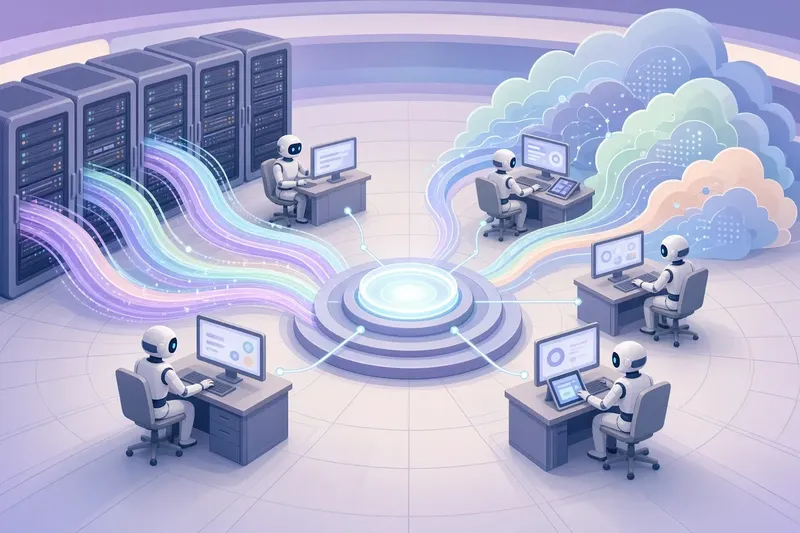
Mike Cannon-Brookes, co-founder and CEO of Atlassian, used his time at Web Summit to make two arguments about AI agents, software that carries out tasks on a person's behalf. First, agents will change what knowledge workers do far more than they will eliminate the jobs themselves. Second, better AI models do not by themselves make an organization more productive, because the limiting factors are how people work and how software is designed. Atlassian makes enterprise work software such as Jira and Confluence and is building agents into those products.
Where the gains are showing up so far
Companies are now building agents into core workflows, sometimes in small iterative steps and sometimes in large structural overhauls. Cannon-Brookes described the results plainly. Efficiency gains exist, but they are modest and smaller than the early hype suggested.
The clearer gains are elsewhere. Work quality is rising, meaning the standard output of business processes is getting better. Creativity is also growing as teams discover new kinds of projects and software they can now build.
One way to read this: a team that measures only hours saved may conclude its AI tools are underperforming, when the improvement sits in the quality and range of what the team produces. That is an interpretation of his remarks, not a measurement he offered.
Jobs: a change of content, not a disappearance
Cannon-Brookes began with a caution. He advised against believing anyone who claims to know what the labor market will look like in five years. With that caveat, he said he believes AI will on balance create far more jobs than it displaces, even as widespread restructuring alters existing roles. He also noted that outside observers often label workforce reorganizations as AI job cuts when companies are actually realigning for a different way of operating.
His main illustration is the bank branch. In the early 2000s, forecasts held that online and mobile banking would eliminate physical branches. Instead, he said, branches expanded in the United States and Australia over the past ten years because their function changed. Staff moved from handling basic cash transactions to complex customer service, advisory meetings and financial consultation. A branch job in 2026 has little in common with the same job in 2000.
He expects knowledge work to follow the same pattern. Software engineers, product designers, marketers and financial analysts will not vanish, but the way they carry out their work will transform completely. The balance between disciplines is still unsettled. He pointed to an industry debate in which a product manager predicted more product managers and fewer engineers, while an engineer argued the opposite.
A practical test for your own role
His remarks suggest three checks for judging whether a role is being removed or reshaped:
- Ask how the job must change, not whether it will exist. Leaders should work out how existing jobs need to transform before competitors that use AI well take market share.
- Watch peers, not models. He repeated the common saying that people will not lose a job to an AI model but to someone who has learned to do that job better with AI tools.
- Look at where human effort moves. Workers shift from procedural mechanics toward defining target outcomes, and their contribution centers on taste, judgment and rigorous evaluation of what the model produces.
Financial modeling shows the third point. A request for an advanced model now returns a result almost instantly. The analyst's core task becomes designing the tests that confirm the model is correct. People work at a higher level of abstraction, setting goals, constraints and feedback loops instead of executing each step by hand.
Why better models do not turn directly into productivity
Cannon-Brookes identified the main obstacle as talent, not technology. Retraining instincts and long-held assumptions about how to solve problems is hard, and that cultural shift is a steeper barrier than connecting a model to a product.
The second obstacle is interface design. Models have advanced quickly, but the way people interact with software has lagged. Large productivity gains require workers to adjust their mindset while software moves beyond traditional web forms to accommodate agents.
He also rejects the label "AI product." In his framing, Atlassian sells technology and workflow solutions, and AI is an ingredient in them, comparable to mobile connectivity or the internet. He forecasts that companies branding themselves around a dot-ai suffix will fade as AI becomes a baseline expectation in all software.
About a month before Web Summit, at its conference in Amsterdam, Atlassian announced the Agentic Multiplayer Protocol, or AMP. It combines emerging standards, including Anthropic's Model Context Protocol (MCP), which connects agents to tools and data, and agent-to-agent (A2A) communication, under the user interfaces of Jira, Confluence, Loom and Atlassian Service Collection.
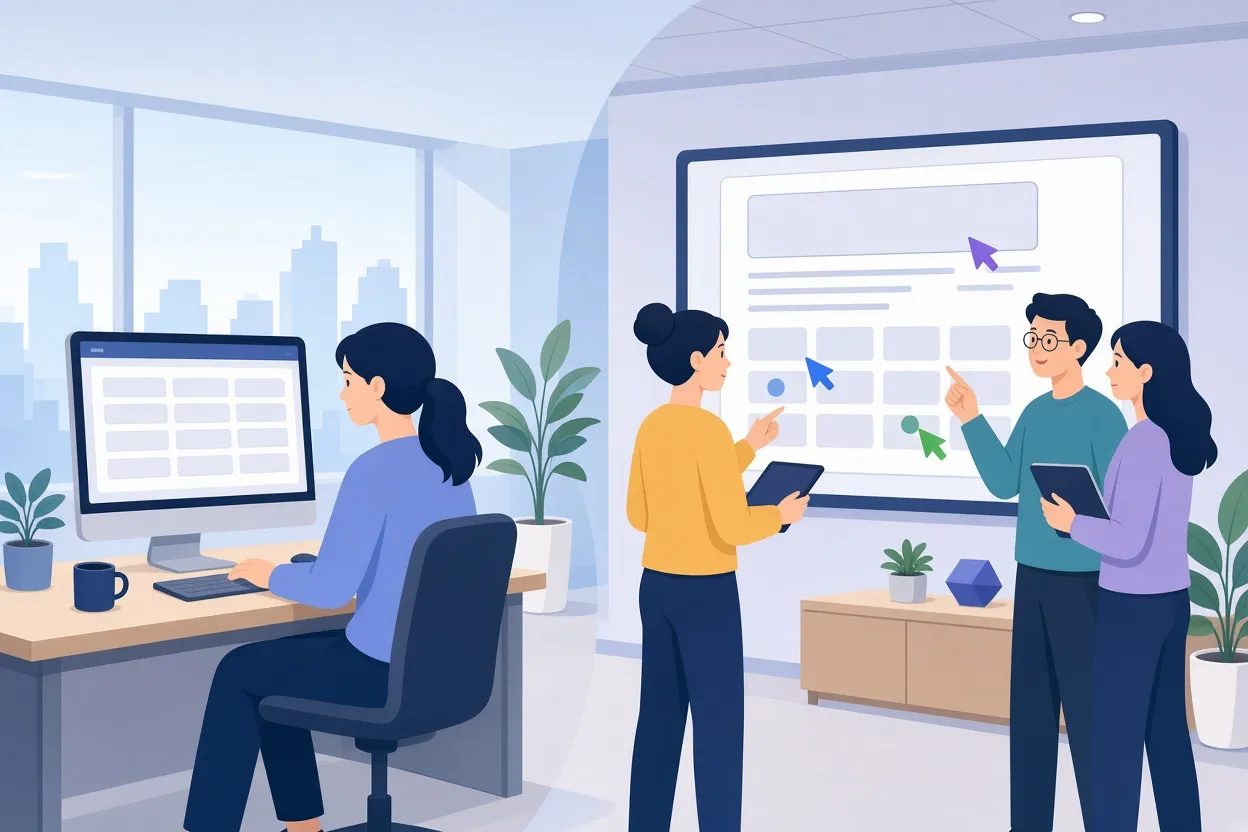
▲ From solo web forms to shared work with agents
Four ways people work with agents
Cannon-Brookes argues that one-on-one text chat is not the primary pattern for enterprise productivity. He described several modes of interaction.
| Mode | What it looks like |
|---|---|
| Chat | Back-and-forth text between one person and one model |
| Delegation | Asking an agent such as Claude to write code and open a GitHub pull request, a proposed code change, on the user's behalf |
| Multiplayer collaboration | Several agents from different vendors working at the same time alongside several human teammates inside an application such as Confluence |
| Pairing and delegated attendance | Briefing an agent with explicit parameters and sending it to attend a meeting or represent an employee asynchronously |
Delegation raises new questions about attribution when an agent does work in a person's name. For collaboration, his mental model is that the person and the agent sit on the same side of the table, working toward a shared outcome and crafting a document together.
Each mode needs its own interface. In Loom, agents draft videos or analyze recordings and provide commentary. In Confluence, the interaction is real-time shared editing of a document. A single chat box does not fit all of these.
The context layer under the applications
Beneath Atlassian's applications sits the Teamwork Graph, a layer that supplies agents with company context. Work on it began eight years ago with about five engineers, and roughly 1,000 engineers work on it today.
The graph maps objects and the relationships between them: documents, spreadsheets, project goals and outcomes, emails, calendars, meeting transcripts, source code, data assets from platforms such as Databricks and Tableau, and physical office assets. The system reasons over this graph to answer search queries and chat requests. Outside coding agents reach it through a command-line interface (CLI) or an MCP server.
Cannon-Brookes said rich context reduces token consumption. Tokens are the units of text a model processes, and usage costs are counted in them. It also cuts cost, improves accuracy and speeds up tasks. The graph also indexes completed agent sessions and extracts memories, document links and lessons, so that later runs build on earlier ones.
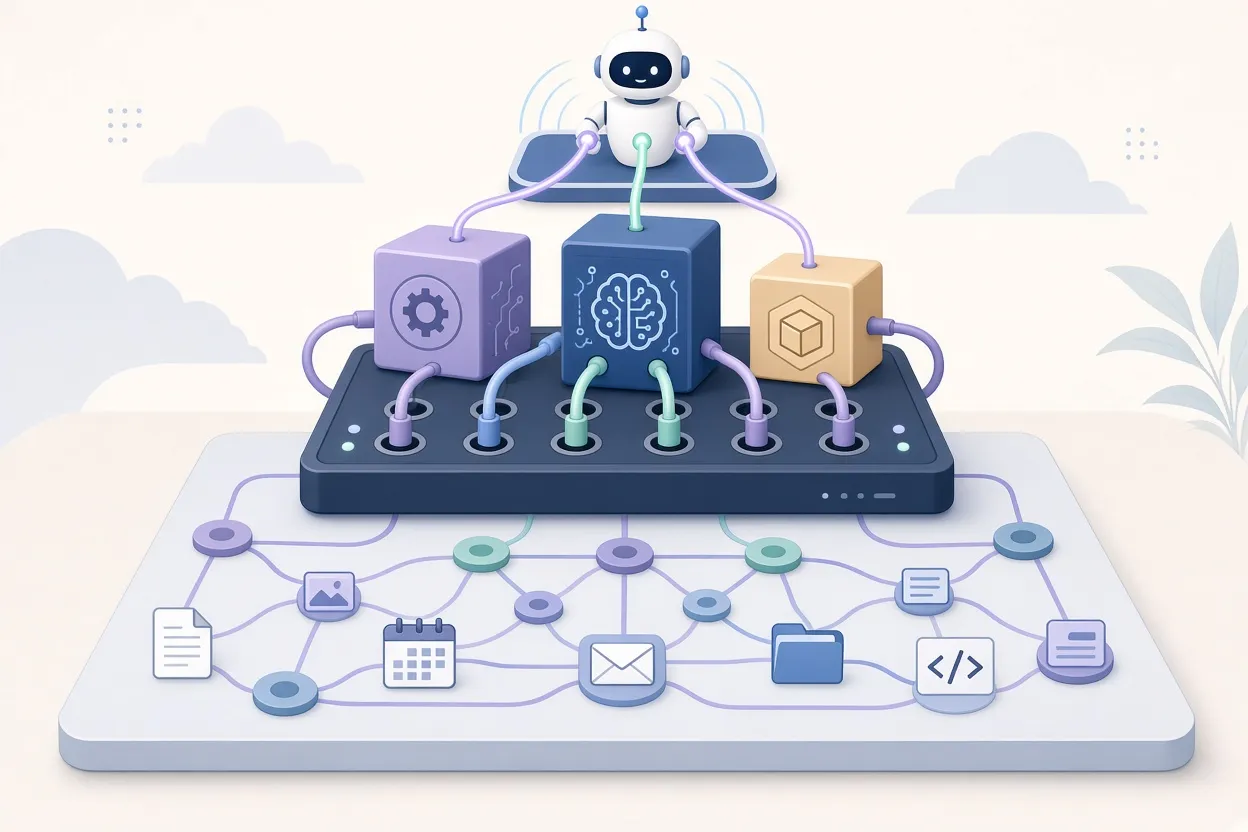
▲ Context layer, model routing and the agent
Blending models instead of chasing the newest one
Cannon-Brookes does not consider models pure commodities, because they differ in strengths and cost. He also cautions that moving automatically to the newest and largest frontier model is often slow, expensive and counterproductive.
Atlassian relies on model blending, investing significant time to learn which model handles which task best. Harnesses, the software layer that runs on top of models, matter because they route work and switch between providers. In his account, the large advances come when context, harnesses and the full application stack improve together, not from raw model gains alone.
Model labs and enterprise software
Model makers are moving into applications, with Anthropic offering Claude Code, Claude Cowork and Claude Design. Microsoft CEO Satya Nadella has remarked that working with AI models leaves breadcrumbs that let labs learn enterprise workflows and launch competing products.
Cannon-Brookes looked to history for perspective. Similar fears once surrounded Microsoft, Google and Amazon. He argues the basic rules of enterprise software still apply: focus, execution and products aligned with customers. He counts compliance, complex workflows at large scale and sustained interface investment as Atlassian's advantages.
On vibe coding, the practice of generating code quickly with AI models, he noted that cheaper code helps incumbents too. Models such as Claude Opus, Claude Haiku, Google Gemini and open-weight models from Meta and Mistral are available to every vendor at the same pace.
"Headless is brainless"
Headless software drops the visual interface and leaves all interaction to agents. Cannon-Brookes called that approach brainless and a path to death for software products, even though Atlassian runs a widely used MCP server and CLI tools for agents.
His reasoning: computing moved from terminals to windows and menus because terminal work is inefficient for people. He cited recent industry survey data indicating that mainstream knowledge workers strongly dislike working only through text prompts and command lines. He expects interfaces that adapt dynamically, but he warned that software cannot rearrange itself unpredictably on its users.
Key points and what to do
The central message is that agents change the content of work, and that organizational habits and software design, not model quality, set the pace of the gains. These views come from the head of a company that sells collaboration software, and readers can weigh them with that in mind.
For readers applying this to their own work:
- Define outcomes, constraints and acceptance criteria before asking an agent to act.
- Build verification skills. Set tests for AI-generated work such as financial models or code before relying on it.
- Treat adoption as a change-management and training effort, not only a software purchase.
- Match models to tasks instead of sending everything to the flagship model.
- Give agents structured company context, and keep what they learn from each session.
- Keep investing in visual interfaces, and keep navigation stable when testing adaptive ones.