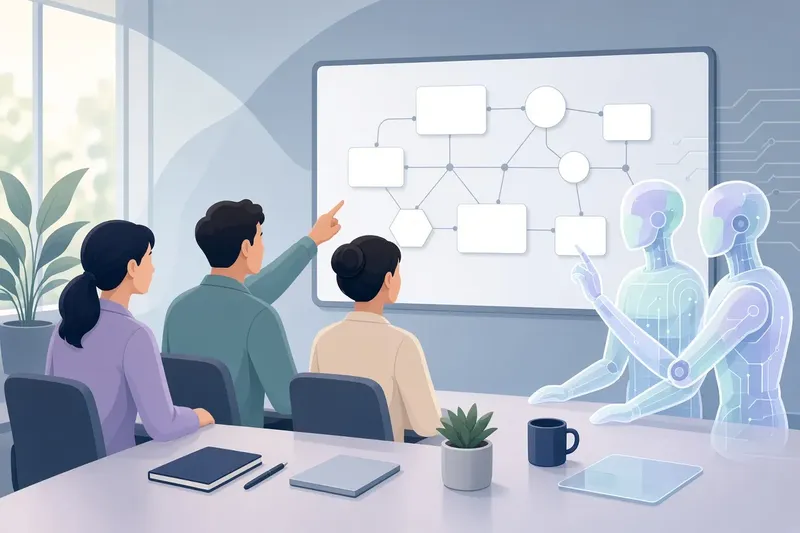
IBM's $11 billion acquisition of Confluent rests on a specific diagnosis: enterprise AI agents, software that carries out tasks on a person's behalf, are held back less by how capable the models are than by how current their data is. Shaun Clowes, general manager of Confluent and Data at IBM, describes Confluent as IBM's real-time, continuous data foundation, the layer that feeds live information to AI models and operational agents across a company's systems. His argument also explains why so many corporate AI projects look strong as a proof of concept, a small trial that tests whether an idea works, and then stall before they reach production.
Why IBM wanted a streaming data company
Confluent is a data streaming platform. Streaming moves records between systems continuously as events happen, instead of in scheduled batches. Clowes calls the combination with IBM a natural and complementary fit, pointing to IBM's multi-decade history of turning emerging technologies into competitive advantages for businesses.
By his account, organizations adopting generative AI need foundational assets that include comprehensive access to their data, secure hybrid deployment options (hybrid meaning a mix of a company's own infrastructure and cloud services), and open ecosystems. Confluent fills the data role. The acquisition brings real-time event streaming into IBM's broader AI operating model and its work with corporate customers. The stated goal is to turn fragmented, siloed data into active data that feeds AI models and triggers autonomous business workflows.
What agents cannot see
Clowes describes the traditional enterprise as two-sided. On one side sit systems of record, such as ERP and CRM software, which execute transactions. On the other side sit analytical systems, which produce reports about what already happened. People have always bridged the two. A worker reads a report, decides what to change and types the change into an application.
Agents break that pattern. Clowes frames an agent as software operating software, working continuously and without sleep. To act well, it needs instant awareness of the organization's current operating state. A large language model, the kind of AI system that powers these agents, gives an agent strong reasoning ability. But the agent is effectively blind to anything outside the data it has been handed.
Ten minutes is already too old
The practical consequence is that batch data fails. If an agent works from information that is ten minutes or an hour old, Clowes says, it makes flawed decisions because the real world has moved on. He points to three situations where stale information invalidates an automated action:
- A customer service agent helping a traveler who missed an airline connection
- An insurance agent reviewing policy details, exposures and a claim
- A banking agent handling payment verification and account transactions
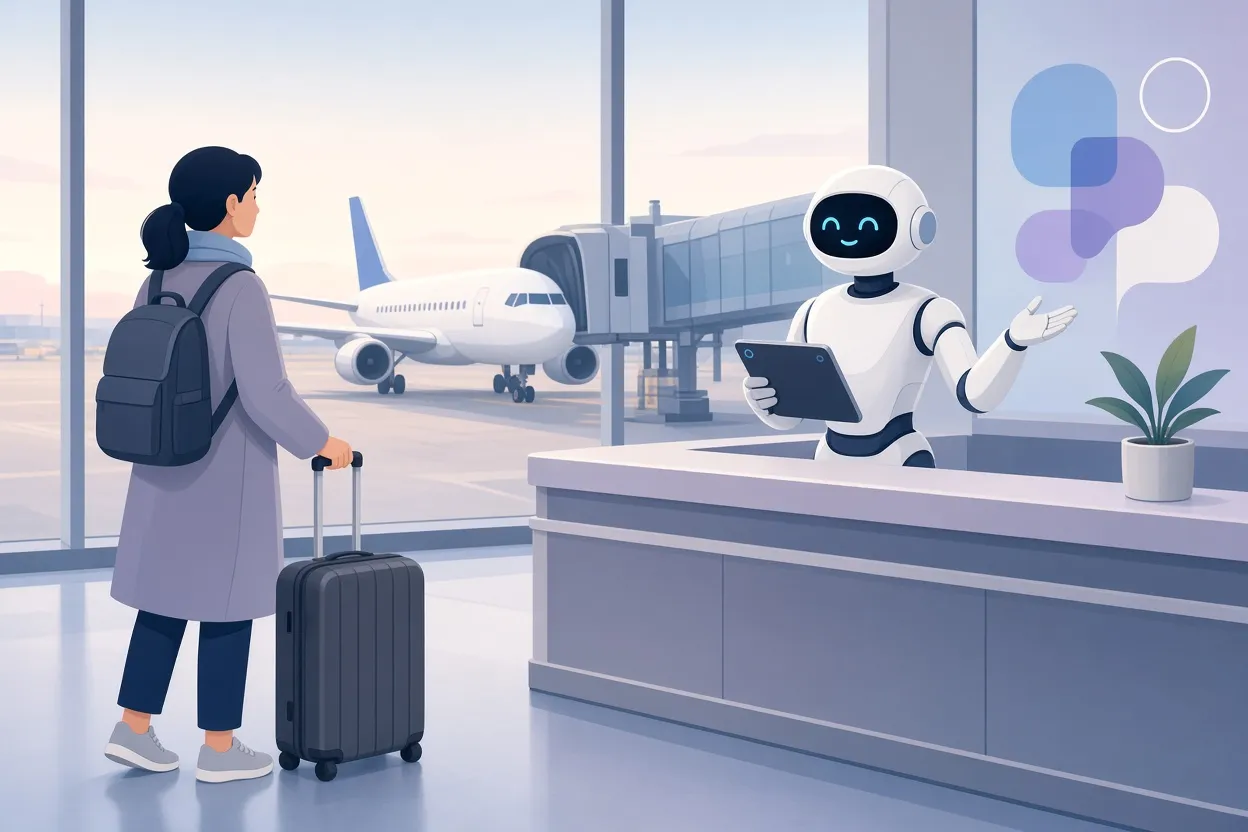
▲ An agent acting on stale data
Real time means state, not only speed
Clowes makes a distinction that is easy to miss. Real-time data is not just about low latency, the delay before information arrives. It represents the living state of the enterprise: inventory, machinery, logistics and personnel. In a logistics operation, that state includes active delivery fleets, staff allocations and vehicle status. In a manufacturing plant, it covers live machine performance, ingredient levels and stock-keeping units.
Scale sharpens the problem. When thousands of agents act independently, each action changes the system's state at once. Every other agent then needs to know about the change immediately, and that is the job a streaming architecture performs.
Why pilots stall before production
Clowes sees enthusiasm for AI across industries, along with a sobering gap between that excitement and successful production deployments. Large language models let a company rent high-level intelligence, so building an impressive proof of concept has become remarkably simple.
The trouble is that prototypes succeed under lab conditions. Teams simulate ideal data availability and assume that actions will flow smoothly across corporate boundaries. When a company tries to scale the same idea to hundreds or thousands of agents, it runs into the technology it actually owns: legacy mainframes, modern cloud services, hybrid deployments and a constantly growing set of specialized tools.
Clowes warns that companies can fool themselves here, treating an easy prototype as proof that production will be just as easy. His position is that none of this complexity can be wished away, and no company can simplify its environment overnight. Legacy and hybrid systems will persist alongside new platforms. The workable path, as he presents it, is data streaming infrastructure that bridges existing assets and modern AI services.
One way to read this argument is that it moves the bottleneck. If intelligence is rentable, the scarce ingredient becomes the plumbing that tells an agent what is true right now.
The human speed limit
Clowes traces enterprise AI through three phases and judges that adoption is still at an extremely early stage.
| Phase | How it works | Limit |
|---|---|---|
| Chatbots | A person and a machine explore a problem space together | Conversation only |
| Copilots | A person works alongside an AI agent, as developers do with Claude Code | Paced by the person's speed and attention |
| Autonomous processes | Whole business processes run end to end without a required human step | Depends on live data and reliable systems |
His central claim concerns the middle row. A copilot keeps a person in the workflow, an arrangement often called human-in-the-loop, so the work can only move as fast as that person can react and think. Clowes argues that this caps how much a copilot can raise the operating tempo, or clock speed, of a business. Customer service desks, where human staff still verify AI output, illustrate the ceiling.
The larger prize, in his view, is automating hundreds of mission-critical processes at enterprise scale, such as claims processing, product delivery and staff scheduling, without a human bottleneck in each one.
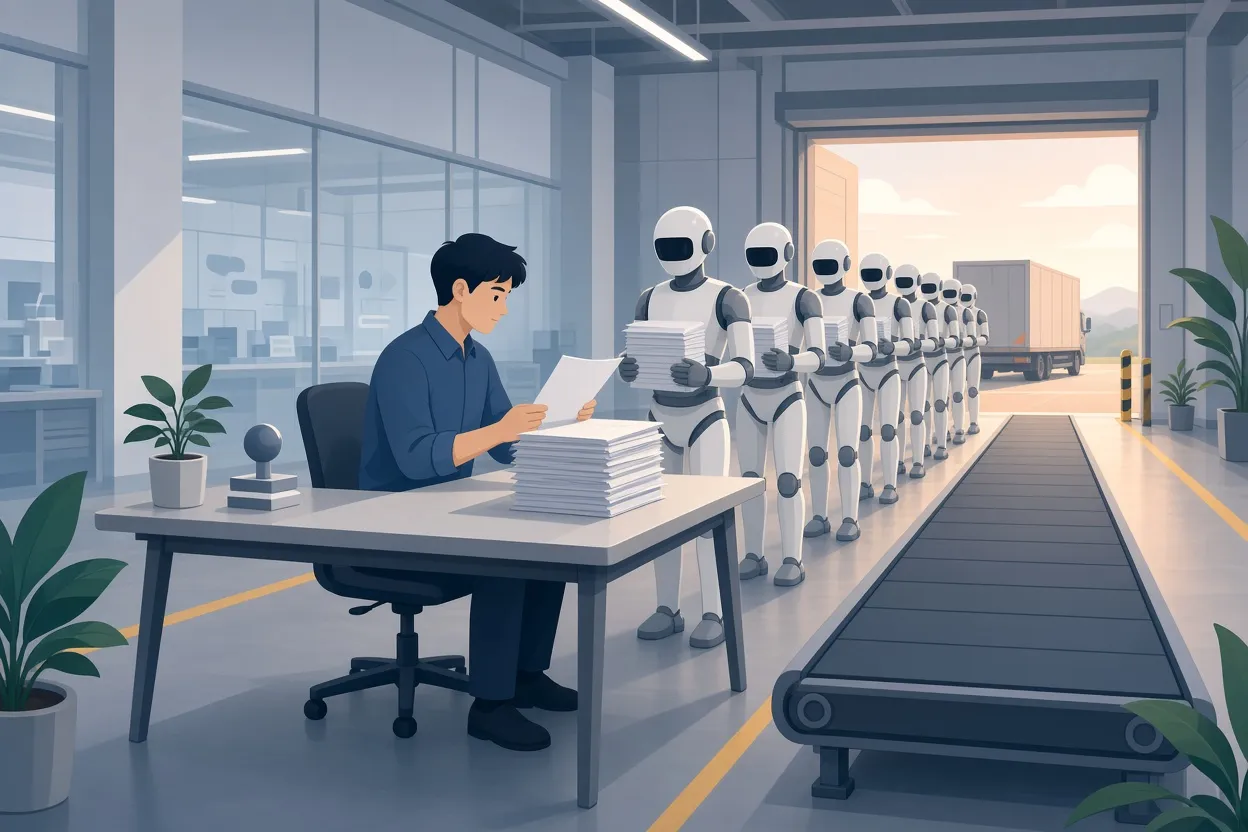
▲ Human review as the pace limit for AI work
Five years, not overnight
Clowes does not expect that shift to arrive quickly, and he gives several reasons.
First, technology diffuses in stages. Software engineers and technical builders adopt agents first and use them to create tooling. Broader business operations follow later, once that knowledge spreads.
Second, the real world is messier than the vision. Enterprises hold scattered data repositories where records are created, altered and moved across fragmented legacy silos. Clowes cautions that this makes the transformation far harder than a roadmap presentation suggests.
Third, companies have long relied on people to smooth over gaps and weaknesses in their processes. Replacing that quiet human repair work with software is complex.
He cites Bill Gates's adage that people overestimate what changes in two years and underestimate what changes in ten. For AI, Clowes suggests the longer window may compress, with about five years as a plausible horizon for deep impact. He treats autonomous operation at scale as inevitable, while stressing that the path there requires sustained foundational work. That timeline is his forecast, not a settled fact.
IBM's four-pillar operating model
At its TechXchange conference in Atlanta, IBM presented an end-to-end enterprise AI operating model. Clowes argues that a standalone model delivers limited value without a structure around it that turns technical potential into business results. The model he outlines has four pillars:
- Comprehensive understanding of the organization's data
- Safe orchestration and execution of agents at scale, where orchestration means coordinating many agents and their tasks
- Agent management with observability, the ability to monitor what agents are doing and why
- Reliable systems that let agents act on external enterprise tools
IBM's aim is to supply these building blocks together so that organizations can deploy autonomous AI into production workflows reliably.
What to take from this
The case IBM makes for its Confluent purchase comes down to three points. Agents reason well but see only the data they receive. Data that is minutes old can already be wrong in fast-moving businesses. And the gap between a working prototype and a production system is mostly a gap in data flow and legacy integration.
For teams planning agent projects, the practical steps that follow are:
- Treat real-time data as the full operating state of the business, not as a messaging pipe.
- Plan for legacy, hybrid and siloed systems from the start, and do not assume a successful proof of concept will carry into production unchanged.
- Aim automation at whole workflows, not only at speeding up individual tasks with chatbots.
- Build monitoring and management safeguards before granting agents the ability to act on tools on their own.
- Place AI inside a clear operating model that covers data, governance, orchestration and tool access.
Fully autonomous work without human oversight remains a multi-year goal by Clowes's own estimate. The groundwork he describes, live data and systems that agents can read and act on safely, is work a company can begin now.