A business can put dozens of AI agents to work without asking one system to run everything. In this operation, roughly 36 agents handle development tasks through Linear, while separate tools support content production, email, meetings, and administration. The more consequential design choice may be where the work ends up: the company runs its course platform and core data on infrastructure it controls rather than placing every workflow inside a rented business platform.
One task board for parallel development
Linear is the central board for development work. Agents receive backlog tasks, build features, prepare code changes, run automated quality checks, and move work toward deployment. That shared task record matters when approximately 36 agents work on separate initiatives: it gives the operation a place to see what was assigned and how far each task has progressed.
The coding setup draws on Claude Code, Codex, Kimi, DeepSeek, and Gemini. These are not all assigned the same kind of work. OpenRouter routes requests among language models, with Gemini 2.5 Flash used for high-volume, routine tasks and Claude Sonnet 4 used for more demanding reasoning and architecture. A language model supplies the reasoning behind a task; an agent uses a model within a workflow that can also involve tools and assigned work.
CMUX helps coordinate the agents’ terminal sessions. A terminal is a text-based interface for running software commands, and managing multiple sessions lets parallel coding work remain organized. The desktop setup runs on a Mac and uses Alfred for keyboard-driven shortcuts and automation. That hardware choice reflects this operation’s workflow preference, not a requirement demonstrated for every business.
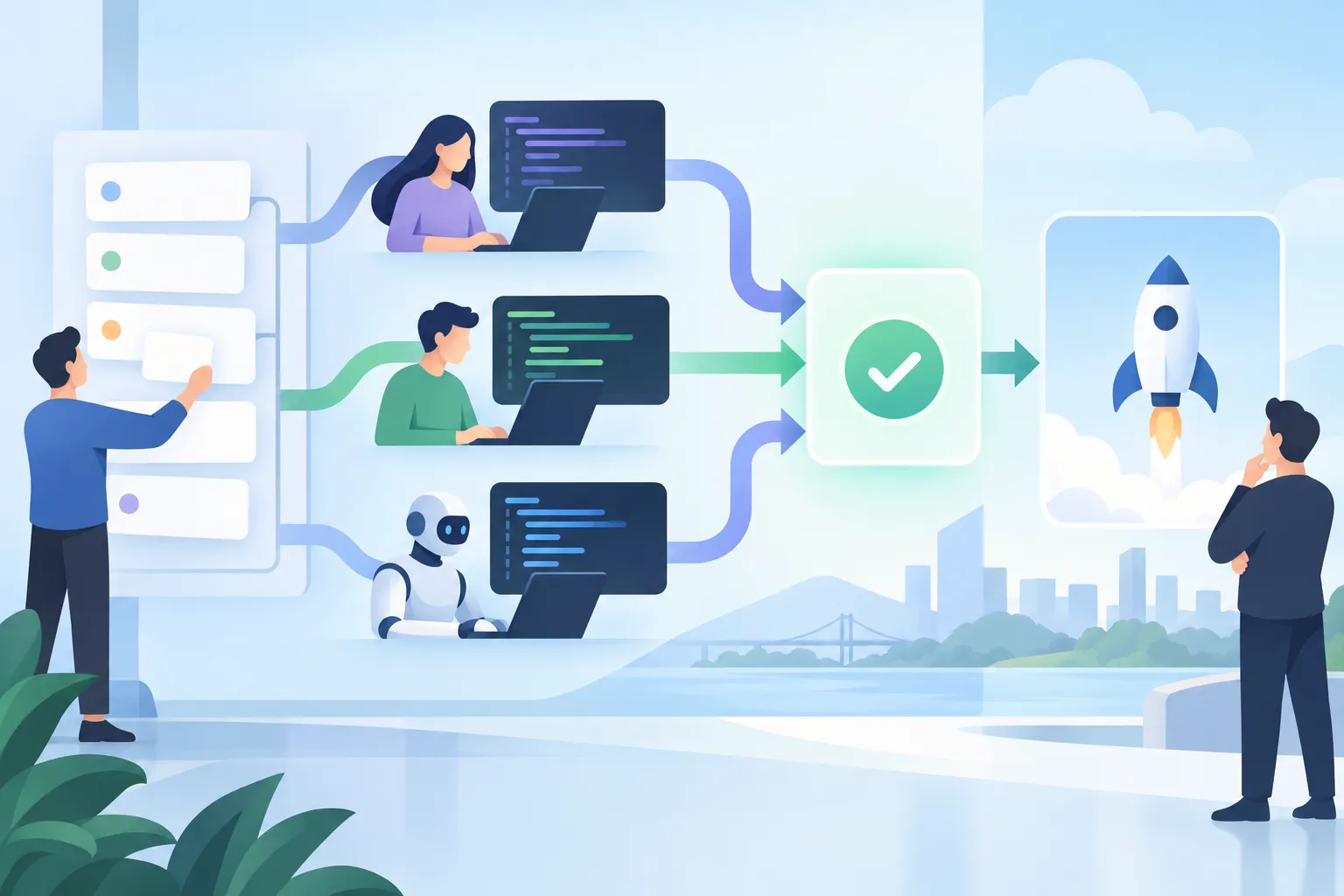
▲ Parallel coding with a review gate
The task board also marks a useful limit. Automated testing and a deployment path do not, by themselves, decide which features a client needs or which results should be accepted. Keeping those decisions visible to people is a practical way to use parallel agents without treating task completion as the same thing as business approval.
Keeping the application and data under direct control
The company runs a custom course platform for training and community resources instead of making a rented platform the center of its business. Its concern is dependence: if access to a subscription platform ends, the workflows, customer funnels, and records kept there may become difficult to use. Self-hosting is its answer to that concern, as well as a way to make custom integrations and changes without waiting for an all-in-one platform to add them.
Railway hosts the applications on virtual private servers, or VPSs: rented server environments used to run software. The setup also uses PostgreSQL, a database for structured records, on Railway. Cloudflare handles DNS, performance, and domain protection, and stores images and videos separately from the primary application servers. Porkbun manages domain registration. Resend handles transactional and outbound email.
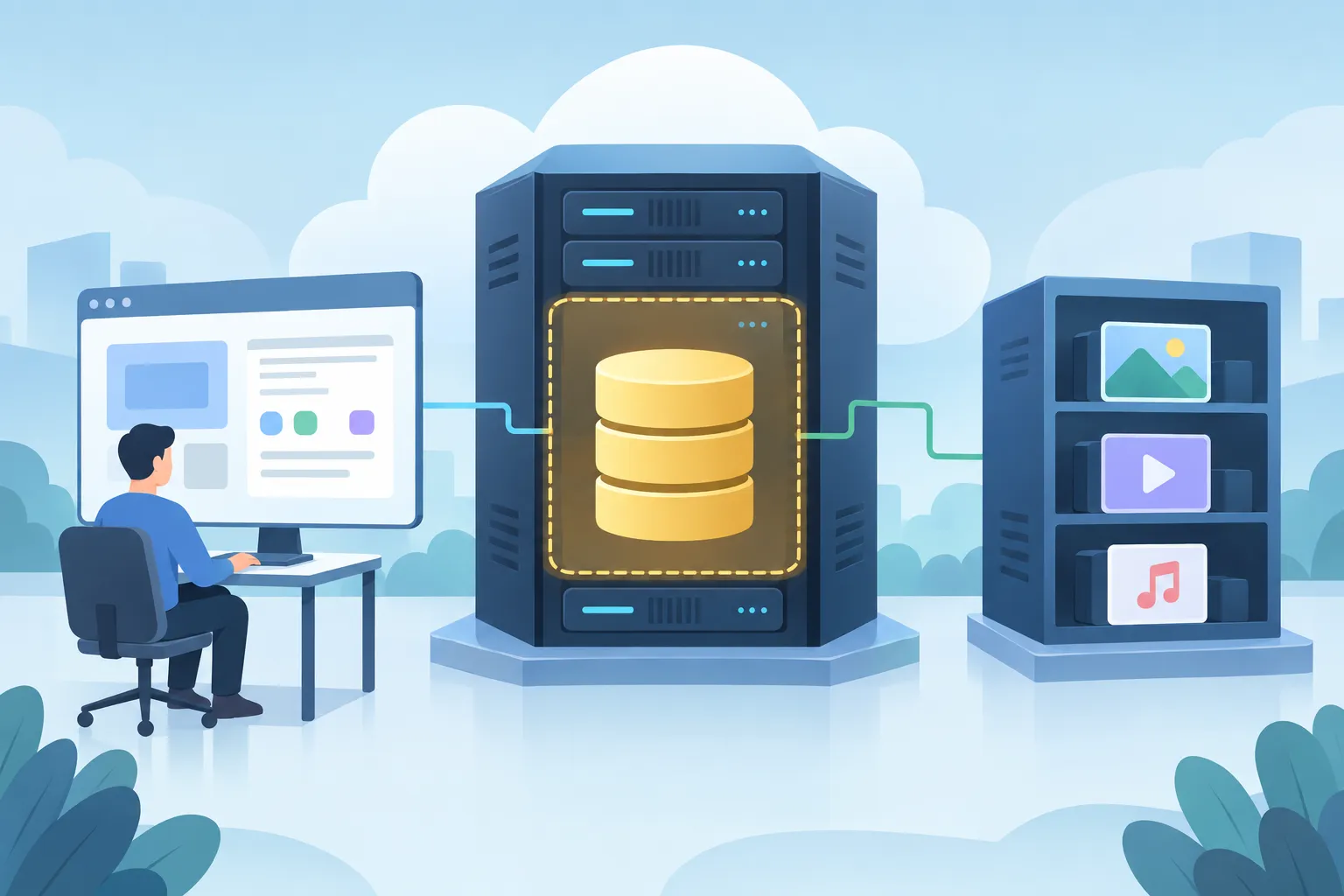
▲ Core business data and separate media storage
This split separates records organized into fields and tables from large media files. It also identifies what the company considers its core: the application, database, and business workflows. Self-hosting does not remove the need to make decisions about that core. Someone still has to choose what data the application keeps, which integrations it permits, and who is responsible for changes.
The development pace cited for this approach reaches up to 60 custom features in a week for one client. That is a result from this operation, not a general speed target for companies that adopt the same tools.
Separate tools for production and distribution
Content work follows a different path from software development. CAM automates short- and long-form production, while Kie.ai supplies generated image and video assets through tools including ChatGPT Image 2 and Seedance 2.0. Streamlabs supports broadcasts. Zernio distributes posts across the company’s social profiles, and Cloudflare stores media files used by its applications and pages.
Gling.ai handles a narrower but recurring editing task: it removes pauses, bad takes, and filler words from raw footage. The company adopted it when it was producing a new course each week. CapCut remains available for occasional manual visual adjustments. This division keeps repetitive cleanup automated without assuming that every creative decision belongs to an AI tool.
The same distinction shapes its approach to AI avatars. HeyGen is not part of the daily production stack, despite an active subscription. The operation favors learning how to make original videos before relying on avatars to stand in for that work. That is a production judgment, not a claim that avatar tools cannot be useful elsewhere.
Assistants for email, meetings, and daily work
A custom executive AI assistant drafts and sorts communications, manages calendar work, connects to content pipelines, and prepares end-of-day briefings. Its estimated operating cost is about $20 per month in this setup; that figure describes this case, not a price others should expect. Himalaya, a command-line email tool, gives assistants a way to work across email accounts, including Gmail and Outlook, without making each inbox a separate manual task.
Meeting work is split by purpose. Fathom AI records client onboarding and planning calls, then produces summaries and action items; its stated cost here is $20 per month. Granola AI provides transcription and in-call sales guidance. In one consulting case, its pricing guidance preceded a decision to double a quoted price. That outcome belongs to that case and does not establish what another business could charge.
For the people directing these systems, Wispr Flow turns spoken instructions into text. The aim is to supply detailed context to agents without relying on short, typed prompts. Obsidian stores working knowledge, and 1Password centralizes credentials. These tools support the human side of the operation: explaining requirements, finding information, and managing access.
What to take from this setup
The stack divides work by responsibility rather than searching for a single tool to do it all. Linear tracks agent development, specialized applications handle media and meetings, and the custom platform keeps core records close to the business. The 36-agent count is less instructive than the boundaries around those agents.
For a business considering a similar approach, start by mapping three things:
- Identify which tasks can be assigned and tracked, and which outcomes need a person’s review.
- Separate structured business records from media files, then decide which systems should hold each.
- Choose specialized tools only where they solve a recurring job, such as editing footage or summarizing calls.
That sequence puts human priorities and data decisions ahead of the tool list. Agents can carry out substantial work, but the business still has to decide what work matters and whether the result is ready to use.