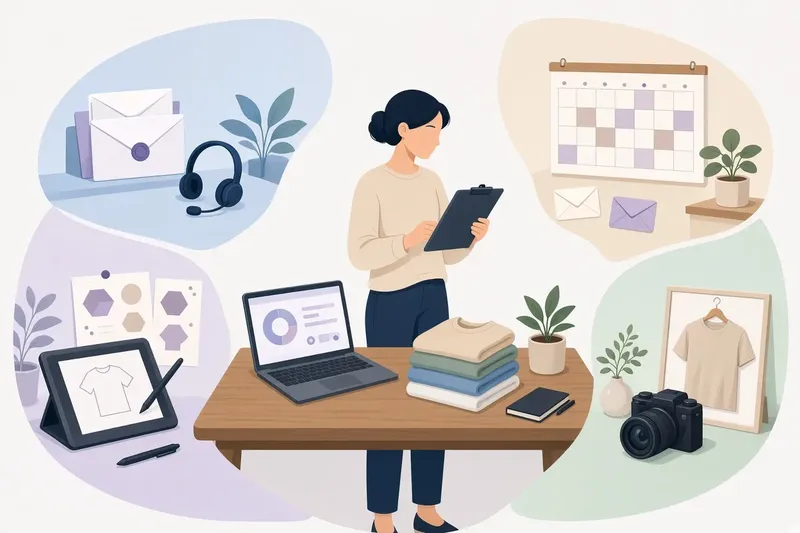
Napster, the brand that once pushed the music industry from $18 to $20 albums toward on-demand streaming, has set its music business aside and rebuilt around lifelike, video-first AI agents. CEO Jon Acunto frames the new company with a four-word framework, Capture, Learn, Act, Own, and argues that the real contest in enterprise AI is not about which model is smartest but about who ends up owning the customer relationship and the compute behind it.
What Napster dropped and what it kept
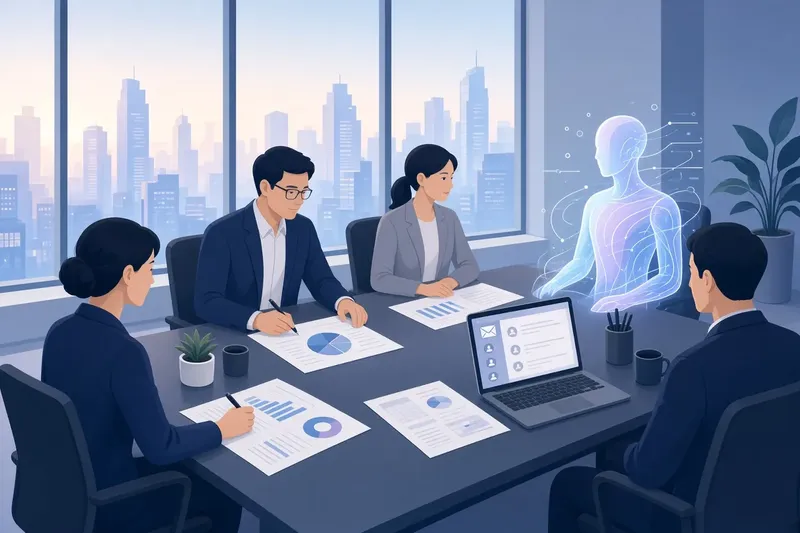
The visible change is the product. In January, ahead of CES, Napster paused its conventional music streaming focus and announced an AI agent platform. The agents are realistic visual avatars, trained on a company's product line, brand voice and domain expertise, that hold one-on-one conversations with shoppers on a website or in a store. The company calls this move a shift from streaming music to "streaming intelligence."
What appears to have survived the pivot is the company's self-image as a disruptor that removes intermediaries. Acunto draws a straight line from the late-1990s unbundling of albums, when listeners who wanted one radio hit had to buy a whole disc, to a present in which he says large platforms position themselves between businesses and their audiences. He acknowledges that streaming services like Spotify delivered real convenience, but argues their economics left artists shortchanged, and he presents that as a mistake the AI era should avoid repeating.
The technical foundation also carried over. After the company was acquired from Algorand, leadership chose to build on seven years of core architectural development rather than start from scratch, and Napster later bought TouchCast, whose founder had spent more than a decade on edge-computing architecture for AI.
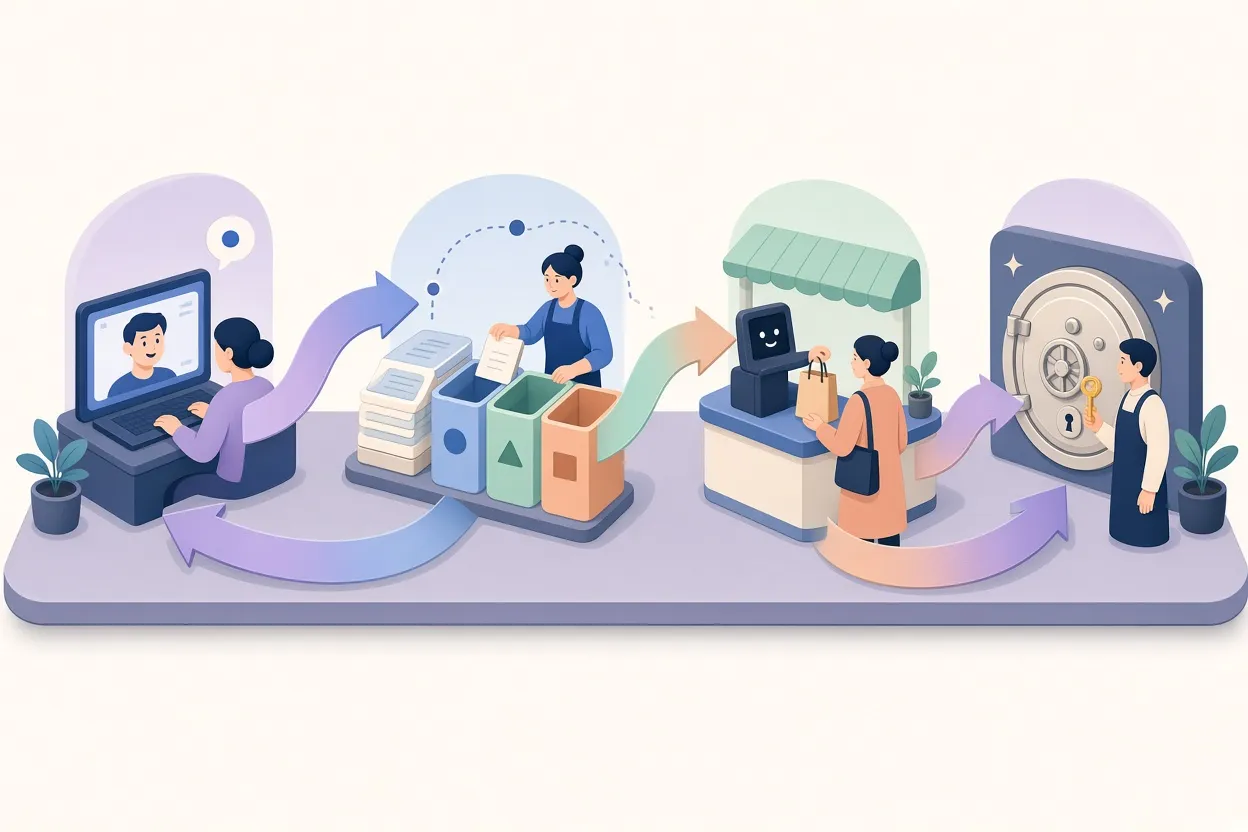
The Capture, Learn, Act, Own framework
▲ The Capture, Learn, Act, Own framework
Napster walks enterprise clients through four sequential stages. Acunto's recurring example is a clothing retailer such as Gap.
| Stage | What happens | Example |
|---|---|---|
| Capture | A video agent on the website greets visitors and asks real questions | Style preferences, sizes, colors, when the shopper plans to buy |
| Learn | The business analyzes first-party conversational data for actionable insights | Replacing generic "customer-centric" statements with concrete answers |
| Act | The agent uses accumulated intelligence to recommend and assist in real time | In-store hardware recognizes a returning online shopper |
| Own | The company keeps the data, the models and the compute | Agents run as an API layer over the client's own infrastructure |
Two details stand out. First, Acunto claims that almost no e-commerce sites today qualify their traffic through conversation, which is why he sees the Capture stage as the largest untapped opportunity. Second, the Act stage extends into physical retail through proprietary hardware units called Station and The View. When a shopper who talked to an agent online walks into a store, the in-store unit is meant to recognize that profile and continue the same conversation, joining digital discovery and in-person shopping into one thread.
The Own stage is the one Acunto calls the most important. His warning scenario is a company that outsources Capture to Meta, hands Learn to Anthropic or OpenAI, and keeps only Act in-house. In his view, that company has effectively given away its customer intelligence and, with it, its competitive identity. He describes Napster's software as a neutral interactive layer that sits on top of any foundation model, including those from OpenAI and Anthropic, while the business retains 100 percent ownership of its data and intellectual property.
Why edge compute and ownership are the moat
Napster's enterprise offering runs natively inside Microsoft Azure and Azure AI Foundry. Acunto says that of 17 companies with native Azure integration, Napster is the only agentic AI platform, and that the platform operates purely as an API on top of a customer's existing data architecture, which he presents as the guarantee of full data sovereignty. He also places Napster alongside Microsoft and NVIDIA in advocating that proprietary models run locally on edge compute and AI laptops, and he credits NVIDIA CEO Jensen Huang's push for private compute and model-sharing ecosystems as a counterweight to centralized cloud control.
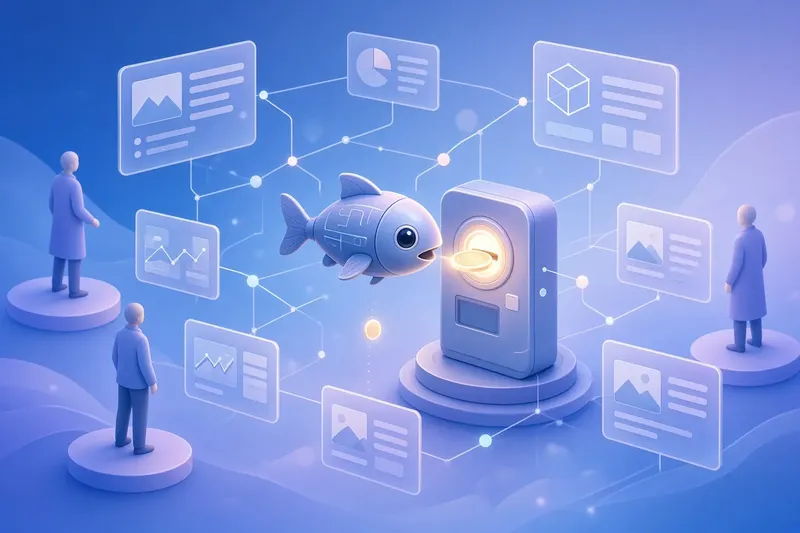
The business case for edge compute is price. Napster charges $0.01 per minute for real-time conversational video agents, against what Acunto describes as an industry norm of $0.25 per minute for cloud-only competitors. The explanation he gives is the TouchCast portfolio: patents filed in 2018, 2020 and 2023 cover rendering frames and orchestrating the agent on the client device instead of in cloud clusters, which he says cuts compute costs sharply. He also suggests that rivals trying to copy edge-based interactive video will run into those patents, a claim readers should treat as the company's own assessment.
The same logic drives his unit economics for customer conversations:
- A ten-minute agent conversation costs roughly $0.10.
- A single website visit acquired through advertising costs roughly $1.00.
- In those ten minutes, a business can learn favorite colors, family size, product preferences and the reason a visitor did not buy.
Acunto argues that this kind of zero-party data, information customers volunteer directly, is either unavailable from data brokers or unaffordable at that price, and that because the business owns it, the asset compounds as it is appended to customer profiles over time.
What the agents have done so far
▲ Formula 1 ticketing agent adding VIP tickets
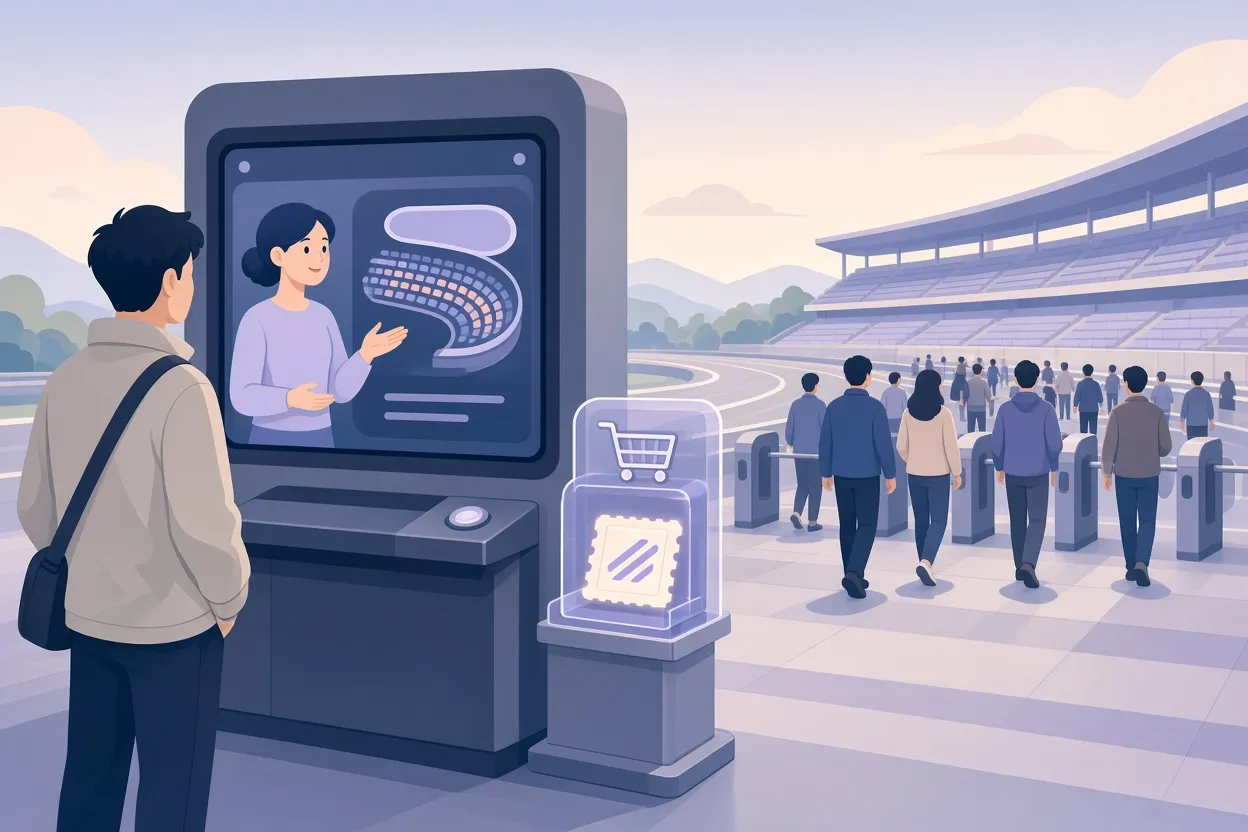
The most concrete deployment Napster cites is a test around the Formula 1 race at Spa-Francorchamps, also shown at Microsoft Build. When fans arrived at the ticketing portal, an AI concierge greeted them and took over navigation, discussed ticket tiers and VIP packages, and, once a fan decided, configured the selection and placed VIP tickets directly in the cart. Acunto says the test showed far less drop-off during checkout than self-serve browsing, and he notes that the client agreed to let the results be shared, which he says is unusual because many enterprises keep agent conversion data private as a competitive edge.
The broader pitch rests on familiar funnel math. Typical e-commerce sites convert 3 to 5 percent of paid traffic, meaning 95 to 97 percent of visitors leave without buying. Conversational agents, in Napster's framing, exist to engage that departing majority and find out why they left. Acunto also reports that early client testing shows interaction and conversion metrics rising by a factor of 10 to 100 over static layouts and text boxes. These are company-reported figures from early tests, not independent benchmarks, and the Spa result is a single case.
Scale claims include more than 2,000 enterprise organizations worldwide using the technology through Azure. On the consumer side, the Napster app serves as a sandbox where users can talk by voice or text with tens of thousands of discipline-specific agents in fields such as medicine, law, financial planning and music. Acunto says these agents train around the clock within a single vertical, keep distinct personalities and retain memory across sessions, recalling a conversation whether the user returns in hours or a week. He describes the goal as "Super Business Intelligence" aimed at customer lifetime value, explicitly not artificial general intelligence.
Why video, and how far the roadmap reaches
Acunto's argument for face-to-face agents over text boxes is that humans are audiovisual creatures who rely on expression, inflection and visual cues to build trust. He compares today's static e-commerce pages to early Facebook feeds full of dinner photos, which he says only became engaging once video arrived. On the uncanny valley, his position is that discomfort comes from poor execution and latency, or from asking a machine to perform human-only social behavior. An agent asked on a date should politely decline based on its business role, not pretend to have feelings. Avatar style, he adds, should follow the brand: a sleek realistic persona may suit Nike, while a plush mascot fits Build-A-Bear.
He frames the larger shift with a computing analogy. Agents, in his telling, are to today's fragmented websites and portals what Windows was to MS-DOS: a unified front end that sits ahead of individual software silos. He insists Napster's layer should work like the open World Wide Web rather than a closed portal in the style of 1990s AOL, connecting to GitHub, Azure AI Foundry and millions of models.
Napster plans on three horizons:
- Microscope, 0 to 3 years: immediate execution, where he expects emerging capabilities to be misunderstood by observers.
- Binocular, 3 to 8 years: mainstream autonomous agents and early physical robotics.
- Telescope, long term: infrastructure such as orbital compute, satellite links replacing cell towers and pervasive robotics.
The robotics thread matters to his thesis. He argues that conversational agents are the training ground for service robots, which lack personality and business context until human interaction pipelines supply them. He also addresses longevity directly: if a user or creator trains an agent for a decade and the host company disappears, the user must retain full portability of that relationship and data, which is why he treats infrastructure ownership and Azure-grade compliance as central rather than optional.
Key points and what to do with them
Napster's reinvention replaces music with video agents but keeps the company's anti-intermediary identity, and it stakes its competitive claim on two things: a framework that keeps customer intelligence inside the enterprise, and edge compute that it prices at $0.01 per minute against a $0.25 cloud norm. The reported results, including the Formula 1 ticketing test and a 10 to 100 times engagement lift, come from the company and its early clients.
For businesses evaluating conversational agents, the practical guidance from this playbook is to add a conversational capture layer at the front of the funnel, keep the resulting data and models in self-owned storage rather than scattered across vendors, deploy through enterprise cloud integrations that preserve ownership, limit agents to professional, domain-specific scope, and plan for a digital-to-physical journey if stores are part of the business. Anyone curious about the agent experience can try the consumer Napster app, and developers can deploy custom agents through Azure AI Foundry.