Claude Opus 5.5 made its strongest case in practical work: it gave direct written answers, generated a coded animation and built interactive web designs. A two-week round of model testing and workflow integration used about $3,000 worth of API tokens, the units of text a model processes. Anthropic released Opus 5.5 just two hours before OpenAI launched GPT-6 Sol and GPT-6 Luna. That timing invites a comparison, but the detailed work samples here come from Opus 5.5, not matched tests of all three new models.

▲ Benchmark scores and practical outputs
The distinction matters because a benchmark, or standardized performance test, answers a different question from a finished piece of work. Anthropic’s internal comparison table reports a lead for Opus 5.5 against GPT-6. It does not separately show how Sol and Luna handled the writing, animation and design tasks described below.
What the numbers compare
| Measure | Reported result | Comparison |
|---|---|---|
| Benchmark tests | Opus 5.5 led on 7 of 9 | GPT-6 in Anthropic’s internal table |
| Running cost | 40% lower | Earlier Opus tiers |
| Output generation speed | 30% higher | Previous models |
The cost and speed figures do not establish a price or speed advantage over GPT-6 Sol or GPT-6 Luna. Nor does the benchmark table provide a matched-task comparison with either new variant. Opus 5.5 appears to have a strong showing in these results, but choosing a model for a particular job still calls for examining its output on that job.
Writing that gets to the point
An Anthropic engineer described Opus 5.5 as a release focused on sentence clarity, putting important information first and following a user’s writing constraints. A comparison with Claude Opus 5 showed less dense formatting. In a practical technical-question example, Opus 5.5 moved straight to a diagnosis rather than opening with conversational filler.
That behavior can matter as much as a score when someone needs an answer they can use quickly. The trial judged Opus 5.5’s writing more natural and direct than earlier versions, though that remains a qualitative assessment. It is not evidence that GPT-6 Sol or GPT-6 Luna would be more verbose on the same prompt; no equivalent writing samples from those models are included in this comparison.
An animation test with a useful caveat
Opus 5.5 was asked to build an animated short as a self-contained HTML file using vanilla JavaScript canvas drawing and sounds made with the Web Audio API. Canvas is a way to draw graphics in a web page; the Web Audio API lets code create sound. The resulting animation showed a multicolored ball moving through watercolor-style landscapes, with boats and birds. It was a more demanding test than asking for a static image because the model had to specify changing frames and a sequence of scenes.
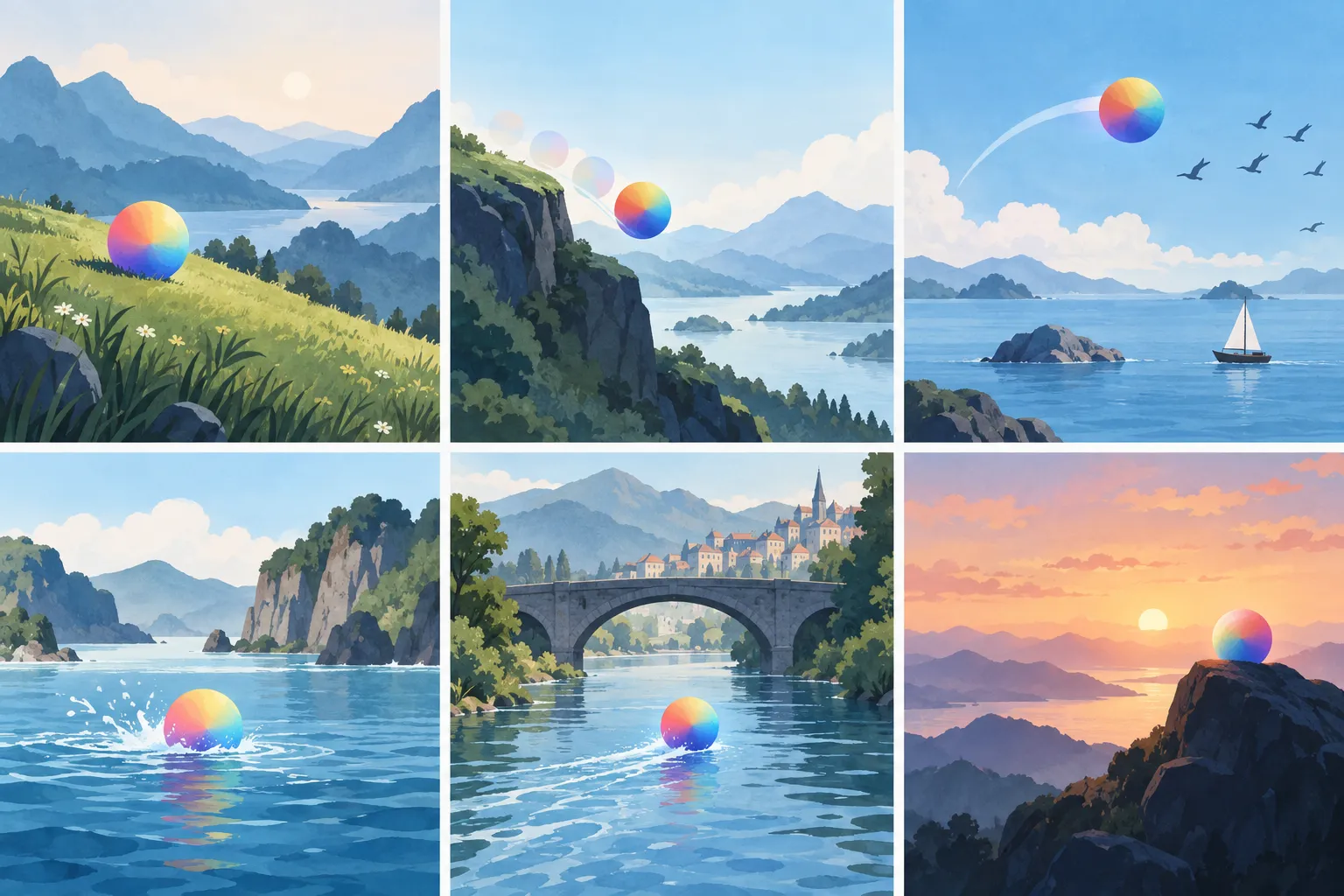
▲ A coded landscape animation
The output ran to about 1,300 lines of code across an HTML file and an auxiliary rendering script. The requested format was a single self-contained file, so the extra script is worth noting even though the visual result was compelling. A separate creative-coding example also used JavaScript drawing and generated audio for a multi-scene story. Together, the examples suggest that Opus 5.5 can produce substantial animation code; they do not show how often it will meet every delivery constraint without revision.
Design as an artifact, not just code
In Claude Projects, Opus 5.5 generated a styled, interactive preview for a business teaser page. The design included typography choices, fluid gradient shapes and responsive layouts for mobile screens. It also produced a seven-slide presentation that visualized Anthropic’s benchmark and price-performance figures. These were artifacts that could be inspected inside Claude rather than only raw code blocks to assemble elsewhere.
That difference changes the evaluation. For front-end work, useful questions include whether the layout communicates the intended message, works at mobile size and remains easy to revise. The examples show polished initial outputs from Opus 5.5, but they do not establish that Sol or Luna could not produce comparable designs. They also do not replace a review of the finished page’s content and behavior.
How to make the comparison useful
The practical evidence favors trying Opus 5.5 for concise writing, creative coding and visual front-end work. The benchmark figures add context, but they should not stand in for a direct test of GPT-6 Sol and GPT-6 Luna on the work that matters to you. A focused comparison can stay small:
- Give each model the same writing request, including the desired length and a requirement to put the answer first. Compare clarity and the editing needed.
- If animation or web design is part of the job, specify the deliverable and file constraints. Check both the visible result and whether the files match the request.
- Record the time spent reviewing and correcting each output. If fixing an agent’s work takes longer than doing the task manually, revise the workflow rather than assuming a benchmark win will solve it.
Opus 5.5’s work samples provide a reason to test it, while the available figures leave the Sol-and-Luna question open. Use the scorecard to decide what to investigate, then choose based on matched tasks, usable outputs and the review effort your work requires.