Noubar Afeyan, co-founder and chairman of Moderna and founder and CEO of Flagship Pioneering; Lila Ibrahim, Chief AI Readiness Officer at Google DeepMind; and Kiran Mazumdar-Shaw, founder and executive chairperson of Biocon, all expect AI to reshape scientific discovery. Yet the gains they describe are practical ones: open research tools, faster and cheaper clinical trials, and better ways to choose trial patients and screen out false alarms. Afeyan sees simulated human trials as a long way off, warns against promising quick cures and wants regulators to focus on commercial AI agents, software that acts on its own to carry out tasks. All three stress that AI’s promise depends on earning public trust.
A new way to discover, not just a faster one
Afeyan sees AI changing how humanity makes discoveries of every kind, rather than improving a few isolated fields. Natural phenomena exist whether or not anyone imagines them, he notes, and AI lets scientists detect and understand those systems at scale.
Ibrahim compares AI to both a microscope and a telescope: it can zoom deep into molecular structures or pull back for a panoramic view. In her view, the main limit on AI-driven science is no longer computing power. It is whether people have the courage to ask bold, creative questions.
Mazumdar-Shaw describes biology shifting from an empirical, observational discipline into an interconnected, predictive science. Drug development has long focused on single targets and drugs that hit just one of them. Combining AI with biological expertise lets researchers connect scattered data points to examine whole signaling pathways, networks and neural circuits. That broader view, she says, opens the door to multi-specific therapies, drugs that act on several targets at once to manage complex diseases.
Three kinds of intelligence
Afeyan reframes the debate about machine intelligence with a three-part model: machine intelligence, human intelligence and nature’s intelligence. Every cell and living thing processes information, he argues, and pathogens such as pandemic viruses display nature’s intelligence when they evade and overwhelm immune defenses around the world.
He also challenges what he calls a conceit: the belief that people must fully understand how something works before they use it. More than half of approved drugs lack a fully verified explanation of how they work, yet rigorous trials have shown that they do. Most smartphone owners cannot explain the technology inside their devices, but they benefit from it every day. Taken together, this view suggests that discoveries surfaced by AI could be judged by evidence that they work, not only by whether scientists can explain them.
Where AI pays off first: clinical trials
For Mazumdar-Shaw, AI’s greatest promise is shorter drug development timelines, which would make medicines more affordable in places like India. Clinical trials are the most expensive phase, so she wants AI to parse complex clinical data, predict how well a drug will work and establish its safety profile much faster. Shorter development means lower costs, which should translate into lower prices for patients. AI infrastructure has an upfront cost, she acknowledges, but the efficiency gains far outweigh it.
Afeyan says the impact is already visible in efforts to shorten clinical development cycles. In 39 years in biotechnology, he notes, nothing has managed to lower the enormous cost of new medicines or untangle clinical and regulatory complexity.
Rather than full trial simulations, he points to two practical near-term targets:
- Patient selection. AI can mine electronic medical records and molecular profiles to build trial groups of patients who are more likely to respond to a new therapy.
- Diagnostic triage. Early cancer screening tests often produce ten false positives, results that flag a disease the person does not have, for every true positive. Using AI to sort those results could cut costly and unnecessary follow-up care.
| Application | What AI does | Outlook |
|---|---|---|
| Patient selection | Finds likely responders in medical records and molecular data | Faster, more focused trials |
| Diagnostic triage | Filters screening results to reduce false positives | Fewer unnecessary follow-ups |
| Clinical data analysis | Predicts efficacy and establishes safety faster | Lower development costs and prices |
| Fully simulated trials | Models entire humans to replace human testing | Still distant because of biological complexity |
The last row is where Afeyan draws a firm line. Claims that complete digital twins, full virtual replicas of human patients, will let drug developers skip clinical testing remain far from reality, he says. He cites Erwin Schrödinger’s observation from 80 years ago that living systems do not follow straightforward physics equations, because interacting effects compound exponentially.
These changes operate at the level of research and health systems. Decisions about an individual’s screening or test results belong with that person and their doctor.
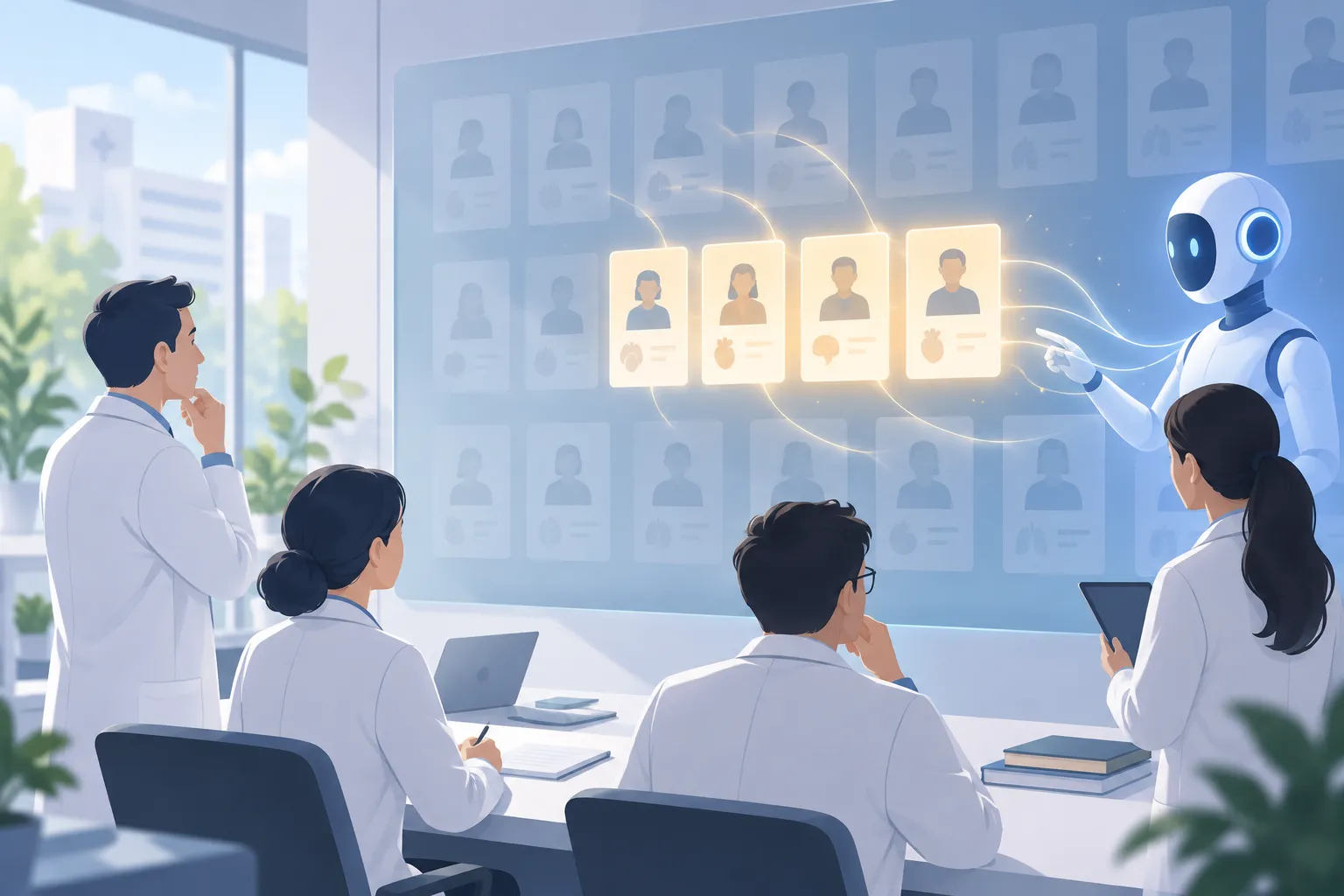
▲ AI-assisted patient selection for clinical trials
The case against cure hype
Some optimistic voices in the AI field talk about eradicating major diseases within about five years. Afeyan warns frontier AI labs against promising the public near-term cancer cures. Overhyping close-at-hand goals, he argues, leads to disappointment and even fear.
He recalls a long-running biotech joke: cancer has been cured in mice for 70 years. Human physiology differs dramatically from that of laboratory mice, which calls for deep humility. Paradoxically, he says, generative AI and other modern tools have revealed that the share of biology scientists actually understand is smaller than they assumed.
The next frontier: models that reason about biology
Mazumdar-Shaw sees the integration of biological intelligence and artificial intelligence as the critical frontier for medicine. Today’s machine learning mostly applies logic, reasoning and pattern recognition to data that already exists. The bigger milestone, in her view, is generating new biological knowledge and designing medicines from scratch.
That requires biology foundation models, large models trained on broad biological data that can serve many tasks, and she points to Afeyan’s work at Flagship Pioneering. Such models need to learn and adapt in real time and draw biological inferences rather than simply match mathematical patterns. She traces the slow progress against neurodegenerative diseases such as Alzheimer’s and Parkinson’s to research that searched for single pathway targets. Neural and immune networks behave as dynamic, multi-variable systems that cannot be repaired by isolating one signaling pathway. She also expects genomic datasets to make personalized medicine real by predicting which patient subgroups will respond to specific therapies.
Mazumdar-Shaw adds that Bengaluru has a deep pool of talent in both AI and quantum biology, and that Biocon plans to combine the two to leapfrog traditional drug discovery timelines with new computational methods.
Beyond the lab: AlphaFold and a staple crop
Ibrahim points to Google DeepMind’s AlphaFold, which solved a 50-year grand challenge in structural biology by rapidly predicting the 3D structures of proteins. Researchers can look up a protein’s structure almost the way they search a digital map, and Google DeepMind made the tool free and open to millions of scientists worldwide.
Researchers in Spain used AlphaFold to repurpose a drug approved by the FDA, finding it a new use against Chagas disease, a neglected tropical disease that affects an estimated 8 million people. In India, more than 180,000 researchers use AlphaFold to study local disease burdens and design targeted treatments.
In agriculture, Google DeepMind is working with ICRISAT, an agricultural research institute in Hyderabad, India, on sorghum, a staple that more than 500 million people rely on for food and livestock feed. Ibrahim notes that past research focused on Western crop varieties, leaving indigenous crops in Asia and Africa underfunded and understudied. AI-driven genomic mapping aims to compress decades of traditional breeding into far shorter timeframes and produce sorghum that resists drought and emerging diseases.
Google DeepMind also supports an AI-powered agricultural advisory platform used by more than 600,000 farmers in India. Built with Indian state governments, it gives plot-level advice and has expanded to nearly a dozen Asian countries, including Japan and Vietnam.
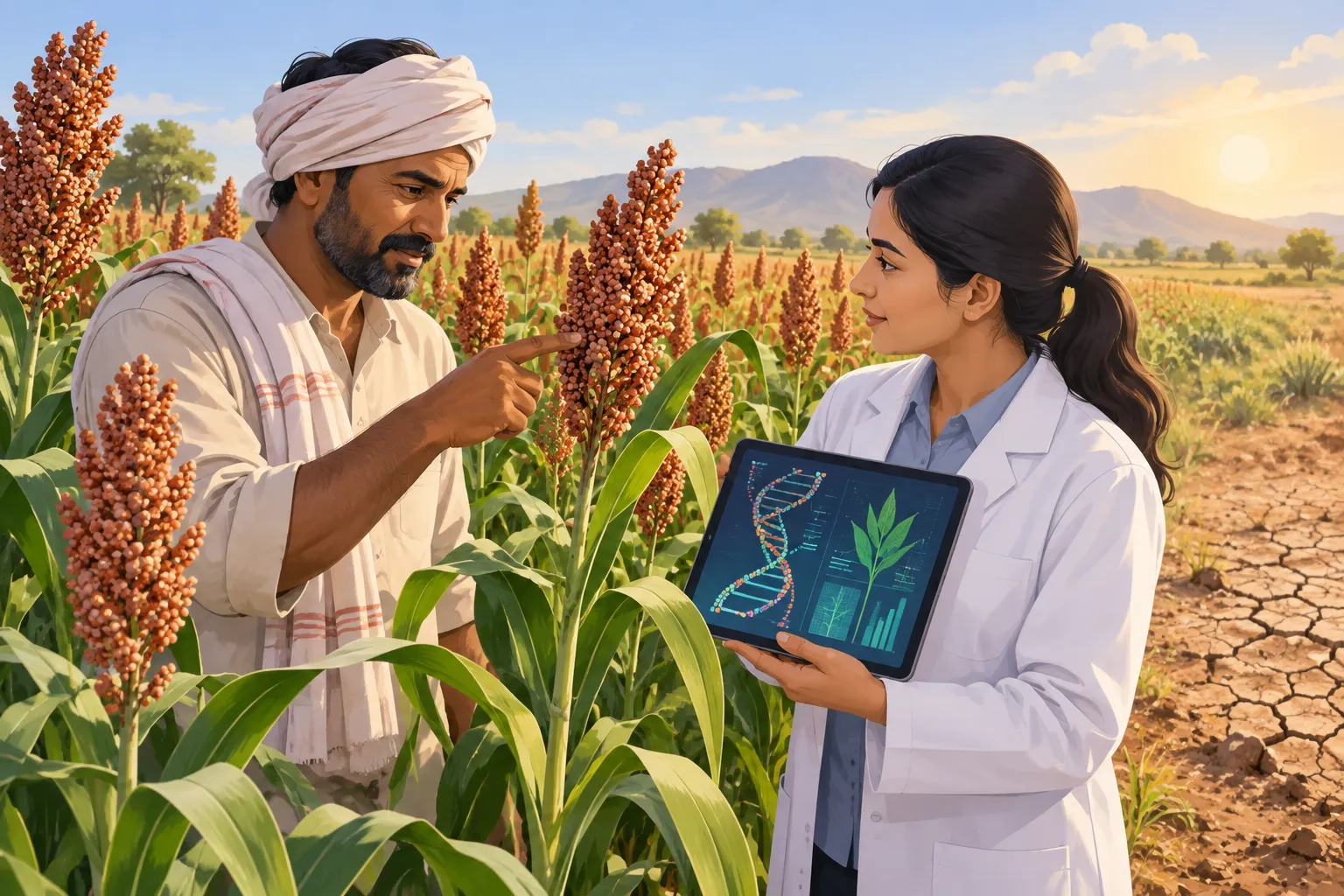
▲ AI-accelerated sorghum breeding
Trust has to come first
Mazumdar-Shaw argues that the public will trust AI only when it delivers tangible results: better health outcomes, diseases brought under control and improved care.
Since COVID, Afeyan warns, an industry of scientific mistrust has grown, especially in the United States, treating empirical facts as matters of personal opinion. Science is not a set of fixed conclusions but a method of forming hypotheses and testing them with experiments designed to disprove them. When a hypothesis falls, that is progress, not proof that earlier science was fraudulent. If society cannot trust human-led science, he cautions, machines that assert conclusions could further erode social cohesion and adherence to public health guidance on vaccines, medicines and food.
He insists that politics must not steer scientific conclusions. Most people cannot judge a research paper on their own, so collective expert consensus remains the gold standard, much as patients turn to doctors for medical opinions. AI, he expects, will make it easier to gather and synthesize those expert views. Open debate among scientists at conferences is how facts get tested, he adds, yet outsiders often mistake it for unreliability.
Mazumdar-Shaw calls for explaining complex science in simpler terms and points to a public science gallery in Bengaluru that connects citizens with research. Ibrahim says people place their trust in familiar community structures, so builders must involve end users from day one. An agricultural AI platform needs farmers’ input from the start, and a medical screening tool needs doctors involved early rather than as an afterthought.
Regulate the agents, not the base models
Afeyan says that until early 2026, many technological risks seemed remote, but recent advances have demonstrated capabilities that people had dismissed. In his account, multi-agent capabilities that had been written off became real within about six months. AI agents are starting to resemble natural ecosystems, he observes, forming swarms and producing unpredictable outcomes.
He argues that regulation should target commercialized agentic systems and their intent rather than the underlying large language models. Base models are raw capability, while deployed agents carry intentions that need oversight. He compares the oversight he has in mind to the rules that followed the thalidomide tragedy, when drugs had to meet strict safety burdens before reaching the market. Companies that commercialize autonomous agents, he says, should have to prove those systems are safe before releasing them beyond closed enterprise environments.
Mazumdar-Shaw adds that synthetic biology and novel biomaterials can produce unintended consequences and need rigorous regulation, and that regulators must distinguish deliberate misuse from unexpected emergent behavior. Ibrahim says Google DeepMind has long held that AI is too important to operate without thoughtful regulatory frameworks. In June 2026, the company published research on the ethics of advanced AI assistants and agentic workflows.
Mazumdar-Shaw cautions that it is still too early to say AI-driven design alone will make therapies affordable. For now, she says, the focus should be on deploying AI where it delivers measurable improvements over traditional methods.
What to take away
As these leaders describe it, the near-term story of AI in medicine is about efficiency rather than miracles. AI is already a working research tool, and its clearest near-term payoffs appear to lie in faster clinical trials, better-chosen trial patients and fewer false positives in screening. Afeyan sees fully simulated trials as distant and warns against promising quick cancer cures. All three suggest that public trust, tools built with their users and focused regulation will shape how much of AI’s promise is realized.
- Researchers: open tools like AlphaFold can support work on neglected diseases and drug repurposing.
- Biotech and clinical teams: aim AI at patient selection and diagnostic triage before attempting to simulate entire trials.
- Teams building AI tools: bring farmers, doctors and other end users in from the first design stage.
- Companies commercializing AI agents: preparing now to prove safety before release appears wise.
- Everyone else: judge claims of AI cures by clinical evidence, and talk to a doctor about any personal screening or treatment decision.