EyeTell, a Silicon Valley startup founded by YouTube co-founder Chad Hurley, wants to do for video production what YouTube did for distribution. The company bundles a range of generative AI video and animation tools into one accessible software suite, and its own staff are already using it to make work that once required a studio. One screenwriter produced an entire Regency-era period drama episode in a single week, with no actors, no sets and no horses. The pitch is a wave of new storytellers. The pushback, over copyright, pay and jobs, is just as real: a 2026 Artsy survey found that only 14% of artists consider themselves enthusiastic adopters of AI.
From distribution to production
Hurley traces the idea for EyeTell to the period after he stepped away from YouTube. YouTube gave people who already made videos a way to reach an audience. What he noticed was a much larger group of people who had creative ideas but lacked the technical skills or the money to turn them into finished work.
EyeTell is aimed squarely at that group. Hurley predicts that AI video tools will set off a renaissance in storytelling at a scale never seen before, opening up production the way YouTube opened up distribution. That is a founder’s forecast, but the company is staffed to chase it. Its team mixes experienced technologists with professional animators and seasoned film storytellers.
A period drama made in one week
The clearest example of what the tools can do is “Ashcombe House,” an original British Regency-style drama with carriage rides, elaborate costumes, drawing rooms and horses. A major studio would typically spend millions of dollars on a production like that, hiring actors, scouting locations and building sets.
None of that happened here. A screenwriter and AI producer at EyeTell, who has a background in traditional film production, made the full episode on her own in one week. She worked from a desk in a shared WeWork office, using basic computer skills and EyeTell’s generative tools. The visual style takes its inspiration from the 2005 film adaptation of “Pride and Prejudice.”
| Traditional production | “Ashcombe House” | |
|---|---|---|
| Cast | Hired actors | No actors |
| Locations and sets | Scouted and built | None |
| Crew | Studio team | One screenwriter |
| Budget and time | Millions of dollars at a major studio | Basic computer skills, one week |
Turning one photo and a voice into a talking character
EyeTell’s desktop software puts a prompt engine, where users type instructions for the AI, alongside a timeline editor for assembling scenes. It can also take a hand-drawn 2D robot sketch and turn it into a rendered 3D character that can be posed.
The more striking demo starts with just one still photograph of a person and a short recording of his voice. From those two inputs, the software builds a stylized low-poly 3D character (a 3D look made from a small number of flat polygons). The character speaks in a cloned version of the person’s voice and sits in a lounge high above a futuristic city skyline.
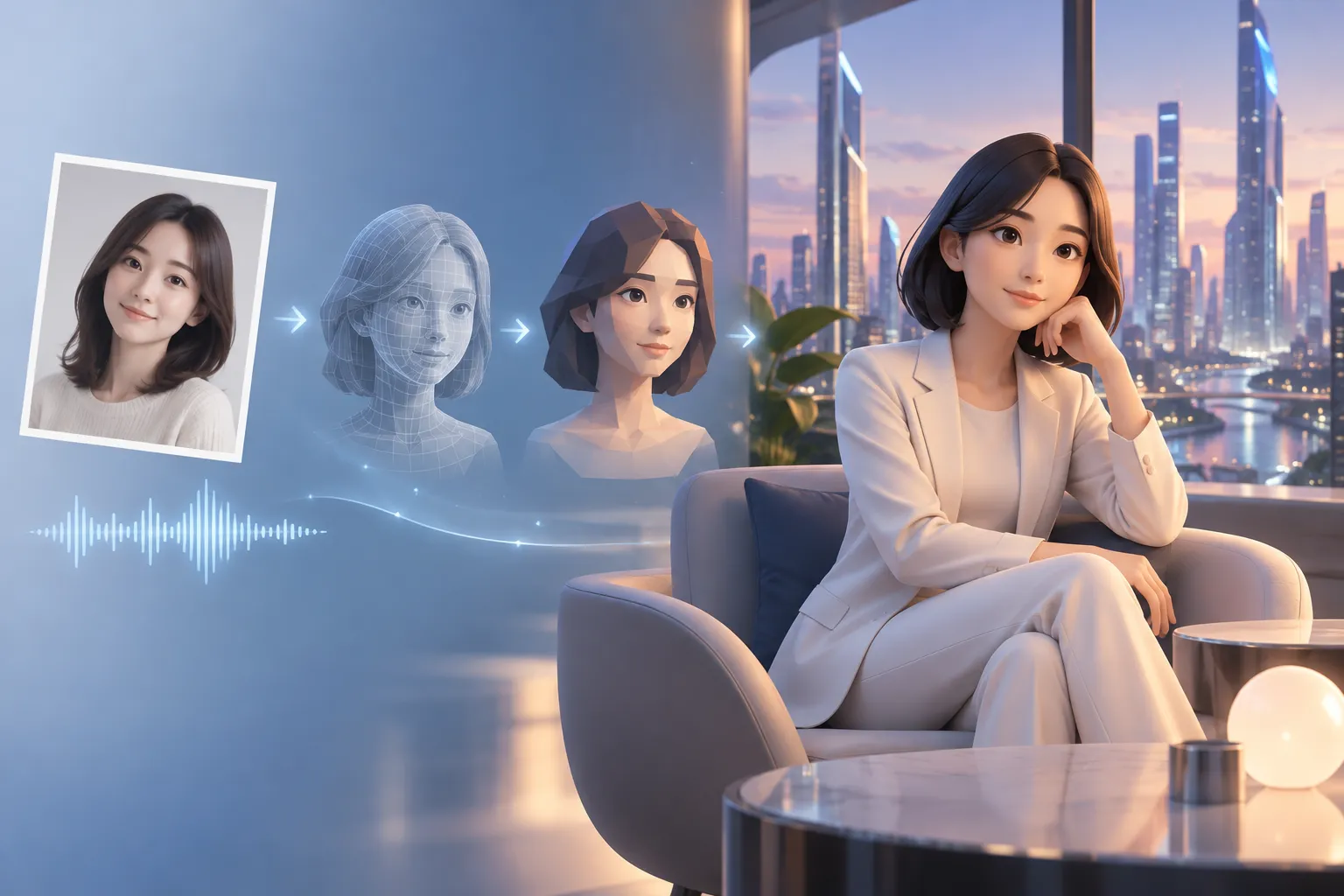
▲ A talking 3D character built from one photo and a voice
Could the prompt engine write the questions and replace human storytellers altogether? EyeTell’s chief storyteller concedes that the AI can write dialogue and plot beats on its own, but says purely automated output often feels unnatural and artificial unless a person guides and refines it. In other words, the tool may lower the cost of making something, but deciding what is worth making still appears to be a human job.
Removing the studio gatekeepers
That chief storyteller brings deep industry experience: he worked as a lead animator at Pixar and Warner Bros. on Academy Award-winning films such as “Toy Story” and “Monsters, Inc.” He argues that the traditional Hollywood system depends on corporate gatekeepers who decide which pitched projects get approved. Generative AI, in his view, gives an individual creator the equivalent of a full animation studio on a personal computer.
He also has an answer for artists who push back. He points to two earlier shifts in filmmaking:
- When computer-generated dinosaurs arrived in “Jurassic Park,” artists who built practical effects were alarmed.
- When Pixar released “Toy Story,” parts of the animation industry called 3D computer animation ugly, mechanical and soulless, until skilled storytellers proved it could move audiences.
The argument is that today’s resistance will follow the same path. That is the view of the people building the tools, and it does not settle the concerns that follow.
Copyright, consent and a Content ID-style answer
People who work in film worry that generative AI will eliminate jobs and use people’s likenesses, voices and intellectual property without consent or fair pay.
Hurley argues the opposite: that AI can make attribution and licensing easier. He compares EyeTell’s approach to Content ID, the system he helped pioneer at YouTube that identifies copyrighted material in uploaded videos. A similar digital system, he says, could detect intellectual property that flows into AI-generated work. Rights holders could then license fan-made content and earn money from it instead of relying only on blanket takedowns and restrictions. Whether that model actually puts money in creators’ pockets appears to be the open question.
EyeTell TV lets the audience steer the story
EyeTell has also started an experiment called EyeTell TV, which Hurley first introduced on YouTube. It streams AI-generated stories that change based on what the audience types into the chat.
One example is “Crumb and Ledger,” an animated show set in a bakery. People in the audience submit “wishes,” and the AI works them into the scene almost in real time. Requests included:
- A mail carrier delivers a pizza
- A panda eats the food
- A duck flies into the store, grabs the bread and flies away
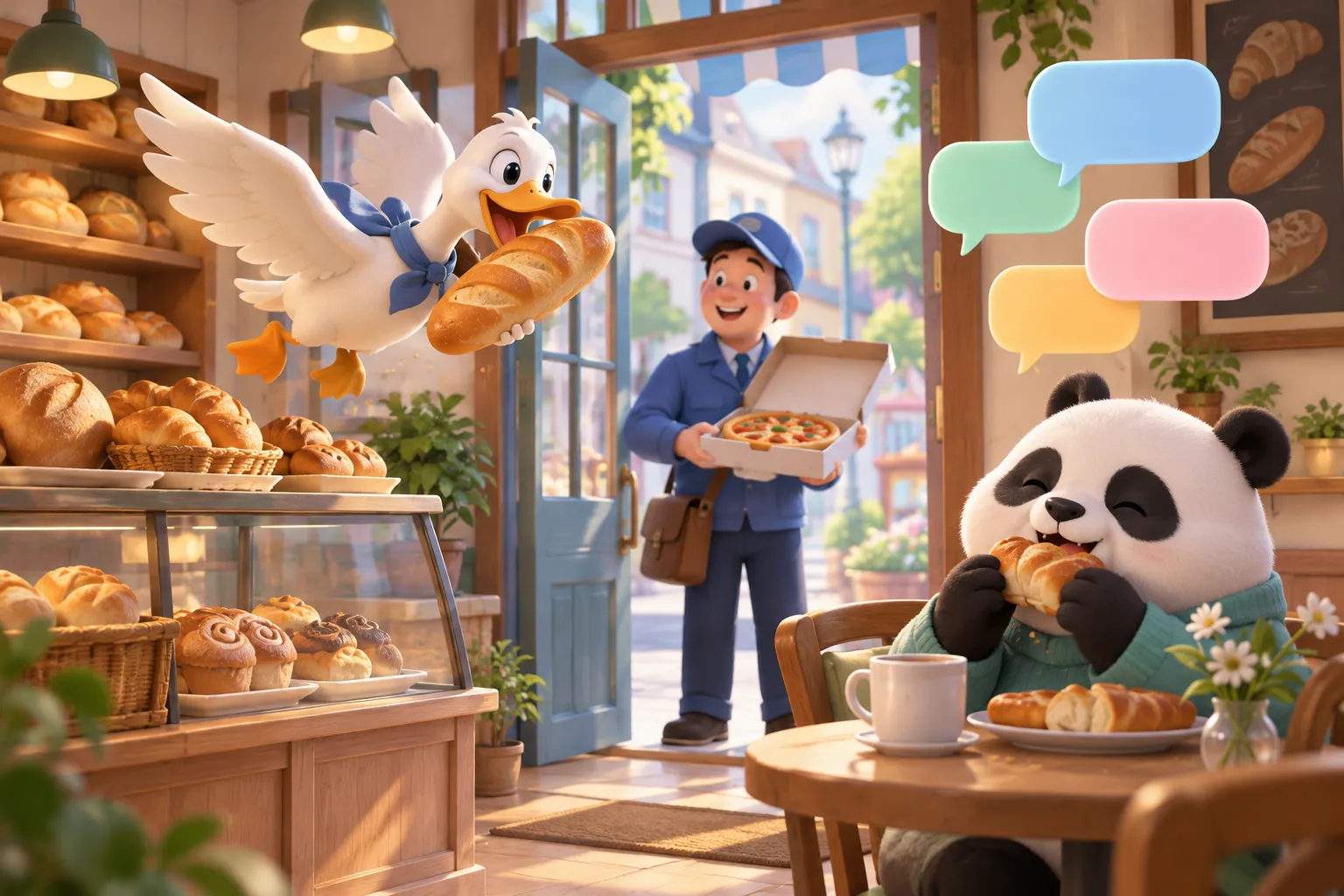
▲ An AI-animated story steered by audience requests
Hurley describes the goal as turning passive watching into active participation, with the audience shaping where the story goes together. Because anyone can type a request, EyeTell layers its safeguards. Restrictions built into the underlying AI models work alongside EyeTell’s own moderation filters to keep explicit, violent or hateful suggestions off the screen.
Other proposed uses include animating historical events, bringing archival family photos to life and producing independent films.
What it means and what to do
The screenwriter behind “Ashcombe House” does not see AI filmmaking as a replacement for traditional cinema. She expects it to exist alongside it, giving new voices a path outside formulaic studio projects. Most artists are not there yet. In the 2026 Artsy survey, 86% did not count themselves as enthusiastic adopters. For companies like EyeTell, winning that trust looks like the next hurdle.
If you are a creator trying AI video tools, or a team building a product like this, a few practical points stand out:
- Treat prompts as directing instructions, and refine the output yourself rather than relying on fully automated scripts.
- Use AI to prototype expensive ideas, such as period pieces or complex science fiction, before spending on locations, sets or crews.
- Pair a clear portrait photo with a clean voice recording to build a speaking character quickly, and given the industry’s concerns about likeness and voice, make sure you have the right to use them.
- If users can submit prompts, do not rely only on the base model’s limits. Add your own filters that screen requests before anything is generated.