Jev can lower the cost of a Claude Code workflow when the job is a decision rather than a piece of writing or code. In one 12-task test, using Jev to choose among models reduced API costs by 36.9% compared with sending every task to Claude Opus 5.5. In a separate lead-generation workflow, Jev scored 1,000 businesses for 2.35 cents. Neither figure represents the cost of every step around those decisions.
Jev returns structured answers: a probability for a yes-or-no question, a choice from a supplied list, or a numerical score. It does not write marketing copy or generate code. That distinction makes it useful alongside Claude Code, which can coordinate other models and tools after Jev makes a choice.
Routing work to the right model
A model router decides which model should handle a task before that task runs. In the 12-task test, Jev chose among Claude Haiku 4.5, Claude Sonnet 5, Claude Opus 5.5, and Fable 5.1. The tasks ranged from simple calculations and text cleanup to debugging and planning a 3D interactive map. Jev assigned 11 tasks to less expensive models and reserved Claude Opus 5.5 for the complex map-planning task.
| Approach for the 12 tasks | API cost |
|---|---|
| Send every task to Claude Opus 5.5 | $0.31827 |
| Let Jev route the tasks | $0.20079 |
The difference was $0.11748, or 36.9% of the all-Opus cost. The result depends on this particular mix of tasks and on Jev assigning most of them to cheaper models. It is not a measured saving for every Claude Code project.

▲ Tasks routed by complexity
Jev also selected prewritten agent routines, called skills, from a folder. Across eight prompts, Jev and Claude Opus each chose the intended skill eight times. Jev took 1.83 seconds for the set, compared with 19.53 seconds for Opus. This measures selection speed and agreement on those eight choices, not the quality of the work a selected skill later produces.
The pricing helps explain why narrow decisions can be inexpensive. On OpenRouter, Jev was listed at about $0.042 per million input tokens and $0 for output tokens. Claude Haiku 4.5 was listed at $1 per million input tokens and $5 per million output tokens. Those are model prices, not complete workflow costs: the model Jev selects still has to do the requested work.
What the 2.35-cent lead score includes
The lead workflow began with data collection, not Jev. An Apify Google Maps scraper collected 1,000 Vancouver-area businesses across 10 categories, with 100 businesses per category. The job took 4.5 minutes and cost $0.51. Its CSV file included fields such as business category, rating, review count, website, phone number, postal code, and map coordinates.
Jev then evaluated each business on its estimated likelihood of buying an AI service and selected a preferred service offer. In Claude Code, that scoring run processed 559,420 input tokens in 5.2 seconds for $0.0235, or 2.35 cents. A separate run that processed and displayed the businesses on an interactive map took 12.25 seconds. Neither timing includes the 4.5-minute scraping job.
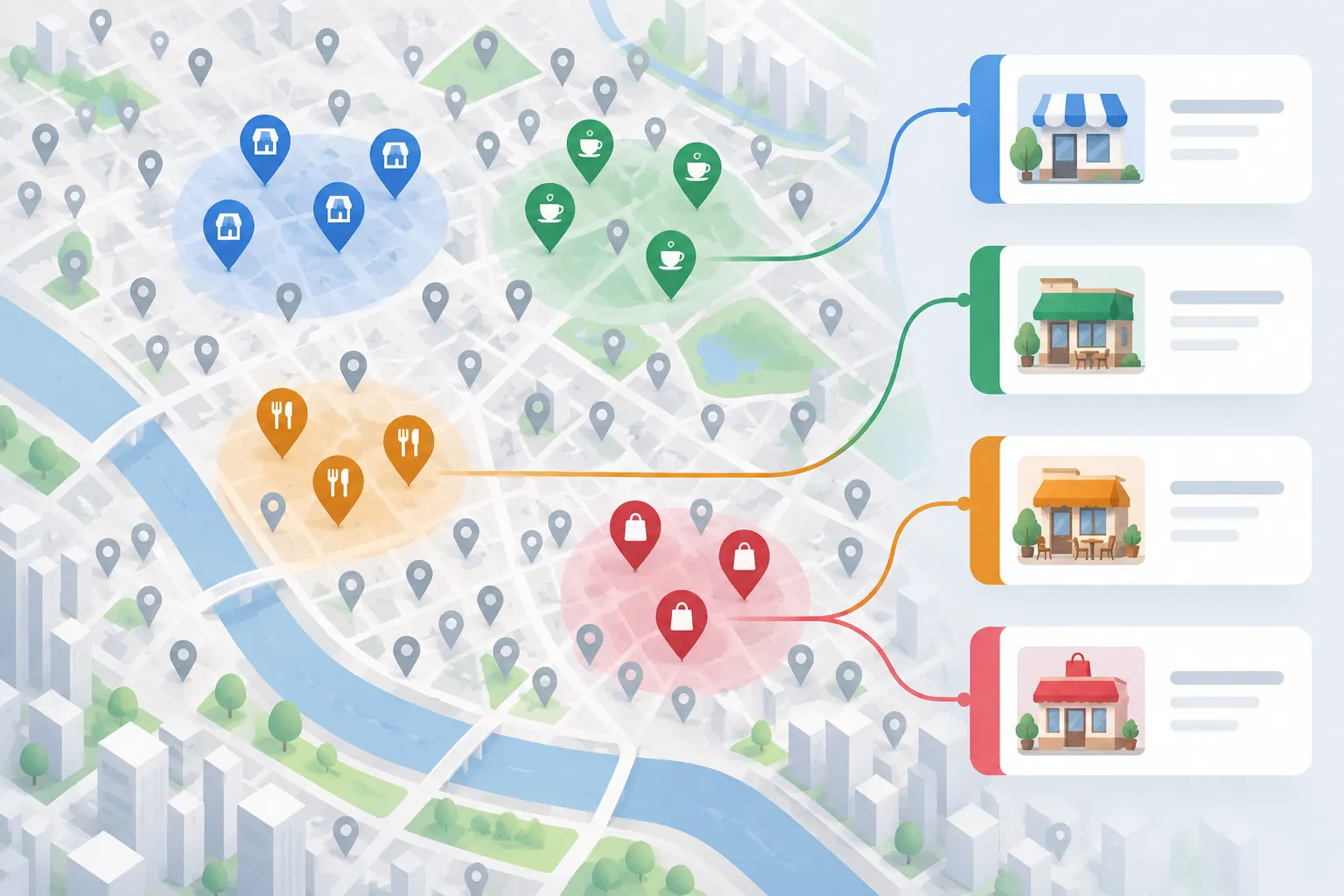
▲ Lead scoring and contact selection
The offer choices totaled all 1,000 businesses:
| Jev’s selected offer | Businesses |
|---|---|
| Paid advertising | 753 |
| WhatsApp or phone agents | 210 |
| AI websites | 33 |
| Content systems | 4 |
These are Jev’s classifications, not confirmed purchases or stated preferences from the businesses. The low scoring cost is most relevant when a workflow has many records and asks the same constrained questions about each one. Jev supplies a score or category; other tools must collect the records and act on the results.
The scrape and scoring runs together cost $0.5335. The next step added another charge: an Apify contact search on the top 50 leads found 37 valid email addresses, excluded 13 entries, and cost $0.35. Claude Code then prepared a three-step personalized draft campaign in Instantly, using details such as business category, location, and review count. The scrape, scoring, and contact-search charges sum to $0.8835; that subtotal does not establish the full cost of drafting or running the campaign.
A score alone also does not establish commercial value. The workflow moves from collecting records to ranking them, finding contact details, and preparing outreach. Costs are known for several of those operations, but no revenue was measured for this 1,000-business run.
A third use: finding visual assets
The same division of labor appeared in a media-search project. Claude Code built a browser for 331 images and video clips, Claude Haiku 4.5 generated descriptions of the files, and Jev scored how closely files matched a meaning-based query. A search for “working at night” found a relevant office clip in 3.24 seconds. Here, too, Jev made a comparison rather than creating the descriptions or building the application.
What to take into a workflow
Jev’s strongest role in these examples is a narrow decision point: choosing a model or skill, scoring a lead, or ranking a search match. To assess whether that role saves money, compare the entire workflow before and after routing, not just Jev’s price per token. Keep data collection, contact enrichment, and generative-model work as separate line items.
For a similar lead workflow, set a cost cap on scraping, check which contacts have valid email addresses, and review outreach requirements before sending anything. Outreach of this kind should include a physical postal address and a clear one-line opt-out instruction. The practical test is whether inexpensive decisions help move a specific task forward without obscuring the cost of the work that surrounds them.