OpenAI closed its third quarter with an annualized revenue run rate of close to $50 billion, up 70% from the previous quarter, according to Chief Financial Officer Sarah Friar. The quarter also marked a structural shift: enterprise revenue doubled quarter-over-quarter, and the company's sales are now split evenly between business customers and consumers. Friar attributes the surge to two forces working together, a wave of new frontier models and a rapid push into corporate workflows, and she expects the company's Dots virtual assistant, so far an enterprise product, to begin reaching consumers before the end of the year.
Where the 70% jump came from
Friar's account of the quarter points to both new models and the enterprise business, and they are hard to separate. On the model side, OpenAI released a frontier model numbered 5.6 at the start of the quarter and a second model, Astra, in early September. These releases, she said, powered a large share of the revenue growth. On the business side, the enterprise segment doubled in a single quarter, lifting it from a minority of revenue to half of it.
The way the two fit together is that the new models became sellable products in specific corporate use cases. Friar named three drivers of the enterprise acceleration:
- Software engineering, where coding tools built on the models are in heavy use.
- Cyber security, where Astra in particular is described as a major step forward in defensive capability.
- Early deployments of Dots, the company's agentic virtual assistant.
Smaller companies joined the trend too. The small and medium-sized business (SMB) tier grew more in the third quarter alone than in the prior six quarters combined.
Consumer demand did not stall while the enterprise side caught up. ChatGPT now draws 1.2 billion weekly active consumer users, up 20% quarter-over-quarter, and the company passed 100 million paying consumer subscribers during the quarter. Friar reads that subscriber milestone as a direct answer to the claim that consumers will never pay for generative AI.
| Metric | Figure | Comparison |
|---|---|---|
| Annualized revenue run rate | About $50 billion | Up 70% quarter-over-quarter |
| Enterprise revenue | Doubled | Quarter-over-quarter |
| Revenue mix | 50% enterprise, 50% consumer | After enterprise doubling |
| SMB tier growth in Q3 | More than prior six quarters combined | Single-quarter growth |
| Weekly active consumer users | 1.2 billion | Up 20% quarter-over-quarter |
| Paying consumer subscribers | Over 100 million | Reached in Q3 |
How OpenAI keeps enterprise customers from leaving
The obvious question for any buyer is whether enterprise revenue built on fast-moving models can last, given how often every lab ships a new version. Friar's answer is that stickiness depends on how deeply a customer has embedded the product. A company that only calls a frontier model through an API can switch vendors easily. A company that has woven the model into its organizational context, proprietary data and persistent memory finds switching far harder, because the accumulated context does not travel with it.

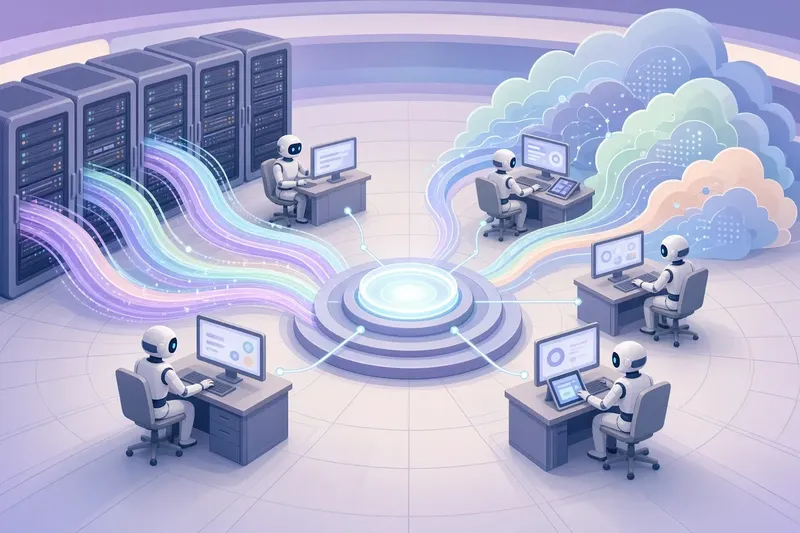
▲ Dots assistant embedded in enterprise workflows
Two customer examples illustrate the pattern. Visa's relationship with OpenAI began with cyber defense; Friar cited a severe PHP vulnerability, one with the potential to disable roughly 70% of the public internet, that OpenAI helped patch quickly. Amgen, the pharmaceutical company, started with life sciences and drug discovery work but made cyber security a priority to protect its intellectual property. In both cases the entry point was a high-stakes, specialized task rather than a general chat tool.
Dots deepens the hook further. In enterprise deployments it connects across email, calendars and sensitive financial systems to carry out multi-step workflows. Once employees build daily habits around an agent that already knows their inbox, schedule and ledger, the agent becomes part of how the organization runs.
OpenAI also offers a path for companies that want customization without exposing their data. Friar said enterprises that ask for open-weight models are usually trying to solve three things: inference cost, the ability to apply reinforcement learning (a training method that improves a model through feedback on its outputs), and data sovereignty. OpenAI's response is to let customers such as Amgen train cyber defense agents with reinforcement learning inside sandboxed environments, so proprietary data stays contained.
What this means for enterprise buyers
For corporate customers weighing OpenAI against alternatives, the retention strategy cuts both ways. The same memory and context integration that makes Dots useful also raises the cost of leaving later. Buyers evaluating a deployment may want to ask early how organizational memory is stored, whether it can be exported, and how sandboxed training keeps proprietary data from leaving their control. For companies in regulated sectors, Friar highlighted OpenAI's go-to-market partnership with Amazon's AWS Bedrock as the channel that has enabled deployments with governments and highly regulated financial services firms. That route is likely the most relevant one for banks, insurers and public institutions with strict compliance requirements.
When consumers get Dots
Dots has been enterprise-only so far by design. Friar describes the philosophy as "training at altitude": tackle the most complex, interconnected environments first, then scale down to mass consumers. Moving an agent to 1.2 billion weekly users is primarily an economics problem. Every agent session is, in effect, a cloud computer assigned to a user, and data center bottlenecks are expected to persist into 2027 and 2028. Friar acknowledges that the global compute constraint is real. That constraint pushes OpenAI to deploy Dots first where the enterprise business model returns the most per unit of compute.
The bridge to consumers is a cheaper underlying model. OpenAI recently announced that the Terra model now runs beneath Dots to cut inference costs, and Friar projects that consumer rollouts will begin before the end of the year. There is competitive pressure to move: Meta's Muse product appears to be gathering user context aggressively, and a delayed consumer launch could allow rival habits to settle in. Consumer demand for assistant-style help already exists in ChatGPT, where 300 million weekly users ask about health and wellness and 200 million ask about personal finance.
Friar sees the enterprise-to-consumer path as a familiar one in technology, comparing it to email, which moved from offices into daily personal use, and in the reverse direction to the iPhone, which spread from personal devices into corporate environments.
The cost argument and the "myth of 2026"
A large share of the compute question comes down to model economics. OpenAI uses its frontier reasoning models to train much smaller nano and micro models that sit along a Pareto frontier, meaning they offer the best available trade-off between cost and capability for a given task. The company now ships model families, such as Terra and Sol, rather than single standalone models; these families route each task automatically to the most suitable model based on cost and performance targets.
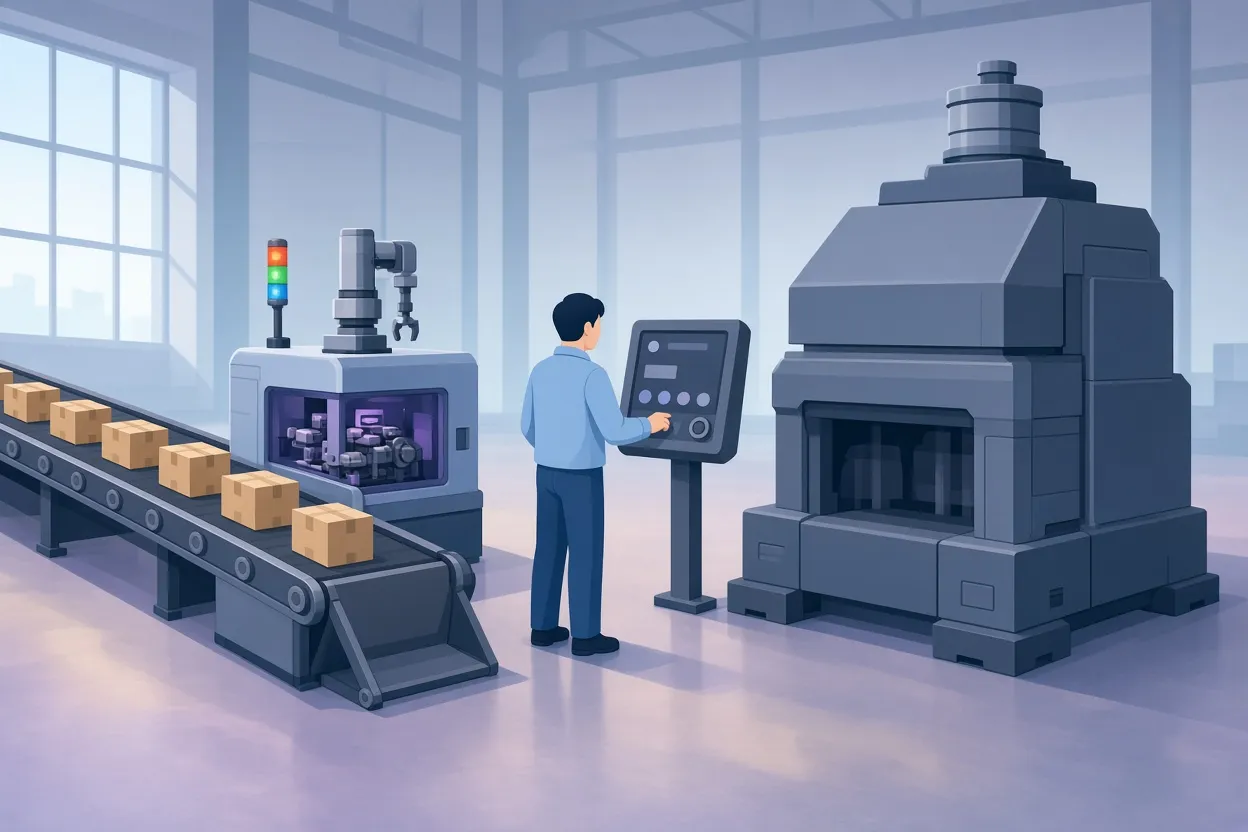
▲ Routing routine tasks to lightweight models
Friar pushed back on what she called the "myth of 2026": the belief that Chinese open-source models hold a decisive cost advantage over frontier labs. By her account, OpenAI's compact Luna model runs at roughly one-fifth to one-sixth the cost of comparable Chinese open-source models while keeping frontier-grade intelligence. When OpenAI cut Luna's price by 80% two weeks after launch, developer token usage rose nearly tenfold. Running Dots on Luna and Terra, she said, lets OpenAI expand gross margins while keeping consumer pricing affordable.
Monetization of the free tier is the other lever. Around 90% of OpenAI's consumer base remains on free plans, which Friar frames as the opening for eventual advertising and commerce revenue.
Sovereignty and the AWS Bedrock channel
Friar also addressed the growing demand from governments for domestically controlled AI. Citing Stanford research, she noted that in 2025 the United States produced 52 frontier models, China produced 37, and Europe produced just one. She cautioned that true model sovereignty is extremely hard for individual countries because frontier research requires capital and compute that few regions possess, and she said European policymakers increasingly recognize the need to rely on secure, trusted frontier models in defense and cyber security. Her sharpest point was about timing: defensive systems cannot wait for local sovereign models when foreign threat actors already use cutting-edge frontier capabilities. OpenAI's partnership with AWS Bedrock is positioned as the practical answer, giving regulated and government customers a pre-cleared infrastructure path.
Key takeaways and what to do
OpenAI's third quarter was driven by new models and enterprise adoption at the same time: the 5.6 and Astra releases supplied the capability, and coding, cyber defense and Dots turned it into doubled enterprise revenue and a 50/50 revenue mix. Retention rests on deep integration with corporate memory and data, which is also the main point for buyers to scrutinize. Dots is scheduled to start reaching consumers before year-end on top of the lower-cost Terra model.
For enterprise teams evaluating OpenAI now:
- Decide which workflows justify a frontier model and which can run on lightweight models such as Luna or Terra, and use model families that route tasks automatically.
- Ask how organizational memory and context are stored and whether they can be exported before committing to an agent like Dots.
- Use sandboxed reinforcement learning to adapt models to proprietary data without exposing it.
- If you operate in a regulated industry or the public sector, evaluate the AWS Bedrock route, which OpenAI says has been central to those deployments.
All growth figures here are the company's own reported numbers for a single quarter, and the consumer timeline for Dots is a projection rather than a confirmed launch date.