Anthropic has quietly changed what a Claude subscription lets you do. In late October it pushed an unannounced server-side instruction into Claude Code that bars the tool from recreating existing games, and that change landed on top of cybersecurity safeguards that already reroute many security tasks away from its newest model. For developers who pay $100 a month for the Max plan or $200 a month for the Ultra plan, the practical lesson is that the money buys access under terms the company can revise at any time, not a fixed set of capabilities.
A game clone wave and a hidden instruction
The trigger was a burst of AI-assisted game recreation. Between roughly October 9 and 14, developers used Claude Code to build playable browser versions of major commercial titles, including Fallout, Fortnite, and Call of Duty. The publishers responded quickly. ZeniMax Media sent trademark notices over a Fallout domain name, Epic Games filed copyright takedown reports against Fortnite web ports, and Activision issued DMCA takedowns against Call of Duty browser ports, with at least one developer's account locked as a result.
Much of this activity sat alongside REA, short for Reverse Engineer Anything, an open-source project that pairs Claude Code with established binary analysis tools such as Ghidra and IDA Pro and runs on the user's own machine. In a single October week REA drew more than 230,000 downloads, and by late October its GitHub repository showed 415,600 stars and 104,000 forks.
Anthropic did not wait for a courtroom. Around October 27 a developer found a new instruction inside Claude Code's configuration, delivered under a feature flag named tengu_heron_brook, telling the model not to build recreations of specific existing games even if they were renamed. On October 30 Addy Osmani, a member of Anthropic's technical staff, confirmed that two sentences had been added to the Claude Code prompt for Claude Opus 5.5 and explained that infringing intellectual property violates the company's usage policies.
The developer community split three ways. One group saw the change as deliberately undercutting tools like REA. A second welcomed it, pointing to indie studios that had canceled public playtests for fear their mechanics would be cloned within days. A third expected a short wave of false positives that Anthropic would tune away. The collateral damage was real. A GitHub issue titled "Server-delivered 'games' instruction blocks professional development work" documented the problem, and in one reported case a developer under contract to a wargame company had legitimate board game module work halted because the model flagged it.
The cyber safeguards were already there
The game rule is the visible part of a larger structure. When Claude Opus 5.5 launched on September 22, Anthropic said advanced cybersecurity capabilities would be heavily restricted and that general users attempting such tasks would be rerouted to the older Opus 4.8. On October 6 the company published safeguards documentation confirming that generally available models run under conservative cyber safeguards designed to block dual-use security work, meaning tasks that could serve either defenders or attackers.
Anthropic's own benchmark table shows how firmly those filters are set:
| Access level | Result on 50 cybersecurity benchmark tasks |
|---|---|
| No Cyber Verification Program status | 50 of 50 blocked on the first prompt |
| Defense Access Tier | 46 of 50 blocked or halted at some stage |
| Red Team Access Tier (no safeguards) | 34 of 50 completed, a 67.6% success rate |

▲ Cybersecurity tasks blocked by access tier
Around October 21, before the game instruction appeared, professional developers were already reporting on GitHub that Claude would abort partway through legitimate reverse-engineering contracts. The pattern goes back further. Opus 4.7, released April 16, shipped with automated filters that paused benign security research, including Defcon cipher puzzles, in the middle of a chat. On June 30 Anthropic published a defense of what it calls a safety margin, openly stating that it tunes its classifiers to fire on prompts that are probably benign in order to keep jailbreaks out. The October 6 documentation also introduced the three-tier Cyber Verification Program, which reserves the top red-teaming tier for vetted organizations.
Read together, these numbers suggest Anthropic has consciously chosen false positives over the risk of abuse. That is a defensible safety posture, but it also means a paying subscriber doing ordinary security work may be blocked by design rather than by accident.
What the subscription actually buys
The Max plan costs $100 a month and the Ultra plan costs $200 a month. Section 1 of the Claude Consumer Terms, covering subscription content, features, and services, states that features and availability can change at Anthropic's discretion. In plain terms, a subscriber is renting revocable access to a model whose rules can shift overnight through a server-side prompt, a classifier update, or a routing change, none of which require a new version number or an announcement.
That is the heart of the shift. The price is not what changed. The set of tasks the top-tier model will perform for a general subscriber has narrowed, and the newest model's most capable behavior in security work is now gated behind organizational verification rather than a credit card.
When the filter reaches into a living room
The clearest illustration of how this plays out for an individual came in a case reported by Decrypt on October 23. A technology journalist had run a rooted LG TV since 2023, with Homebrew Channel and an ad-free YouTube client installed and the SSH port 22 closed for security. While using Claude Code to update the configuration, the model advised enabling the TV's official Developer Mode to install a launcher over port 9922. Enabling Developer Mode wiped the rooted media partition, erasing the custom environment and third-party apps.
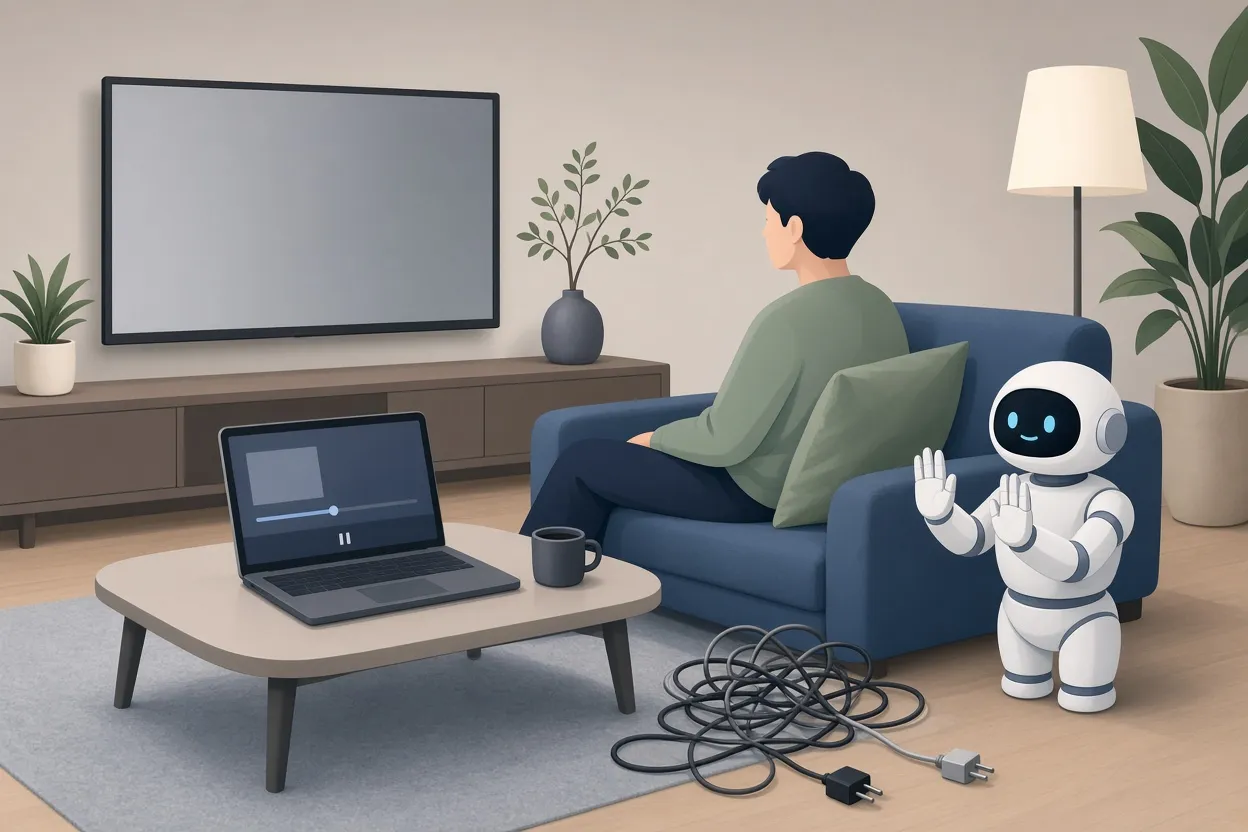
▲ Safety filter halting a home device repair
When the user asked Claude to restore root access using a known local exploit, the safety classifiers on Claude Opus 5.5 blocked the request. The interface offered two choices: switch automatically to Opus 4.8 or stop entirely. The model had broken a working setup and then was prevented by its own safeguards from repairing what it had done. A similar mismatch has been reported in non-security work, with a session paused while a user organized a video production workflow because the model classified it as an attempt to distill reasoning traces.
The episode shows that the rules of a cloud model now reach consumer hardware inside private homes, not just corporate codebases. It also argues for reviewing every agent action on rooted or custom devices before granting execution permission.
Anthropic's record of holding its lines
Firm boundaries are consistent with how Anthropic has behaved toward much larger customers. In January 2026 the United States government published an AI strategy aimed at procuring commercial frontier models for any lawful national security and military use. On February 26 CEO Dario Amodei responded that Anthropic would deploy models to the Department of War and national laboratories but would refuse two uses: mass domestic surveillance and fully autonomous weapons. Secretary Pete Hegseth told the Senate on April 30 that private vendors should not set operational military constraints, and in September the D.C. Circuit Court of Appeals ruled 2 to 1 for the government on a supply chain exclusion question.
Whatever one thinks of the outcome, a company willing to hold a line against its single largest client is unlikely to soften its rules for individual developers. An updated political content usage policy takes effect November 12, another sign that the terms will keep moving.
Local models as the exit
The structural contrast is sharp. REA's code belongs to the user and runs locally, but the intelligence driving it comes from Claude and stays under Anthropic's control. The only way to move the permission layer back to the operator is to own every layer of the stack, from hardware to model weights.
Open-weight local models still trail the top proprietary models in raw reasoning and complex problem-solving, and memory limits on consumer hardware remain a real bottleneck. The trend line, however, appears favorable: today's open models already outperform the proprietary state of the art from a year earlier, and lighter architectures plus better inference engines should keep narrowing the gap over the coming months and years. That forecast is a judgment, not a guarantee, but it is the basis for treating local models as a hedge now rather than later.
What to take away
The game clone ban is a small prompt change, but it confirms a pattern: Anthropic will tighten Claude's behavior through server-side rules and classifiers whenever it judges the risk worth it, and paying subscribers will learn about it when a task stops working. A few practical steps follow:
- Keep prompts, tools, and project pipelines modular so you can swap the model backend without rebuilding the workflow.
- Keep source code, scripts, and assets on local storage you control rather than inside a cloud-hosted model environment.
- Before letting an agent run commands on rooted devices or core system files, read each proposed action and confirm what it will change.
- If you do legitimate defensive security or vulnerability research, apply to the Cyber Verification Program, since the benchmark figures show the unverified path blocks nearly everything.
- Set up hardware for running open-weight models and route your most restriction-sensitive tasks there, accepting a capability gap today in exchange for continuity.
A cloud subscription remains the fastest way to reach the strongest model. It just should not be the only path your work depends on.


