A founder with no engineering background built a small AI-assisted image tool that turns PNG files into SVG vectors, and within six months of full-time focus it was bringing in about $3,000 a month at a profit margin above 80%. He did not raise venture money or run heavy compute. Instead, a handful of practical decisions did most of the work: testing many ideas at once, cutting a free tier that was too generous, scaling search traffic with AI-written pages, and moving off costly services before growth made them expensive. The numbers below belong to this one case, but the decisions behind them are easy to examine and adapt.
From manual labor to a software business
The founder’s path into software was unusual. He started landscaping at 16 and stayed in that trade for three years, then spent two years installing plasterboard on construction sites. Crypto communities introduced him to the developer world, indie hacking (building and selling small products alone or with a tiny team) and solo entrepreneurship. Two years later he co-founded a digital marketing agency in France.
Client work did not suit him. He disliked constantly pitching and selling services. By the end of 2025, he and his co-founder decided to stop selling hours and go all in on software products. The image converter became his first product to earn steady recurring income.
Twenty prototypes instead of one big bet
Rather than putting everything into a single unproven idea, he spread the risk across many small tools. His main instrument was Manus, an autonomous AI agent. He wrote reusable prompt templates that specified his preferred stack (Next.js, Vercel and Supabase) and had Manus research competitors, suggest ideas and scaffold complete apps.
He repeated the process about 20 times and kept every project and domain in its own folder. He did not choose niches based on personal expertise. He let the AI propose utility tools, shipped them, and watched where users showed up on their own. The tool that converts bitmap images into vectors drew visitors and signups right away, with no paid marketing.
The idea came from his own friction. When he generated logos with AI for small web projects, the output was a pixel-based image, and he kept needing clean SVG versions that scale without blurring. He built the converter for himself, shared it with friends, and soon saw steady organic visitors in Google Search Console.
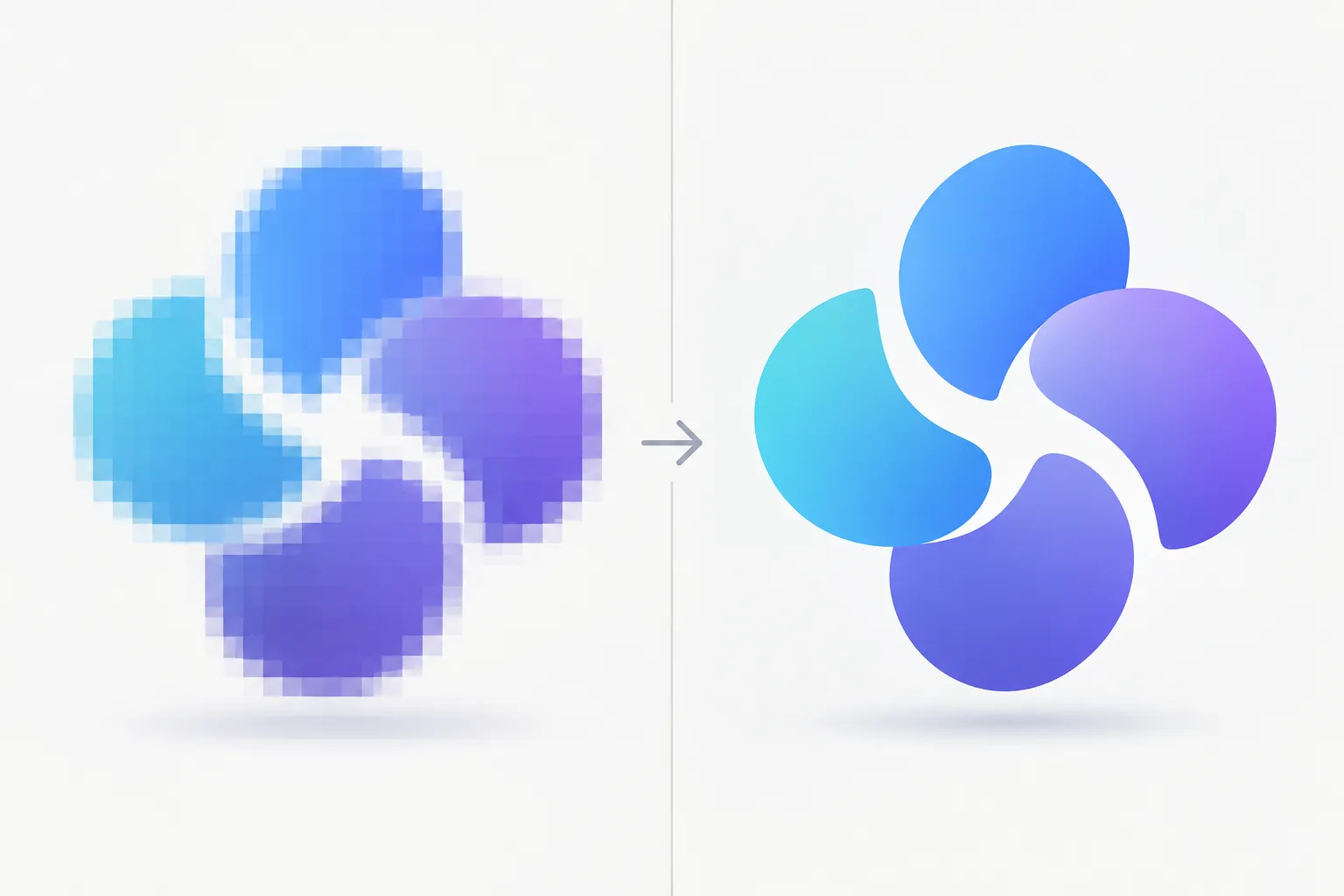
▲ Converting bitmap images into vectors
A thousand users and no revenue
By February the tool had more than 1,000 users and healthy daily traffic, yet revenue was zero. The cause was simple: the free plan allowed 25 conversions, which covered almost everything a casual user needed.
| Setting | Before | After |
|---|---|---|
| Free conversions | 25 | 3 |
| Paying customers | None | New subscriptions every day |
Cutting the free allowance to three conversions pushed heavy users to upgrade, and paid subscriptions started immediately. Around the same time, detailed requests started to arrive for integrations and export presets tailored to cutting and fabrication machines, which revealed customer groups he had not targeted: people working with CAD (computer-aided design) software, CNC milling and vinyl cutters. The simple converter grew into an export engine for makers and crafters.
Scaling search traffic with AI-written pages
Once organic traffic looked promising, he got up at 5 a.m. one February morning and decided to rebuild the site’s search structure. He studied competing tools to find keywords with high search volume and low competition. People searched for more than “PNG to SVG”: they also typed variations such as “JPEG to SVG” and “photo to vector,” plus machine-specific export terms.
Working with Claude, he created 20 landing page variations for specific conversion pairs and use cases, then translated them into 12 languages. This programmatic SEO approach, which generates a page for each search phrase combination, produced more than 1,000 pages. Within two weeks, traffic rose tenfold, bringing hundreds of visitors a day. Targeting other languages, where competition was lighter, appears to have been a large part of the gain.
He added about 200 keyword-focused blog articles. Early backlinks, meaning links from other sites to his own, came from launch platforms such as Product Hunt and from niche communities on Reddit. About two months later, he switched to emailing related blogs in the same niche to exchange links. Building content first and pursuing link exchanges second appears to have been an effective order.
He also offers a caution. Mass multilingual pages worked very well in early 2026, but later Google algorithm updates mean founders now need to focus on quality rather than sheer volume. Copying the tactic today may not produce the same result.
His SEO tooling stays minimal. He follows the 80/20 rule, the idea that 20% of the core work drives 80% of results. He exports query and performance data from Google Search Console and has Claude analyze it. He used Semrush five to six months earlier to track keywords, but he now treats heavy metric tracking as a distraction.
How the product gets built and kept cheap
He spends roughly 12 hours a day working with AI tools, and Claude and Claude Code handle about 90% of his programming. His routine for turning an idea into a live product looks like this:
- Check whether consumers or businesses already pay for similar solutions.
- Write one structured Markdown document that defines requirements and reference competitors.
- Load that document into Claude Code for context, then iterate with prompts to build a minimum viable product (MVP).
- Move through design, front end and landing page, then launch publicly right away.
He uses Recraft for design assets and creates marketing reels, carousels and social posts with Remotion and Model Context Protocol (MCP) integrations, which let AI models work with outside tools. Web apps run on Next.js, while simple marketing sites use Astro or plain HTML and CSS. In his view, about $20 for a domain name is enough to put a working product online.
Costs got two major overhauls. Vercel and Supabase were convenient at launch, but their bills climbed as usage grew. With his co-founder, he moved to two self-hosted virtual private servers at Hetzner, a German hosting provider: one plays the role Vercel did, the other replaces Supabase, and Cloudflare protects both. The conversion engine originally called an external API from Recraft for each image. He replaced it with custom JavaScript scripts so that each conversion no longer carries an API fee. He now uses generative AI mainly in research, to tune edge detection and tracing settings for new machine exports, and then hardcodes the tuned settings into the scripts for speed. Because more users no longer mean proportionally higher API bills, this design appears to be what keeps margins above 80%.

▲ Maker equipment that relies on vector files
What the business looks like today
The product targets people who are not technical. Users drag a PNG, JPG or WEBP file onto the page, get an SVG within seconds, and compare the original and the vector side by side. A paid Pro workbench converts up to 50 files at once. Dedicated workspaces serve Cricut vinyl cutters, laser and CNC machines, embroidery, sign making and Etsy sellers. The laser and CNC workspace offers output presets for software such as LightBurn, Vectric VCarve and Fusion 360, because each machine needs different path, nesting and layer settings.
| Metric | Value |
|---|---|
| Monthly revenue | About $3,000 |
| Monthly recurring revenue from subscriptions | About $1,500, shown as €1,326.56 in the payment dashboard |
| Share of revenue from one-time credit packs | About 50% |
| Active subscribers | 219 |
| New customers in the payment dashboard | 1,720 |
| Net volume in the payment dashboard | €15,691.43 |
| Annual plans | Starter $44, Pro $121 |
Half of the revenue comes from one-time credit packs, not subscriptions. Hobby crafters who convert a file now and then dislike recurring charges, so pay-as-you-go credits became a major income stream. The revenue chart shows the first paying customer at the end of February and a steep climb through April.
About 80% of new features come directly from customer requests and recurring pain points. A Crisp live chat on the site lets him talk to users who struggle with a conversion. One frustrated customer became a loyal subscriber after he fixed a tracing defect by hand. He finds chat gives faster and more precise feedback than surveys or email.
Not every tactic worked. He sent about 5,000 cold emails and received around 10 replies, and he admits his targeting or copy was likely off. He also finds organic reach on X much weaker than it used to be, which makes Reddit a better place for honest early reactions.
What to take from this case
These figures come from one founder’s business and are not a result anyone can expect. The sequence of decisions is still worth borrowing:
- Start with a problem you face yourself or one people already pay to solve. If you are unsure, ship several small tools and watch which one draws users.
- Write a single Markdown spec, build the MVP with a coding agent such as Claude Code, and launch before polishing details.
- Get early feedback by messaging target users on Reddit, X or Instagram and offering free access in return.
- If you have many free users and no revenue, check whether the free tier gives away too much.
- Offer one-time credit packs next to subscriptions for occasional users.
- Before usage grows, estimate how managed services and per-call API fees will scale.
His core advice is that products earn money because they solve urgent problems, not because their first design is flawless. Refining details pays off after paying customers and a steady feedback loop exist.