Tibo Sottiaux, who leads ChatGPT at OpenAI, thinks most software builders are planning for the wrong year. In his view, AI models will be roughly 10 times faster and cheaper within 12 months, and most actions on the internet will soon be carried out by AI agents, meaning software that takes a goal and works through the steps on its own, rather than by people. He laid out that picture right after OpenAI DevDay on September 29, 2026, where the company unveiled a large slate of product and platform announcements. Here is what OpenAI appears to be building toward, and what developers and product teams can do about it now.
Three shifts he says the market has not priced in
Sottiaux names three changes that he believes most of the industry is underestimating.
| Shift | What he expects |
|---|---|
| Agents as the main internet users | Most digital and web actions performed by agents instead of humans |
| Speed and cost | Models running about 10 times faster and 10 times cheaper within a year |
| Converging modalities | Text, voice, images and other inputs and outputs merging seamlessly |
His argument is that building only for today’s model performance is short-sighted. If builders truly assumed a model 10 times more capable a year from now, they would design their products and platforms very differently. He has felt the speed himself: he expected Astra-level capability to take another year or two, and it arrived much sooner.
The agent shift already has side effects. When OpenAI worked with Notion on its MCP integration, the protocol that lets AI models connect to outside tools and data, the integration drew a sudden surge of agent-driven traffic. Software companies now face a real tension between polished interfaces for human users and lightweight, sturdy APIs that can absorb high volumes of automated requests.
Why hand-built agent plumbing may not last
Sottiaux says he barely writes code by hand anymore. Nearly all of the production code behind his work now comes from Codex, OpenAI’s coding agent, and he reviews and sometimes merges the pull requests, the proposed code changes that teams check before adding them to a codebase. His team also uses Codex for exploratory analysis, tracking metrics, reading business trends and planning features. The only hand-written code left in his week is the occasional LeetCode puzzle he solves on weekends for fun.
Fast models have also changed how many agents he needs to run at once. Since ultra-fast inference models such as 6.1 Sol Ultra-Fast arrived, the need to juggle dozens of parallel agents has dropped sharply, because a single responsive agent keeps him in a steady creative flow.
He describes the pattern as an accordion:
- Teams build large networks of specialized agents to cover a model’s weaknesses.
- A stronger model arrives, and those networks collapse back into one system.
- New limits appear, and the cycle starts again.
For the same reason, he sees carefully wired prompt loops and complex routing graphs as a temporary stage. Instead of engineers micromanaging loops to get reliable results, he expects systems that learn a user’s context and goals on their own to take over. He also keeps reminding his teams to resist overcomplicated architectures and stay simple.
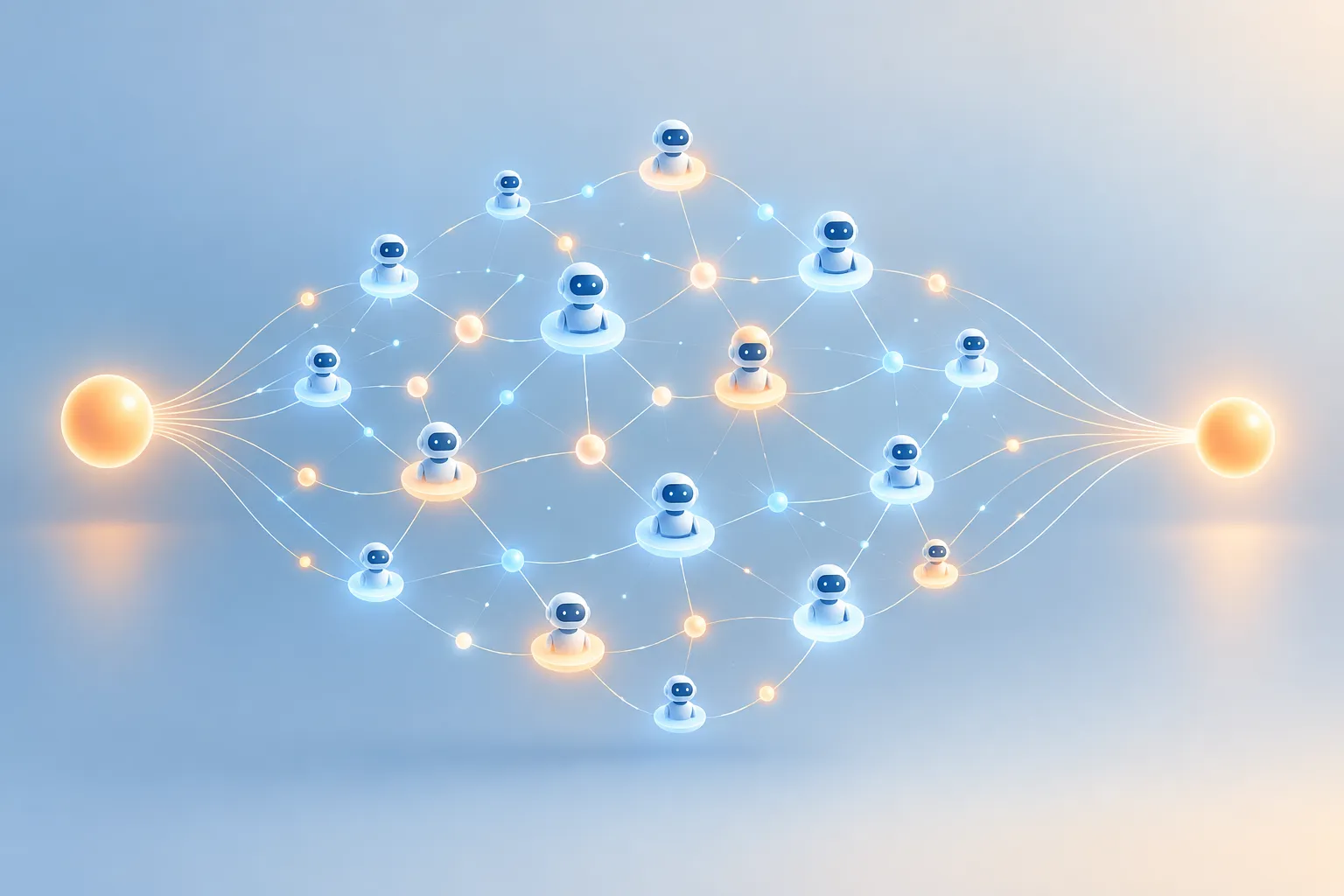
▲ Agent systems expanding and consolidating
Dots: an assistant that is always on
That thinking shows up in Dots, the personal agent OpenAI introduced at DevDay. A dot runs around the clock, learns what its user is trying to achieve, takes feedback and keeps refining its understanding. It can join a meeting room on its own to take notes and then follow up by email or chat. Users can reach it from any device or screen and only need to type when they actually have to step in. Sottiaux calls the habit of hauling a heavy laptop everywhere an outdated setup in which people serve the machine instead of the other way around.
The rollout is staged:
- Users start with one primary dot that learns their personal habits and preferences.
- OpenAI plans to watch how people use it and tune its behavior before adding team dots that work together.
- Later releases will let users spin up several specialized dots, effectively building a virtual team for a particular area of work. He says this is not necessary for casual tasks but adds a lot of value in high-workload roles.
He runs a separate dot of his own that monitors X, formerly Twitter, and handles related work. Dots combines more than two years of research on long-horizon tasks and persistent memory with the Codex execution harness and continuous background operation. For safety, it runs on Astra, which he describes as OpenAI’s most strictly aligned and secure model so far.
What a dot did during a real outage
On DevDay itself, five minutes before a live stage demo, Sottiaux’s dot noticed that ChatGPT production was down and alerted him. It offered to try fixing the code directly in production. He declined and worked with the engineering team instead, because letting an agent patch live production on its own is still too risky.
The architecture follows a few rules. Specialized dots run with strict guardrails and dedicated monitoring on separate hardware such as Mac Minis. A core principle is that the execution harness does not run on the user’s main machine. Like an octopus, an agent can reach out remotely to multiple devices, virtual environments and laptops and work across them at once.
The ecosystem bet behind Sign in with ChatGPT
Sottiaux calls the open ecosystem the sleeper hit of the DevDay announcements. At its center is Sign in with ChatGPT, which launches with 16 partner integrations. The idea grew out of informal conversations with builders of tools such as Pi and OpenCode about how outside apps could authenticate users and use Codex models securely. OpenAI has since turned that into platform infrastructure with plug-ins and discovery.
For developers, the key points are:
- Plug-ins can reach a potential audience of about 1.2 billion ChatGPT users.
- Developers whose plug-ins see high, recurring use are paid through revenue sharing.
- Ranking and recommendations in the directory depend on quality and long-term retention, not on search optimization tricks.
- Plug-ins that clear the quality and retention bar are recommended automatically in relevant conversations, while tools with little real value or weak engagement drop out.
Removing the model picker
What bothers Sottiaux most about the ChatGPT app today is the model picker. Users face reasoning effort settings, multi-agent options, Ultra modes and standard models, and the choice wears them out. He jokes that people currently need a PhD in model pickers. His goal is an app whose interface fades away while the system picks the right tool and depth of reasoning by itself.
Dots already ships without a model picker or configuration menu. Based on user feedback, OpenAI is also merging the separate Codex and ChatGPT Work modes into one interface, and it eventually wants to bring Dots’ always-on abilities into ChatGPT to raise baseline productivity for its 1.2 billion users. ChatGPT Spaces, where people and agents brainstorm together on a shared whiteboard with persistent context, is presented as an early foundation for that kind of shared workspace.
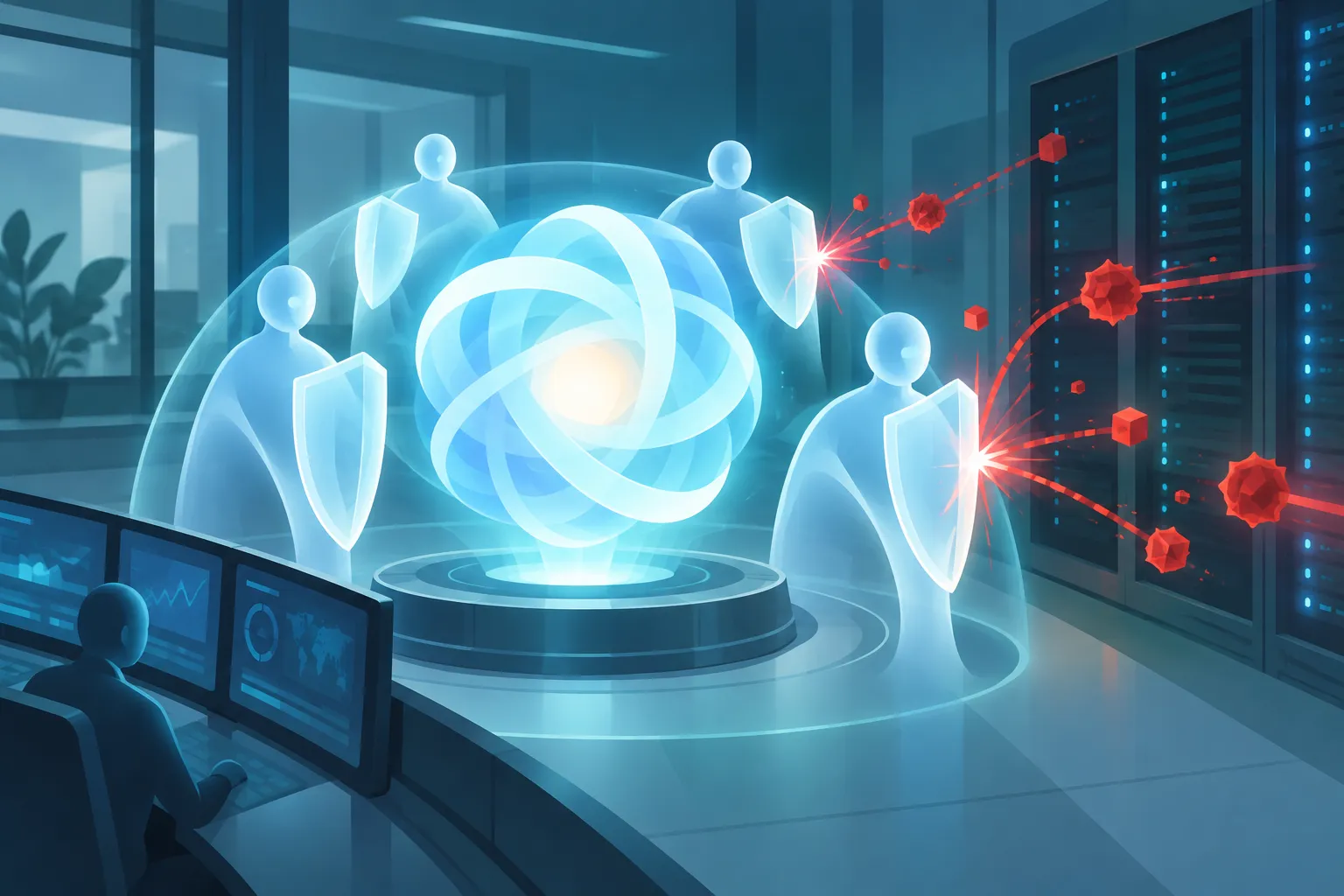
▲ Secondary models monitoring an agent
Where the compute goes: safety monitors
Behind the fast release pace is a heavy investment in safeguards. OpenAI dedicates a substantial share of its total compute budget to secondary monitoring models that watch working agents in real time. These monitors look for prompt injection, an attack that hides instructions in outside content to hijack an AI, stop high-risk autonomous actions and step in before harmful behavior runs. Most of the investment in OpenAI’s API engineering stack also goes to this safety, evaluation and security layer.
Because its products reach 1.2 billion people, many of them non-technical, OpenAI says it will not ship frontier versions that have not been hardened. That is why it decided not to release 6.1 Astra publicly.
The skills that matter more now
When Sottiaux evaluates job candidates, he says tactical skills such as fast typing have lost nearly all their value. The skills gaining value include:
- Strong aesthetic taste and judgment about what is good
- Deep empathy for users and a close understanding of their needs
- Fluency across design, engineering and product management as the lines between them blur
- A founder mindset that takes ownership of problems from start to finish
OpenAI employs more than 120 former Y Combinator founders, and he credits them with drive, initiative and an instinct for product quality. He also sees an advantage for early-career people, who have no decade of old habits to unlearn and tend to find the best ways to use AI tools faster. As an example, he points to an engineer who joined as a new graduate, came to oversee the Applied organization’s entire compute fleet and built major parts of the Codex harness, crediting humility, generosity toward teammates and a fast learning speed.
Much of OpenAI’s product work starts from the bottom up. A team of about four people hacking over a weekend on visual input became a company-wide internal test before turning into a larger feature. Engineers built the Decisions API quickly by using the internal Luna model with constrained sampling as a faster alternative to the Responses API. That autonomy comes with accountability: Sottiaux himself took down production on his third day at OpenAI and was supported in fixing it and learning from it.
What to do now
Taken together, Sottiaux’s view is that agents will become the main users of software and that people will get results without wrestling with settings. The 10x-in-a-year figure is one product leader’s forecast, so it seems more useful as a design baseline than as a certainty. Here is how different readers can act on it:
- Developers running online services: design APIs and backends that can handle heavy agent traffic, not just screens for human users.
- Teams building agents: avoid sinking too much effort into hand-wired loops and graphs, and keep them simple enough to remove when models improve.
- Businesses considering ChatGPT plug-ins: focus on real usefulness that brings people back rather than on discovery tricks.
- People using agents day to day: tune one agent to your preferences before expanding to several, and isolate agents on separate machines or virtual environments with guardrails before connecting them to important code or systems.
- Anyone planning a career: build taste, user understanding and cross-functional skills rather than raw execution speed.