Anthropic is heading into its initial public offering with a compute story built around restraint rather than maximal reservation. During an IPO roadshow fireside chat with JPMorgan Chase CEO Jamie Dimon, Anthropic CEO Dario Amodei explained that the company prefers to lock in a relatively small amount of computing capacity in advance, at relatively low prices compared with its larger rivals, and to buy additional capacity on the open spot market when demand outruns forecasts. The same week, a prolonged Microsoft 365 outage reminded businesses how much they depend on a single cloud provider staying up.
What Anthropic told Wall Street
JPMorgan Chase is serving as an underwriter on the Anthropic offering and is coordinating the push to retail investors, which made the Dimon conversation a central moment of the roadshow. Amodei's tone was optimistic, and his argument rested on three pillars.
A hedged approach to buying compute
The core of the pitch is a two-sided hedge. Anthropic commits upfront to a comparatively modest base of compute at favorable prices. If the business performs below forecasts, that base keeps the company covered without having overspent on idle capacity. If demand accelerates, Anthropic can go to the spot market, where computing capacity is bought as needed rather than reserved years ahead, and acquire incremental capacity.
The S-1 filing, the registration document a company submits before going public, nonetheless lists very large long-term agreements with a range of chip and cloud partners:
| Partner | Commitment | Term |
|---|---|---|
| Broadcom | $161.2 billion | 5-year term |
| SpaceX | Up to $120.5 billion | Through 2029 |
| At least $114.5 billion | Through July 2033 | |
| Amazon | At least $110 billion | Through April 2036 |
| Microsoft | At least $44.9 billion | Through May 2033 |
| NSCALE | Up to $44.6 billion | Through 2033 |
| Lambda | Approximately $41.3 billion | Through 2034 |
The apparent tension between "relatively little compute upfront" and commitments of this size is best read through Amodei's framing: the comparison is with major competitors, and the point is that Anthropic believes it has reserved less, and at lower prices, than rivals have, while keeping the spot market as its release valve.
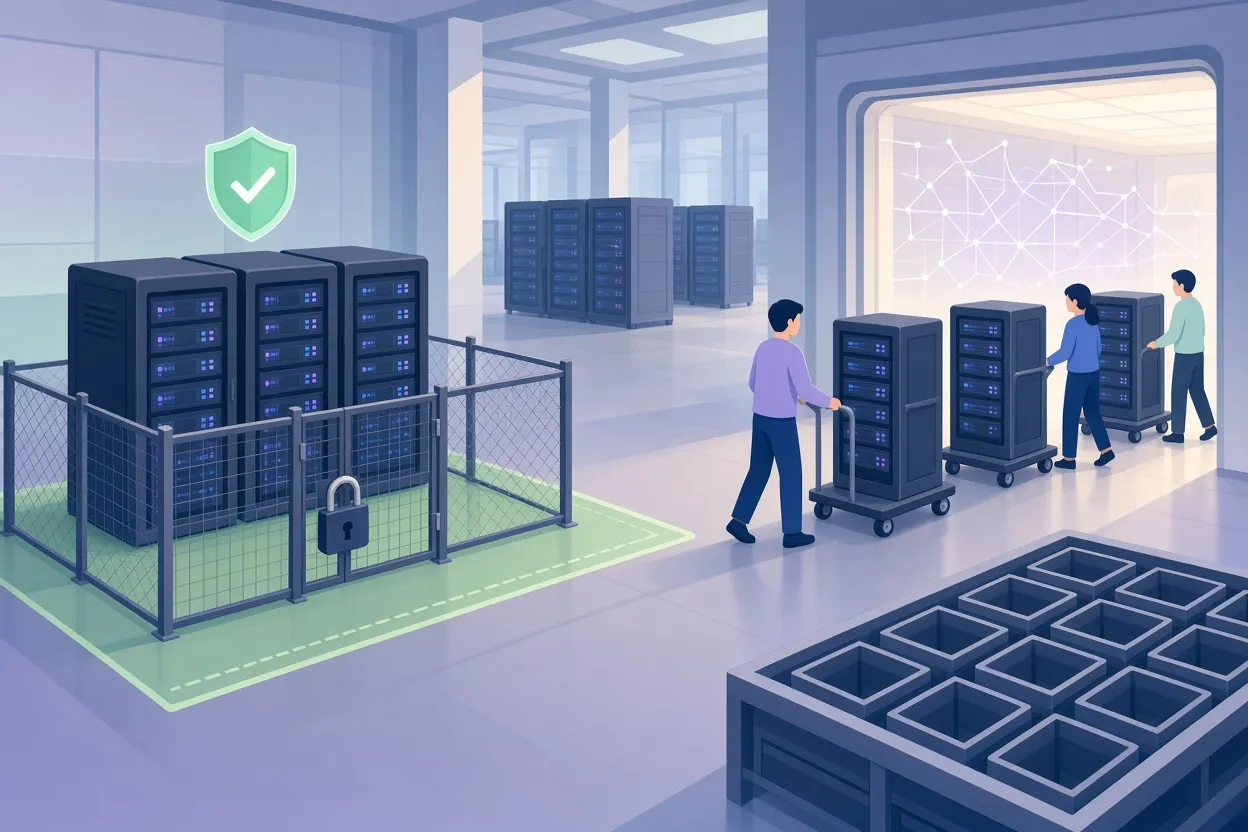
▲ Reserved compute versus spot-market capacity
A cash buffer and higher gross margins
Amodei stressed that Anthropic holds an enormous cash buffer on its balance sheet, which is what makes the spot-market option credible. A company that can pay for incremental capacity when it needs it can afford to reserve less in advance. He also claimed that Anthropic has higher gross margins than its competitors.
Rejecting the "expensive or cheap" split
The third pillar was a technical argument. Amodei pushed back on the idea that AI models must fall into two buckets: expensive frontier models with the best capabilities, or cheap models that are clearly inferior. In his view, Anthropic delivers both cost efficiency and premier performance in the same models, an argument he tied to the margin claim.
The IPO timeline investors are watching
The roadshow comes with a clear calendar. Readers following the offering should note these milestones:
- Expected pricing: November 18
- Expected first trade: November 19
- First lock-up expiration: 27 days after the final prospectus
- Potential Nasdaq-100 inclusion: mid-December
- Final lock-up expiration: 365 days after the final prospectus
A lock-up period is the window after an IPO during which insiders and early investors cannot sell their shares. Two expirations, one at 27 days and one at a year, mean two dates on which new supply of shares could enter the market. Potential inclusion in the Nasdaq-100 index in mid-December is another date to track.
What the spot-market strategy may mean
The strategy invites a debate that industry analysts are already having: will Anthropic's conservative reservations be enough if AI demand expands faster than anticipated? Spot-market capacity is only a reliable release valve if capacity is actually available for purchase when it is needed. If many AI developers end up competing for the same unreserved compute at the same time, prices could rise, and the cost advantage of reserving less upfront could narrow. That risk is the main counterargument to the approach, and it remains unresolved.
For investors, the pitch appears to reframe the question from "how much compute has Anthropic locked in" to "how efficiently can Anthropic convert compute into revenue." The margin and cash-buffer claims are the evidence offered for that reframing. For the broader AI infrastructure market, the message seems to be that at least one major model developer is deliberately leaving room for flexible, as-needed purchasing rather than pre-committing to every unit of capacity it might someday need. If other developers follow, demand for spot capacity from cloud providers and specialized compute firms could grow alongside long-term reservation deals.
Microsoft 365 outage shows the other side of cloud dependence
While Anthropic was making its case for flexible access to infrastructure, Microsoft customers were living through what happens when infrastructure fails. A widespread Microsoft 365 outage began around midday on Thursday and continued into Friday morning, knocking out core enterprise applications including Outlook email, Teams, Word, Excel and SharePoint for millions of users worldwide.
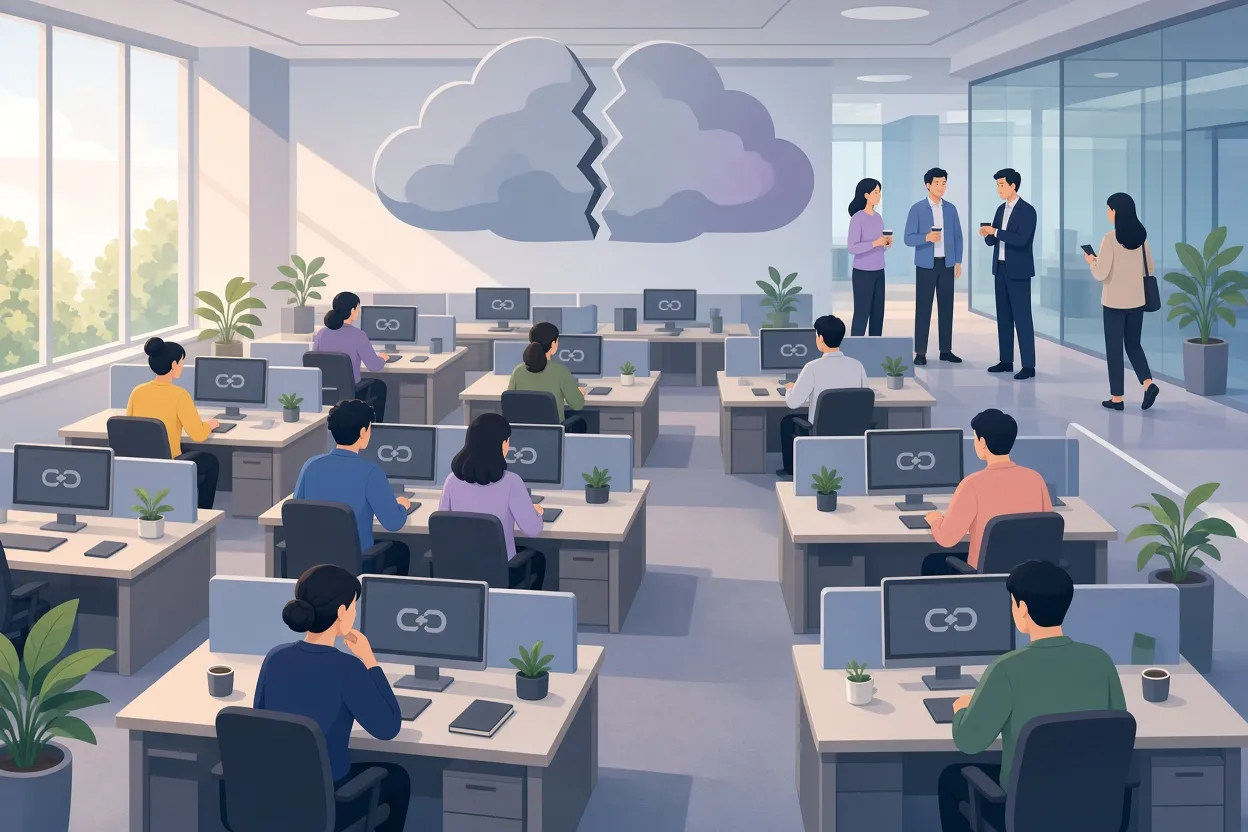
▲ Microsoft 365 outage halts office work
Microsoft explicitly ruled out a cyberattack or any malicious intrusion, and it dismissed speculation that an autonomous AI agent swarm was responsible. The company attributed the downtime to overloaded servers, apologized for the disruption, and said it would publish a formal post-mortem after engineers finished active patching on Friday morning. The length of the outage and the ongoing patching suggest the underlying technical issues may have been more complex than a simple overload, though that is an inference rather than anything Microsoft has stated.
The workflow impact was severe in the most time-sensitive corners of business. Investment banking and private equity deal teams could not send emails or exchange documents during live transactions. Many professionals found they could not, or would not, fall back on consumer tools such as personal Gmail accounts because enterprise compliance standards rule them out. Some employees treated the downtime as an unexpected adult snow day, taking extended lunches while their primary communication and productivity suites were unavailable.
Despite the disruption, Microsoft shares stayed resilient, trading slightly higher in a range of roughly $523.86 to $524.78, up about 0.16% to 0.34%. That steadiness appears to reflect how deeply Microsoft's integrated ecosystem is embedded in corporate workflows: the vendor lock-in that made the outage painful is the same lock-in that makes moving away nearly impossible.
Key takeaways and what to do
Anthropic is going public with a compute plan that pairs a conservative reserved base with spot-market flexibility, backed by a large cash buffer and claimed margin advantages over rivals. Whether that mix proves sufficient under rapid demand growth is the open question investors and analysts are weighing.
- Investors tracking the Anthropic offering should read the S-1 closely for the compute commitments listed above, and mark the November 18 pricing, the November 19 first trade, the 27-day and 365-day lock-up expirations, and the possible mid-December Nasdaq-100 inclusion.
- Anyone comparing AI developers should treat the "reserve less, buy spot" strategy as a claim that depends on spot capacity being available at reasonable prices when needed, not as a settled advantage.
- Enterprise IT managers should set up contingency communication plans for periods when a primary suite such as Microsoft 365 is unavailable, and those plans must satisfy compliance requirements so staff actually use them.
- Organizations locked into a single productivity vendor should evaluate redundancy options so that transactions and deal-making do not stall during the next cloud outage.
None of this is investment advice. The figures here are those disclosed in Anthropic's filing and observed during the outage, and the outcome of the offering will depend on how the market weighs the strategy Amodei described.