Two stories soaked up most of the attention in AI this week: Google's release of Gemini 4 Carbon and Anthropic's S-1 filing for a Nasdaq listing at a targeted valuation of $1.5 trillion to $2 trillion. Both deserve the coverage. But four other announcements landed in the same window, and each of them asks something concrete of the people who use these tools. Mistral released an open-weights coding model that runs on your own hardware. OpenAI rewrote the rulebook that governs how ChatGPT interprets what you say. Apple put a touchscreen on the MacBook Pro for the first time. And a research team showed an AI agent operating an electron microscope from typed English sentences. This article walks through all of them, with a short recap of the headline news first, and focuses on the practical question: what should you do differently?
The two stories everyone saw
Gemini 4 Carbon
Google announced Gemini 4 Carbon roughly two weeks after its Argon update. The company's main pitch is agentic task handling: hand the model a messy, open-ended problem and let it work through the steps on its own rather than prompting it one move at a time. A kite simulation website for a side project is the kind of task Google has in mind, with the coding and design handed over in one go.
The reported numbers are strong. Carbon ranks first on the v5.0 Artificial Analysis Intelligence Index with a score of 59, and it gained 89 Elo points on WebDev Arena to reach 1769, placing fourth there. On security-focused evaluations, the picture looks like this:
| Benchmark | Task | Gemini 4 Carbon score |
|---|---|---|
| SEC-bench Pro | Finding vulnerabilities | 88.2% |
| ExploitGym | Vulnerability exploitation | 54.8% |
| CWE-bench | Vulnerability patching | 71.0% |
One caveat belongs next to every table like this. Frontier models now saturate established benchmarks quickly, which makes the scores progressively harder to trust as a proxy for real-world reliability. Call it the benchmarker's dilemma. The practical response is to test a model on your own messy, multi-step project rather than reading the leaderboard alone.
Anthropic's S-1
Anthropic, the company behind Claude, filed its S-1 to go public on the Nasdaq under the ticker ANTH. The filing runs to hundreds of pages, and the early reading from technology writer Timothy B. Lee was that Anthropic's financials are "surprisingly strong." That contradicted a prior industry assumption that the company had taken significant financial damage after friction with the US government, which supposedly left an opening for OpenAI. The filing was also discussed on The Verge's Decoder podcast with an analyst from the research firm SemiAnalysis.
Going public forces full financial transparency, though some operational and spending questions remain open in the filing, so the complete picture of the business is not yet visible. For a typical user who relies on Claude to draft emails, the listing is unlikely to change the daily experience. For anyone who wants verified revenue, compute costs and runway figures, the S-1 itself is a better source than secondhand speculation.
Mistral Large 4: a coding agent you can run at home
French AI company Mistral announced Mistral Large 4, describing it as its strongest coding model to date. The design goal is different from snippet-by-snippet code completion. Large 4 is built to take an entire programming job and carry it from start to finish, which suits a supervisory style of work: assign the task, step away for a coffee, come back to finished code.
Two details matter more than the headline. First, the model is fully open. Developers can download the weights and run them on their own machines, with no recurring subscription. Second, Mistral says the model is adept at spotting security weaknesses across a codebase before someone with bad intentions finds them, which turns it into an auditing tool as well as a builder.
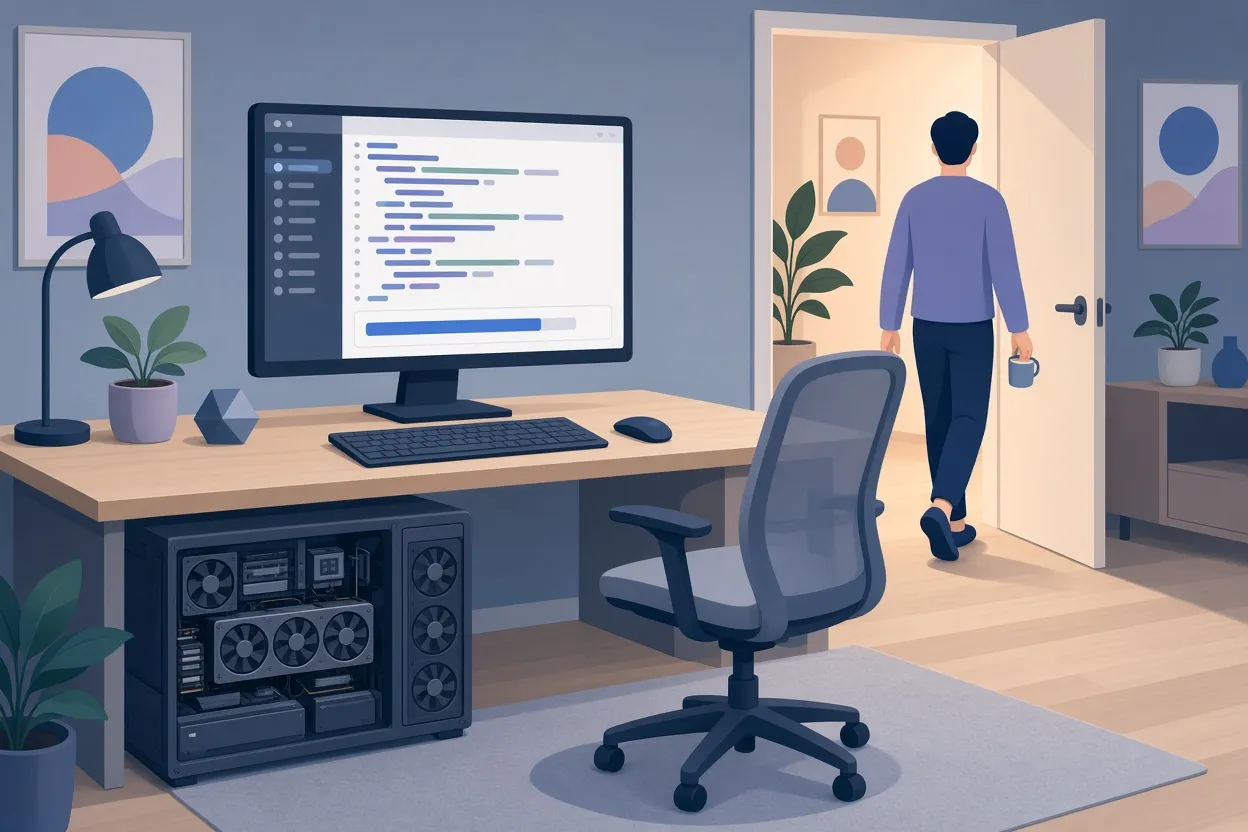
▲ Local coding agent working unattended
For independent developers and small teams, this is the kind of release that works as an equalizer. Enterprise-grade coding capability without an enterprise cloud budget changes who can afford to experiment, and local execution keeps proprietary source code off third-party servers. The competition now spans Mistral, Anthropic, OpenAI and Google Gemini, and that rivalry appears likely to keep pushing capability toward users at lower cost.
What to do:
- If you have the hardware, download Large 4 and run it locally on a real project rather than a toy prompt.
- Keep private code private by using the local model for sensitive repositories.
- Try the supervisory workflow deliberately: give one complete task, leave, and review the result as you would a pull request from a colleague.
OpenAI's Model Spec now starts with intent
OpenAI published a reorganized version of its Model Spec on October 29, 2026. The Model Spec is the public document that sets out how ChatGPT and related models are supposed to make decisions and behave. The new version is organized around five core values:
- Faithfulness to human intent
- Harm minimization
- Honesty and transparency
- Human agency
- Care
The headline change is the first one. Models are now directed to infer what a user actually wants rather than clinging to the literal wording of a prompt. The goal is to eliminate the technically correct but useless answer that appears when someone types a brief, lazy or ambiguous instruction. The spec also frames users as adults capable of exercising their own judgment.
This matters most for voice. Hands-free prompting through ChatGPT's voice mode or a device like Dot tends to produce fragmented, conversational instructions, often while the speaker is doing something else. A model told to prioritize underlying intent is far better positioned to handle that kind of input.
Two points keep expectations realistic. The spec applies to models already powering products like ChatGPT, so it is not a roadmap for some future release. At the same time, day-to-day conversations are unlikely to feel radically different; the expected effect is that workflows feel smoother and less resistant, with fewer pedantic detours. Publishing the rules openly also means users do not have to guess at how the model has been instructed to behave.
What to do:
- Speak and type naturally. Formal prompt engineering becomes less necessary when the model is optimizing for your goal.
- Still state your objective. Intent-first interpretation works best when the intent is visible.
- Read the spec if you build on OpenAI's models; it documents the behavior your product inherits.
Apple's first touchscreen MacBook Pro
A hands-on report from CNET, dated October 29, 2026, describes a MacBook Pro with a touchscreen for the first time. The display carries a new Pro LED XDR branding, with higher brightness, richer contrast and deeper blacks. Users can tap, pinch to zoom and swipe across windows and media directly on the panel instead of relying only on the trackpad. A Dynamic Island sits at the top of the screen and surfaces background processes, audio playback and loading status, much as it does on recent iPhones.
Touch on a laptop sounds minor until you live with it. On touchscreen laptops from other makers, dismissing a dialog or swiping through a photo gallery with a finger is often faster than steering a cursor. The addition also narrows the gap between the MacBook Pro and the iPad Pro, moving the Mac toward a hybrid design philosophy.
Apple has a pattern of waiting years to adopt hardware trends customers have long requested, and then shipping a version that is refined enough to compete strongly. Whether that holds here is a judgment for after the device reaches buyers, but the track record suggests the feature will be polished rather than experimental.
What to do:
- If you build Mac software, expect users who tap. Interface targets sized for a cursor may need a second look.
- If you are weighing a MacBook Pro against an iPad Pro, the overlap between the two is now larger than it was.
An electron microscope that takes plain English
Research reported by Nanowerk describes an autonomous AI agent that operates an electron microscope. These instruments are enormous and traditionally demand a specialized technician to calibrate roughly fifty dials and physical controls. With the new system, a researcher types a request such as asking for a sharp close-up of a sample, and the agent translates that high-level instruction into precise instrument settings, then focuses and scans the material on its own.
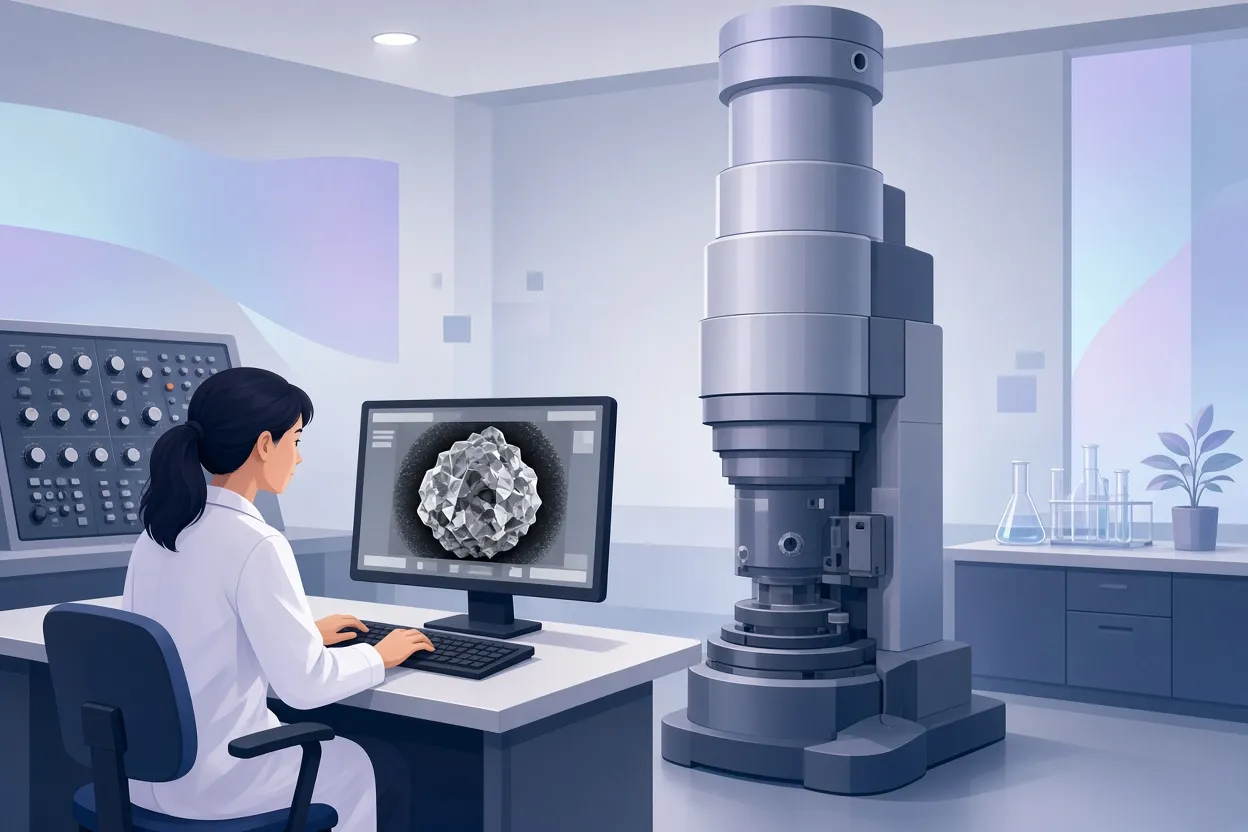
▲ Plain-English control of an electron microscope
The immediate benefit is access. Students, physicians and junior researchers can run advanced materials science experiments without years of training on the machine itself. The broader significance is the interface shift this represents: fifty manual controls collapsing into a sentence is the same pattern now spreading across scientific and technical computing. Expertise in the subject still matters; expertise in the knobs matters less.
What to do:
- If you run a lab, treat natural-language control as a training and staffing question, not only a tooling one.
- If you are a student or early-career researcher, the barrier to hands-on instrument work may be lower than you assume.
A seasonal aside: stylized talking avatars
A smaller practical thread this week concerned animated talking-head avatars, timed for Halloween. The workflow pairs ChatGPT image generation, used to turn a real headshot into an illustrated cyberpunk cyborg, with Magic Hour's AI Talking Photo tool, which lip-syncs the image to an uploaded voice clip. Both steps can be done at no cost, with the usual free-tier limits: a strict 10-second audio cap, 480p output and a watermark. The free tier also defaults to an Expressive motion mode, so a custom prompt such as "Less expressive. Subtle facial movements, sly smirk" helps tone down exaggerated mouth movement, though some exaggeration can remain.
Three practical rules apply. Keep the mouth fully unobstructed in the source image. Keep the background clean and static to avoid warping. Listen back to the audio before uploading it. For corporate training or professional content that needs reusable avatars and higher resolution, HeyGen appears to be the more capable option.
The more interesting argument is about aesthetics. Near-human synthetic avatars in corporate training often leave viewers uneasy as they fixate on small unnatural flaws. An openly artificial, stylized character avoids that trap and, paired with substantive content, may hold an audience better than a near-perfect imitation of a person.
What to take from the week
The big stories set the mood, but the quieter ones set the to-do list:
- Gemini 4 Carbon and Anthropic's IPO filing: read primary sources, and judge models on your own tasks rather than saturated benchmarks.
- Mistral Large 4: open weights, local execution, zero subscription. Run it on private code and try the assign-and-walk-away workflow.
- OpenAI Model Spec: intent now comes first and already applies to ChatGPT. Prompt naturally, but make your goal clear.
- Touchscreen MacBook Pro: expect tap-first users and a narrower gap with the iPad Pro.
- Natural-language microscope control: fewer dials, lower barriers, and a preview of where technical interfaces are heading.
None of these announcements will dominate a headline on its own. Together they describe a steady shift in who gets access to capable tools and how little ceremony it takes to use them.


