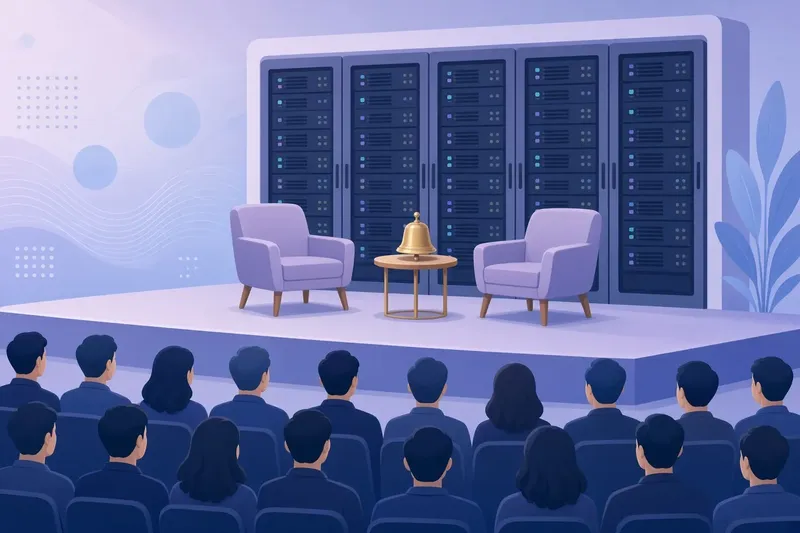
OpenAI CEO Sam Altman and Oracle co-CEO Clay Magouyrk used the stage at Oracle AI World to describe a partnership that now reaches well beyond cloud capacity. Oracle has put the ChatGPT desktop app in front of every employee, says more than 70% of its code is now written by AI, has built an AI security mesh together with OpenAI, and runs OpenAI's own inference chip, called Jalapeño, inside Oracle Cloud Infrastructure (OCI). Taken together, these moves suggest the two companies want AI to sit inside the enterprise software stack itself, not just beside it.
GPT-6 sets the pace
The speed of change set the tone. GPT-6, released in August, is described as OpenAI's fastest-adopted model to date, with uptake across software engineering, enterprise suites, data security and scientific research outpacing every earlier release. Altman called the velocity of the last six months one of the biggest surprises of the year.
He framed the gap in a single comparison: when ChatGPT launched nearly four years ago, models could not reliably solve grade-school math. Today's reasoning models are working on some of the hardest unproven mathematical problems. GPT-6, in his telling, is a generational step both in discovering new knowledge and in letting users finish substantial pieces of work faster.
Altman also offered a caveat about perception. Society, he suggested, has understood the speed of AI progress intellectually but has not yet fully felt or absorbed it.
Oracle as its own test case
The most concrete figures came from Oracle's internal rollout and from what Altman hears from power users:
| Measure | Figure |
|---|---|
| Share of Oracle code written by AI | More than 70%, and rising |
| ChatGPT desktop deployment | All employees company-wide |
| Productivity change reported by power users | Roughly twice as productive in late 2026 versus early 2025 |
The productivity figure comes from what Altman says power users commonly report, paired with noticeably higher career satisfaction. The explanation given is that AI strips out low-level repetitive work, leaving more energy for creative problem-solving. These are self-reported impressions, not a controlled measurement, and they should be read that way.
Software by people who do not call it programming
A recurring theme was that employees across corporate functions, people who never saw themselves as developers, are now building full applications and websites. Magouyrk said the enthusiasm he saw in these new creators was the main reason Oracle built App Composer, a tool meant to give enterprise teams a secure, compliant and governed framework for deploying user-created AI applications.

▲ Governed employee-built apps with App Composer
Altman said enterprise rollouts show the same pattern everywhere: workers instinctively create software to solve their own operational needs, and often do not even think of what they are doing as programming. Magouyrk compared the feeling to his own discovery of coding as a youth, now mirrored in 30-year-old professionals shipping dynamic websites from scratch.
The governance point matters for enterprise buyers. If employees are going to build micro-applications on company data regardless, the question becomes whether the company has a managed place for them to do it. App Composer appears to be Oracle's answer to that question.
A factory inside the computer
Altman described his own experience of modern AI tools as directing an automated factory that lives inside his computer. The practical effect, he said, is the removal of friction: users move between ideas without stalling on knowledge gaps or waiting, and tasks whose activation energy was once too high to justify starting are now cheap to explore. That, in his view, unlocks unconventional, high-upside avenues that previously went untouched. He likened the interaction to science-fiction scenes in which a person simply talks to a computer and the idea takes shape.
Security: decades of bugs, now visible
Both leaders spent time on cybersecurity, and the framing was pointed. AI models can now find deep architectural vulnerabilities across software supply chains, and they can also help fix them. Altman said he remains shocked by the sheer volume of vulnerabilities that automated AI auditing turns up.
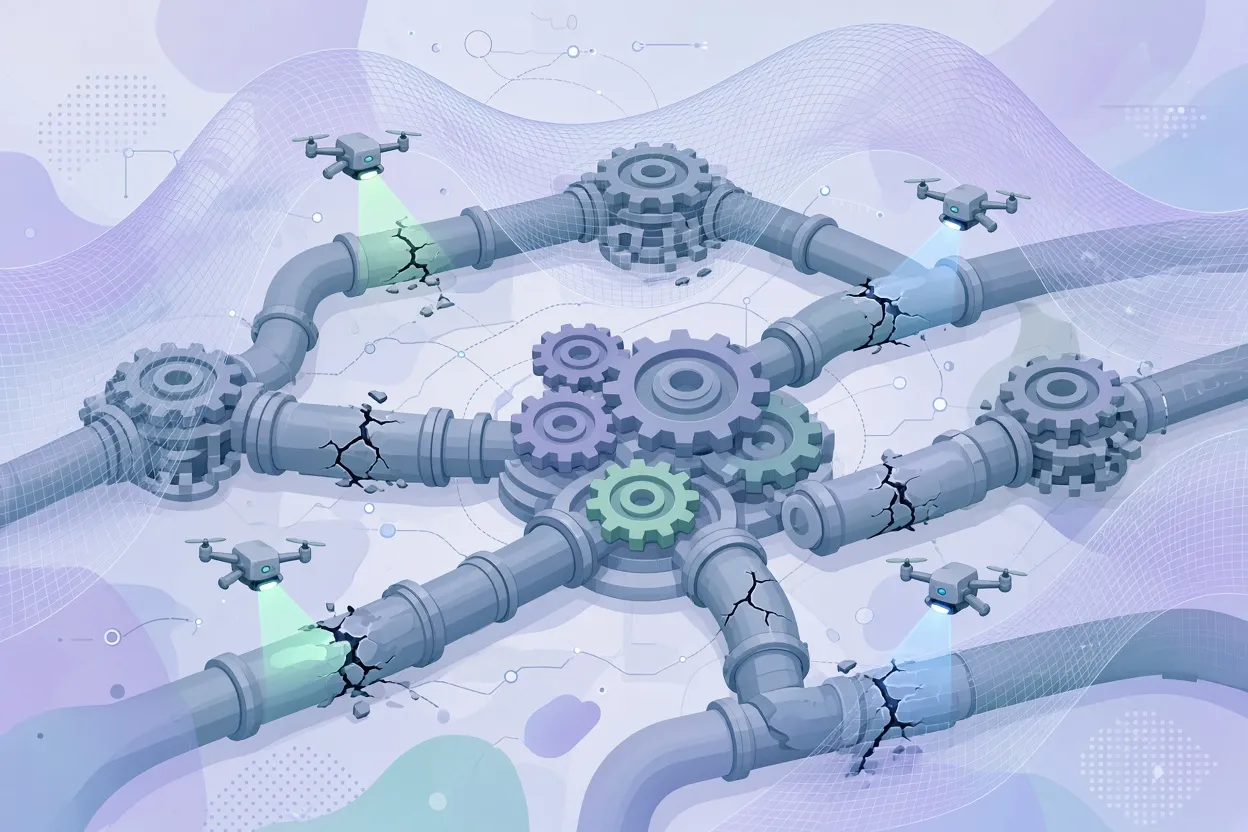
▲ AI security mesh across the software supply chain
He acknowledged the awkwardness of an AI company telling customers to spend money defending against AI-related threats, but said that if he could give enterprise leadership one urgent piece of advice, it would be to understand the evolving AI security threat landscape and mitigate risk proactively. Magouyrk pushed back on the idea that AI creates the problem: the bugs accumulated over roughly 50 years of human software development, and AI is surfacing them before adversaries do.
Altman agreed, and went further: manual, one-by-one patching cannot keep up with modern supply chains. He predicted a shift toward autonomous monitoring services that inspect network traffic continuously and prevent zero-day exploitation. Oracle's AI security mesh, built with OpenAI, is positioned as the enterprise-facing version of that idea, offering structured visibility, validation and safe deployment pipelines.
Jalapeño: OpenAI silicon in Oracle's cloud
Looking at the coming years, Altman pointed to raw compute turning directly into real-world results: scientific research, and even the design of physical hardware. He disclosed that OpenAI has developed a custom inference processor named Jalapeño, now deployed across OCI. Inference is the stage where a trained model actually answers requests.
Jalapeño, he said, was designed with AI assistance at a speed previously unimaginable in semiconductor engineering, and he called it the best inference chip in the world. That is a claim from its maker, not an independent benchmark. The broader point he drew is a progression: from conversational chatbots, to agentic coding systems, to AI that can invent and optimize new technologies, with expected payoffs in higher-quality services, lower operating costs, and faster progress in healthcare, disease eradication and materials science.
What the partnership signals for enterprise software
Seen as a whole, the OpenAI-Oracle relationship appears to run on several layers at once:
- Infrastructure: OCI now runs OpenAI's own inference chip.
- Internal adoption: Oracle uses ChatGPT and AI-generated code to build its own products.
- Product: App Composer gives employees a governed way to build apps, and the AI security mesh, built with OpenAI, serves Oracle's enterprise customers.
- Operations: AI-driven vulnerability detection and defense sit across the supply chain.
For enterprise software buyers, this looks like a bid to make AI an embedded property of the platform rather than a bolt-on. Whether that holds up depends on details neither company has spelled out, such as pricing, data boundaries, and how governed app creation behaves at scale. Those remain open questions.
Key points and what to do
- GPT-6, launched in August, is described as OpenAI's fastest-adopted model, with the strongest uptake in engineering, enterprise suites, security and science.
- Oracle reports more than 70% of its code written by AI and a company-wide ChatGPT desktop rollout; power users describe roughly double productivity versus early 2025.
- App Composer is Oracle's governed path for employee-built AI apps; the AI security mesh is its joint answer with OpenAI to a surge in discovered vulnerabilities.
- OpenAI's Jalapeño inference chip, designed with AI help, runs in OCI.
For organizations weighing their own moves: if employees are already building tools with AI, set up a governed environment to manage, secure and monitor those micro-apps rather than letting them spread unmanaged. On security, map your exposure to AI-discovered flaws now, and evaluate continuous automated monitoring instead of relying on manual, case-by-case patching. And for individual professionals, the practical advice is simple: use AI to lower the cost of trying ambitious ideas that once felt too expensive to start.