AI in Practice, page 3
How to put AI tools to work, on the job and in everyday life
Earlier articles
Earlier articles in AI in Practice, newest first.
 AI in Practice
Muse, Claude Duet and Dots on One Prompt: Which AI Agent Fits Which Job
Muse finished a 90-day Instagram audit first in about 1 minute 25 seconds. Claude Duet, from $20 a month, suits admin work, playbooks and per-channel memory. Dots works over SMS and iMessage but requires the $100 a month ChatGPT tier. Muse is free but messages only through WhatsApp, with no standard SMS support. Test on your own real tasks, and split roles across agents instead of picking one.
 AI in Practice
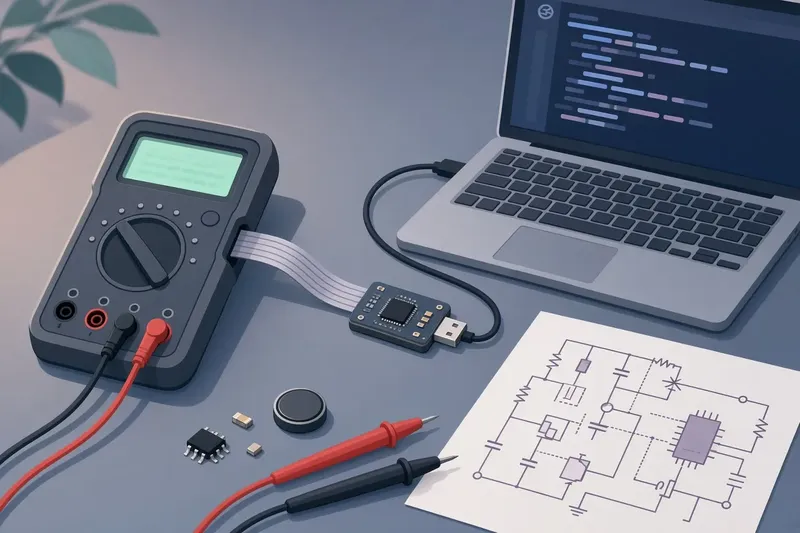
Claude Code Rebuilds a Multimeter's Firmware in Plain C From One Prompt
Claude Code rebuilt the 121GW multimeter's firmware in plain C in under a day. An emulator the agent wrote passed 591 of 591 equivalence tests before flashing. The 90 KB build runs on the meter with accurate readings and working Bluetooth. Left alone, the agent burned thousands of tokens on unrequested checks. Set a token threshold or auto-pause before leaving an agent running unattended.
 AI in Practice
ChatGPT Audio Plugins: A Producer's Soft Clipper Outranked Commercial Tools
A soft clipper built with ChatGPT in about ten minutes placed second of seven. A new mastering plugin coded in about four minutes ranked sixth of seven. Codex on GPT-6 Astra with Light reasoning, on a $20 per month ChatGPT Plus plan. Reference images defined the functional blocks and look, with no-cloning rules. Blind tests against commercial trials, not coding skill, decide what sounds best.
 AI in Practice
Claude Code Trims a 1:53 Clip to 46 Seconds With Captions and -14 LUFS Audio
Seven Claude Code prompts trim a 113-second raw clip to 46 seconds in 14 minutes. One-line prompt left audio at -22 LUFS, 8 dB under YouTube's -14 LUFS target. Rules live in rules.md and names.md, and every step writes a file you can audit. Cut silence by audio loudness, not Whisper timings, then re-transcribe to verify. Add a self-check to every prompt since the model can report done on failed steps.
 AI in Practice
Claude Code and SCORM 1.2: Corporate eLearning Without Storyline or Rise
One test: Claude Code built an 8-page SCORM 1.2 course in under an hour. Opus at Extra effort for the first scaffold, then small targeted prompts for fixes. Annotated screenshots and the element selector steer Claude Code's UI revisions. SCORM wrapper skill asks how to handle SCORM 1.2's single status field. SCORM Cloud sandbox reported Complete status and a 100 percent quiz score.
 AI in Practice
Intelligence Plane: Why Memory and Ontology, Not the Model, Define AI Agents
Intelligence plane decides what an agent knows, remembers, sees and how it learns. Control plane only governs permissions, not what the agent actually knows. Governed analyst scored 97% accuracy against 33% for a naive agent in one test run. Same run used 32,999 tokens against 234,267 for the naive agent. Store memory in the governed database, define ontologies, push entitlements to SQL.
 AI in Practice
Claude at Anthropic: How the Model's Makers Cut an Hour of Work to 15 Minutes
Most Anthropic staff now do an hour of work in 15 minutes or less with Claude. Only about 1 in 4 everyday users report the same gain using the same models. Claude idles 80 percent of chat time, so have it ask every question up front. Automate any task done twice and ask for a three-line summary before details. Spend 1 in 5 sessions on setup and build tools with instructions, not code.
 AI in Practice
ChatGPT Work in Practice: Agents Plan Events, Trips and News Dashboards
ChatGPT Work turns a goal plus connected tools into finished sites, decks and tasks. Venue research and a live launch party site built in about 5 to 10 minutes. A scheduled task refreshes a 30-story AI news dashboard every six hours. A goal spec keeps the agent checking its work across one to two hour runs. One paper trading run projected $3,691 a year in dividends, a simulation only.
 AI in Practice
AI Coding Agents at Uber, Ford and Databricks: More Code, Same Bottlenecks
AI agents multiply code output but review and release gates now cap delivery speed. Gains concentrate in internal tools and framework upgrades, not consumer features. Roughly 70 percent of human code reviews are rubber stamps, by one estimate. Token ceilings, daily tripwires and manager approvals now govern AI spend. Use scripts for chores and carve 5 percent of engineering time for prompt tuning.
 AI in Practice
Mods for Claude Code: Custom Panels, Cache Timers and No-Code Add-Ons
Mods run inside Claude Code and can change its interface, panels and behavior. Requires Claude Code 2.1.287 or newer in the CLI or the desktop app's Code tab. Install from aitmpl.com or Anthropic's directory with a single npx command. Prompt caches last about 1 hour on a subscription but 5 minutes on API credits. Audit community mod code for hidden shell or download commands before installing.
 AI in Practice
Claude Code and T3 Code Turn Linear Tickets Into Merged Pull Requests
Open-source pipeline turns a labeled Linear ticket into a GitHub pull request. Agents pause with multiple-choice questions on vague tickets instead of guessing. Auto-merge only when checks pass, no bot flags and agent confidence is high. Each task gets its own git worktree or Modal sandbox that hibernates when idle. Write specific, testable tickets and keep human review for unverified changes.
Get new articles by RSS or podcast
Add the RSS URL to your RSS reader or the podcast URL to your podcast app to get every new article as soon as it is published. The podcast reads out the headline and key points.
How to subscribe