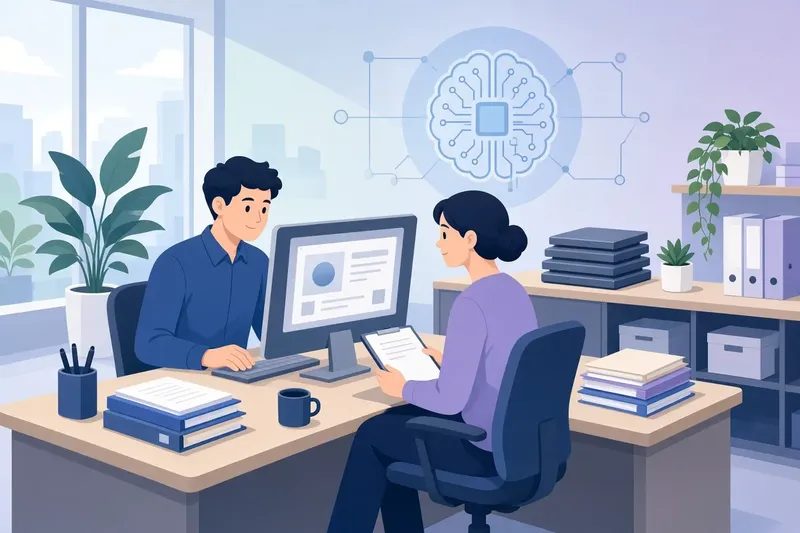
Seagate Technology has trained more than 7,000 of its roughly 8,000 professional employees to use AI tools, yet the company refuses to put a single AI agent on its organizational chart. Patricia Frost, Seagate's Executive Vice President and Chief People and Places Officer, draws a hard line between software that can be deleted in seconds and people whose careers carry real consequences. Her approach, shaped by 32 years in the US Army that ended at the rank of two-star Major General, offers a concrete template for a 30,000-person manufacturer: democratize AI access, govern agents through IT with named human owners, and rebuild the company's job data so automation frees capacity instead of cutting heads.
A rollout built on leads, champions and protected time
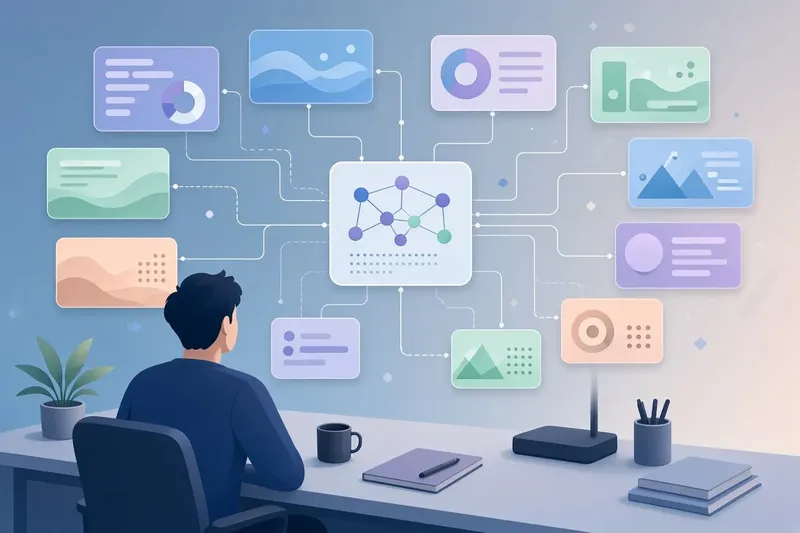
Seagate's workforce splits into about 8,000 corporate professionals and 22,000 frontline manufacturing staff. The AI program started with the professional group and a philosophy of universal access: every office-based employee gets the tools and the foundational training.
The structure behind that effort was deliberately peer-driven rather than top-heavy:
| Element | Scale |
|---|---|
| Business leads, one per function | 35 |
| Volunteer AI champions | 400+ |
| Professionals trained so far | 7,000+ of about 8,000 |
| Total global workforce | About 30,000 |
Two habits helped the training stick without hurting output. "No Staff Meeting Fridays" created meeting-free windows reserved for skills development, and informal "AI and Coffee" sessions gave employees a place to swap prompts, shortcuts and results. The company also notes that prompting itself has changed: early generative models demanded precise phrasing, while current tools handle broader, more conversational instructions, which lowers the barrier for a general workforce.
From personal productivity to redesigned workflows
Seagate treats basic literacy as a starting point, not the goal. The next stage is what the company calls workflow innovation training, an interactive, self-paced online workshop each employee completes alone at a computer. The module asks a pointed question: what is your single biggest friction point, the repetitive administrative task that eats the most time and could be automated?
Frost's own answer illustrates the method. She prepares a bi-monthly update for Seagate's senior leadership team that used to require manual cutting and pasting of inputs from people and locations across her organization. The redesigned flow lets AI aggregate those contributions, then routes the draft into an edit-and-review stage before it goes out under her name. The human remains the accountable author; the software only removes the assembly work.
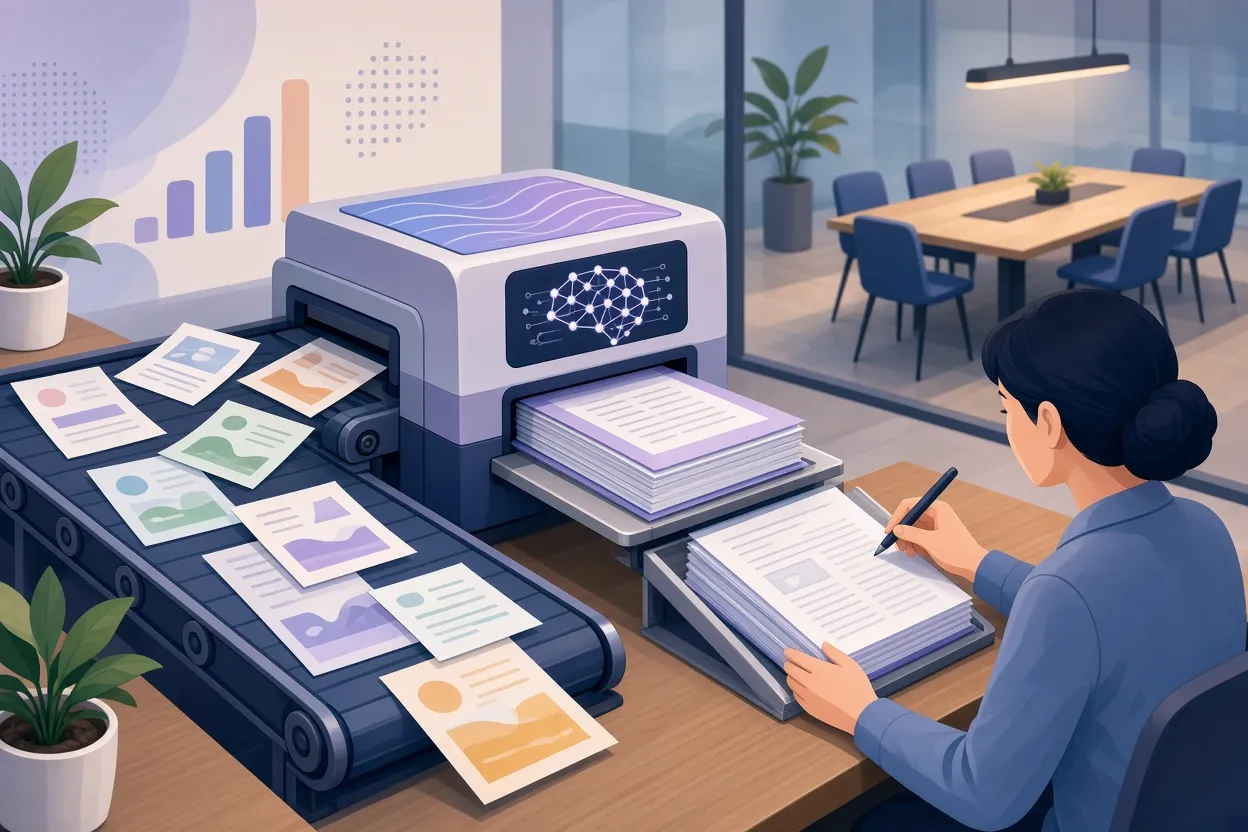
▲ AI-assembled executive update with human review
Once an individual pain point is identified, employees can take it to AI champions or cross-functional technical teams, especially where data moves between HR, Finance and other units. Those handoffs can get complicated fast without clear functional ownership, which is why Seagate pairs the grassroots approach with an executive mandate.
That top-down piece began at a May senior leadership meeting of senior vice presidents and above. Seagate's CEO asked every executive function to identify and present one high-priority enterprise workflow suited for AI-driven automation. Leadership then weighed those friction points against finite technical resources and assembled an annual enterprise workflow roadmap. Frost argues that combining the two directions eases employee anxiety: when people see leadership redesigning work openly, AI stops looking like a tool for quietly eliminating jobs. Her repeated message to staff is to redefine their roles, not just shave minutes off tasks.
Why agents stay off the org chart
Frost's position on whether agentic AI should change reporting lines or justify manager pay for people who orchestrate software agents is unambiguous: Seagate will not place AI agents on its org chart, a position she says the CEO shares. Her reasoning rests on three points.
First, capability. Seagate makes hard disk drives, and software cannot build them or navigate the engineering complexity of a physical production line. An engineer and an agent are not of equal standing, and the company does not pretend otherwise.
Second, reversibility. A digital agent can be deleted instantly with no consequences. Restructuring a human workforce carries profound organizational and personal costs. Treating the two as peers on a chart blurs that difference.
Third, accountability. Boards and regulators will never hold an agent liable. If an agent malfunctions or behaves improperly, responsibility sits with the human functional leader. Org charts exist to represent legal, financial and managerial accountability, which only people can hold. Bots that come and go would also make every reorganization confusing and unworkable.
Instead of hierarchy, Seagate uses an IT-governed Agent Management System. Every agent is registered to a designated human owner who audits whether it still works as intended, enforces guardrails, and decommissions bots that have gone stale over the course of the year.
Operating software is not managing people
The same logic applies to titles and pay. Some employees who learn to automate workflows have asked for raises or an "agent manager" title. Frost declines to treat prompt users or tool operators as people managers. Directing software parameters, she argues, lacks the emotional, interpersonal and operational complexity of leading frontline manufacturing workers. She has not created a formal agent manager role and prefers to address the question through broader job architecture. Full-time agent developers, in her view, likely belong in IT rather than HR, even though HR staff need enough technical fluency to design basic automated flows.
One way to frame the distinction is a five-level ladder: a User who simply works with AI tools, a Delegator who hands discrete tasks to agents and reviews the results, and then, above a managerial threshold, a Supervisor of agents who sets standards and owns outcomes, an Orchestrator who designs multi-agent systems, and an Agent leader who balances human and agent capacity across functions. Frost finds the framing useful but adds a caveat: even when centralized IT teams architect complex cross-functional agent systems, business leaders must validate and certify what those systems produce. No employee or executive can blame an inaccurate output on the agent.
"Human amplification" and a nine-month job architecture
Frost dislikes the phrase "AI transformation" and describes Seagate's initiative as "human amplification": using technology to augment workers, improve productivity and make the workplace better. The practical vehicle is a comprehensive job and workforce architecture project across the enterprise.
Many roles had not been systematically reviewed in years. The project breaks each position into its component tasks, skills and competencies. Working with Cobrainer, a German talent-intelligence company that analyzes global labor and market data scraped from the web, Seagate can estimate what share of a given role's tasks is automatable with current technology. If the analysis says 10 percent of a job can be automated, a manager can guide the employee to automate those tasks and redirect that 10 percent of capacity toward growth-oriented work.
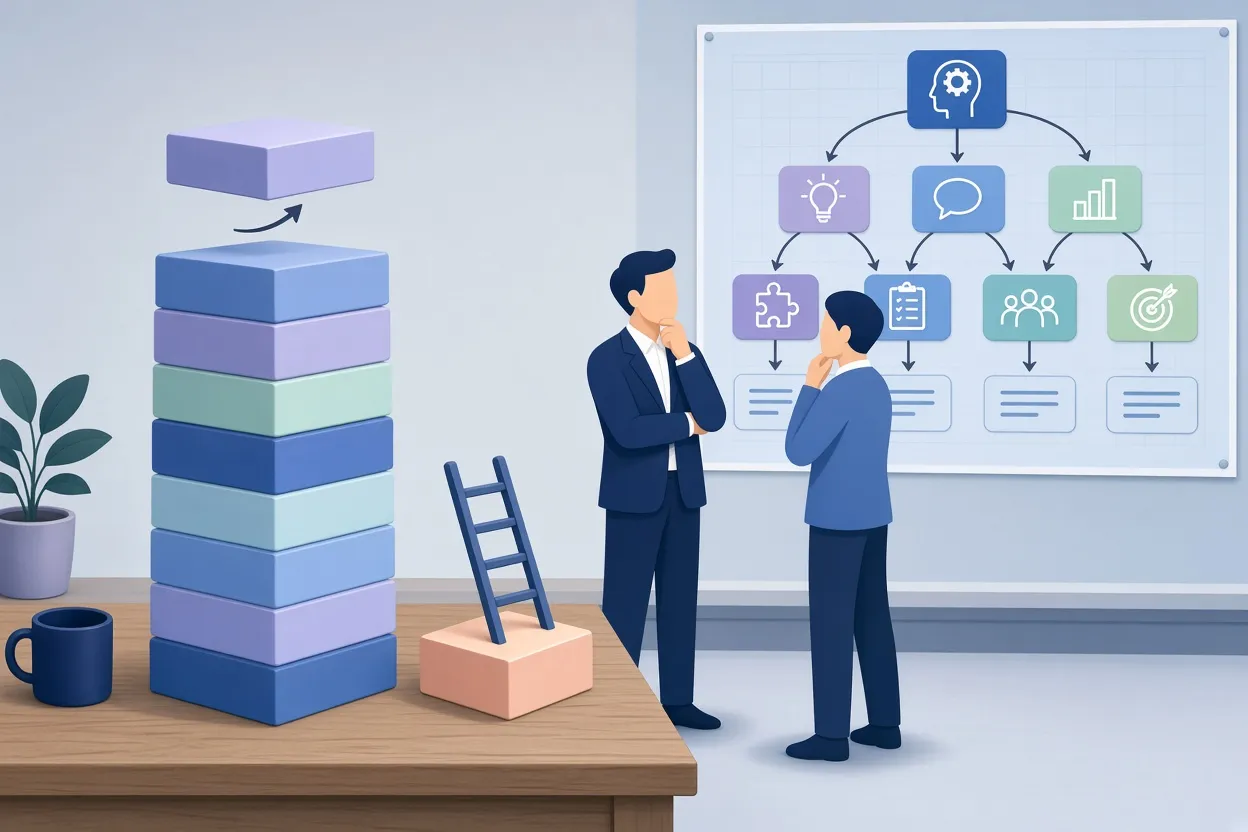
▲ Ten percent of a role automated into freed capacity
Frost frames this as the first principle of AI: before layering tools on top, ask whether the data underneath is clean. Whether a company runs SAP, Workday, Oracle or UKG, downstream modules such as career pathing and learning profiles all depend on an accurate skills and job structure. At Seagate, job architecture serves as the data foundation for its SAP implementation, and the company aims to finish the enterprise-wide build within nine months.
What a job architecture contains
Frost compares the framework to an expanded, standardized resume for every role:
- Where the position sits in the hierarchy
- Its primary responsibilities and the core tasks it exists to accomplish
- The explicit skills required, typically 10 to 15 per role
- Tiered proficiency levels, such as what separates a Professional Level 1 (P1) engineer from a P2
Cataloging this across roughly 30,000 jobs creates transparent promotion pathways on technical and non-technical tracks. After the initial baseline, HR business partners and people managers will maintain the architecture as a living document, adjusting job families as structures evolve and recognizing that some legacy tasks will phase out.
Disappearing roles, Frost stresses, do not mean departing employees. Because Seagate has already invested in employees' cultural alignment and business knowledge, migrating them into adjacent or emerging roles is more effective than replacing them. The architecture also gives managers and employees shared data for one-on-one development conversations, which managers often dread when they lack clear criteria.
Human-in-the-loop hiring
The same principle governs recruiting. AI has made applicant fraud easier: engineered resumes, synthetic identities, and candidates who use bots to resubmit keyword-tweaked resumes for the same opening to beat tracking filters. Seagate uses an AI triage system to process the influx, but keeps human recruiters and interviewers in the loop because algorithms can assess skills fit, not culture fit. As a final authenticity check, every new hire must visit in person before officially joining. Performance evaluations, sensitive interviews and onboarding are treated as fundamentally human work.
A leadership lens from the Army
Frost's military career spanned military intelligence, including signals, imagery and all-source analysis, and ended with five years in cyber defense and operations. The Army, she notes, is built around people rather than platforms, and it routinely pushes individuals into emergent fields with the training to succeed there. The lesson she carries into Seagate is to judge people by capabilities and learning potential rather than titles, which is the same instinct behind looking at tasks and skills instead of static job labels.
Seagate's broader development work follows the same thread. The Leadership Velocity Program selects 35 high-potential middle managers each year for a year-long immersion across global manufacturing sites; the current cohort's first stop was Singapore, where participants signed NDAs and met directly with executive vice presidents. The aim is to open the aperture in a vertically integrated company where silos form easily.
What to take from Seagate's approach
- Give everyone access and training, but run adoption through functional leads and volunteer champions rather than a central mandate alone.
- Protect learning time and create informal venues for sharing what works.
- Move quickly from individual productivity to workflow redesign, and pair employee-identified pain points with an executive roadmap.
- Keep agents off the org chart. Register each one in an IT-managed system with a human owner, guardrails and a decommissioning cadence.
- Do not equate operating software with managing people, and make clear that humans own every AI-generated output.
- Clean up job, task and skills data before scaling AI, and frame automation as freed capacity to be reinvested in people.
Seagate's experience suggests that the hardest part of enterprise AI is not the tools but the organizational design around them. Keeping accountability, leadership and career growth firmly on the human side of the line appears to be what lets a manufacturer automate aggressively without losing its people.