In early 2024, Anthropic started an internal effort known as Project Panama. The goal was simple to state: acquire large volumes of printed books, cut off their spines, scan every page, and feed the text into the training pipeline for its Claude models. The physical copies went to recycling after scanning. In June 2025 a court ruled that scanning books Anthropic had legally purchased counted as fair use, the doctrine in US copyright law that permits certain uses of protected works without permission. The legal question, at least for now, has an answer. The ethical question does not. This article looks at why a lawful process can still raise ethical objections, what disappears when a rare or out-of-print book becomes a row in a dataset, and why books printed before 2022 have become unusually valuable raw material.
What Project Panama Involved
The mechanics of the program are industrial. Warehouses run specialized cutting machines that slice the glued spine off a bound book so the loose pages can run through high-speed scanners. Once the text is captured, the pages and covers go into recycling bins. News reports have described the program as destroying millions of books, and reports from outlets such as CBS News and Forbes have pointed to a surge in antique book buying driven by AI companies looking for training data.
Anthropic did not improvise this operation. The company hired the former head of partnerships at Google Books to lead the project. That hire matters because Google's own book-scanning program, which digitized library collections, was upheld by a US appeals court in October 2015 under the fair use doctrine. That ruling created the legal foundation that AI companies now rely on, and over roughly the past 18 months courts have continued to interpret copyright law in ways that allow companies to digitize and dispose of physical books for commercial machine learning.
Why Pre-2022 Books Became So Valuable
Project Panama prioritized books printed before 2022. The date is not arbitrary. ChatGPT launched in 2022, and since then an enormous amount of text on the internet has been written or partly written by AI systems. For a lab training a new model, text generated by earlier models is a liability. It contaminates the training set with machine output, a problem often described informally as "slop."
A book printed before 2022 carries a guarantee that no digital source can offer: every sentence in it was written by a human being. That makes the physical book trade an unusually clean source of training material. Old, rare and out-of-print volumes, which once held value mainly for collectors, scholars and libraries, now also hold value as high-purity data. Anyone who creates or holds content from before late 2022 should recognize that it has a kind of historical and data-hygiene value that will not be reproduced.
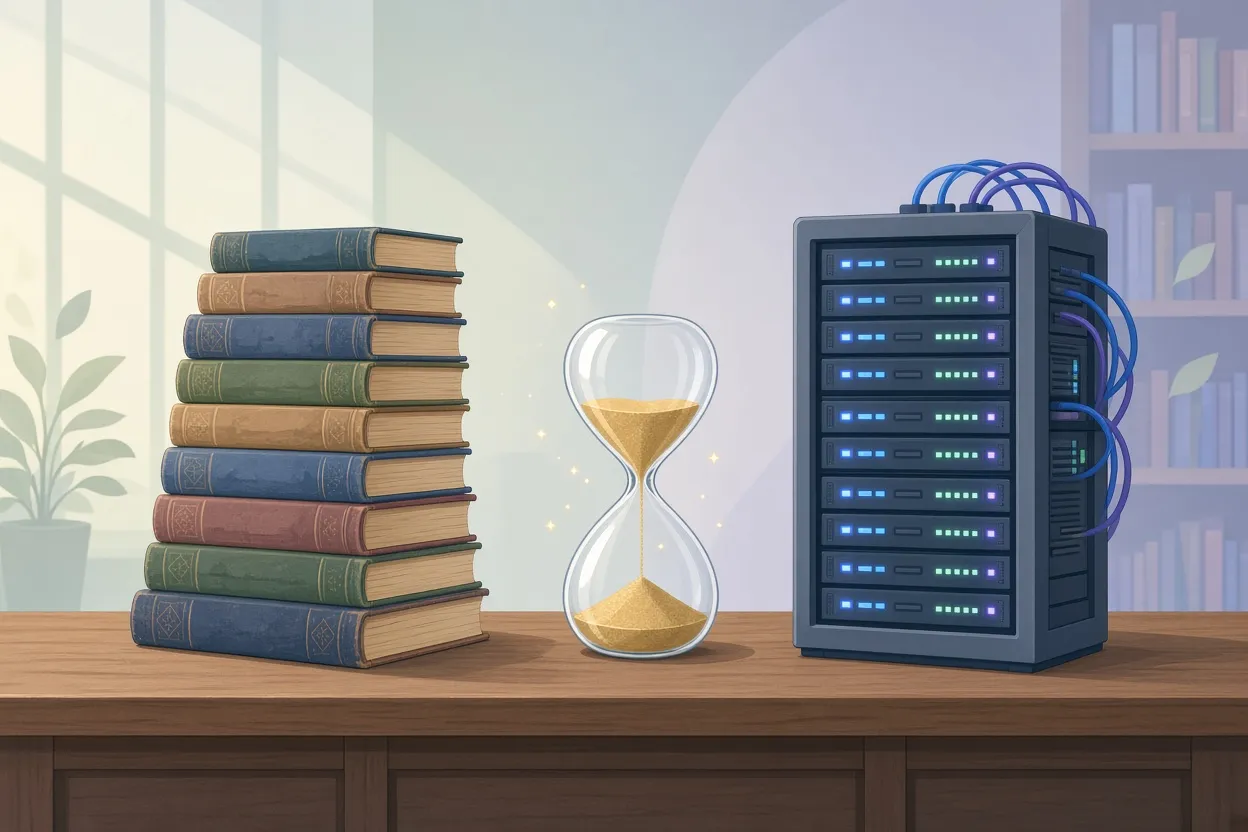
▲ Printed knowledge converted into training data
What Disappears When a Book Becomes Data
The court's reasoning in the Anthropic case rested in part on the point that the underlying ideas in the books are preserved. The text survives in digital form. From that perspective, nothing is lost: the words are still there, just stored differently.
The opposing view starts from a different premise. A printed book is more than its text. A rare or antique volume is an original copy, and no scan reproduces that. When the spine is cut and the pages are recycled, that original is gone permanently. One way to think about this is to contrast it with industrial harvesting of a crop. A coconut plantation regrows after a harvest; a destroyed first edition does not. Human knowledge in physical form, once lost, cannot be regrown.
There is also a question of who ends up holding the knowledge. When the physical copies are destroyed and the text lives inside proprietary model weights, control over that knowledge shifts from a distributed network of libraries, collectors and readers to a handful of private companies. Seen this way, the practice invites comparison with historical episodes in which authorities destroyed books to control information. That comparison is a value judgment, not a legal finding, and reasonable people may reject it on the grounds that the text remains accessible in other copies and formats. But it explains why the practice unsettles people who accept that it is legal.
The Legal Line: Purchased Books Versus Pirated Ones
The June 2025 ruling came in a copyright lawsuit filed against Anthropic by authors including Andrea Bartz, Charles Graeber and Kirk Wallace Johnson. The court split its decision in a way that now defines the landscape.
| Conduct | Court's finding | Consequence |
|---|---|---|
| Scanning legally purchased physical books for training | Fair use | Permitted |
| Training on roughly 7 million pirated books | Unlawful | $1.5 billion settlement |
The $1.5 billion figure has become a reference price. Dozens of copyright suits are pending against OpenAI, Meta, Google and Midjourney, and plaintiffs in those cases now have a concrete benchmark for what unauthorized training data can cost. For companies that trained on pirated libraries, this creates a genuine solvency question. For those that purchased their sources, the ruling is, for the moment, a green light.
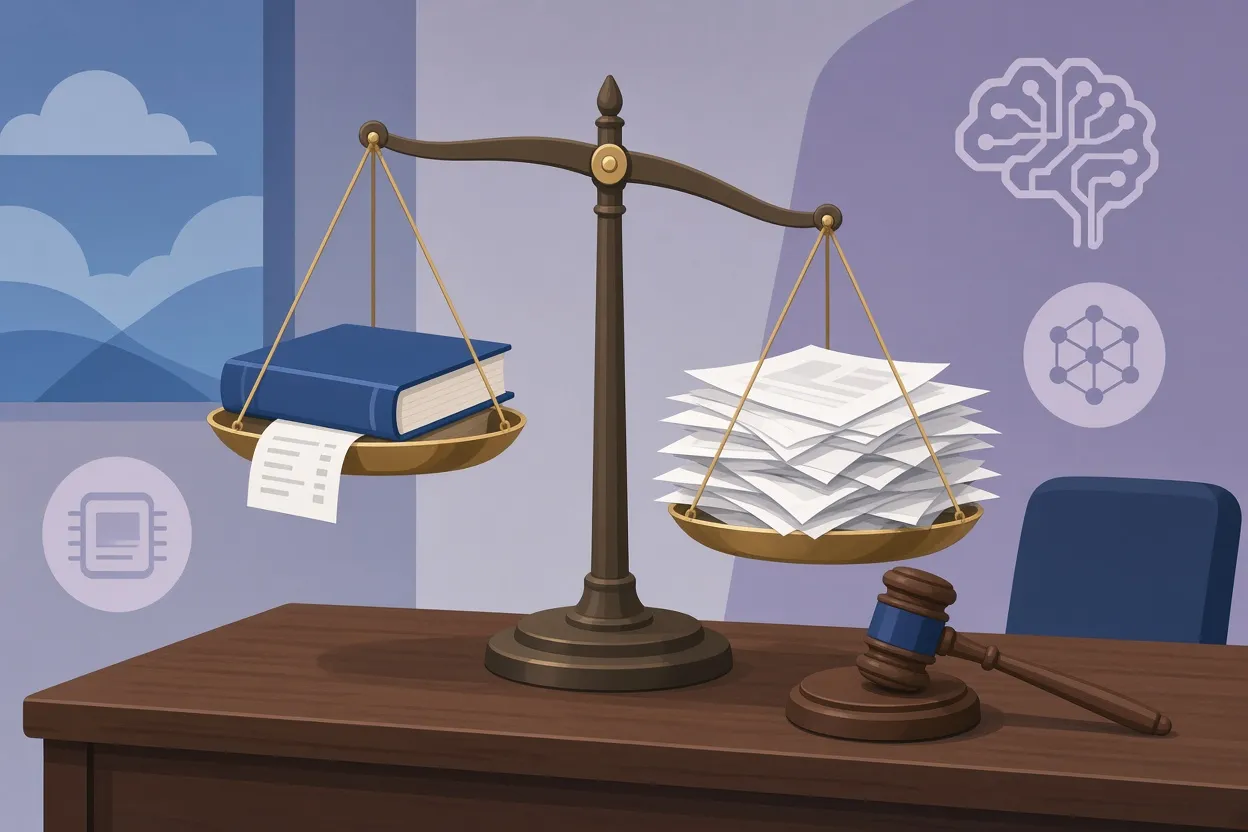
▲ Purchased books versus pirated copies in court
Why a Legal Answer Does Not Settle the Ethical Question
Several tensions remain even after the ruling.
The first is asymmetry. Under the current interpretation, a corporation can buy a book, destroy it and absorb its text into a commercial product as fair use, while an individual who shares a digital copy of the same book faces penalties for piracy. The law distinguishes these cases, but the distinction is hard to square with everyday intuitions about fairness.
The second is the "learning like a student" narrative. AI companies often describe training as analogous to a person reading widely and learning from what they read. The competing description is that the process functions more like an extractive manufacturing line: raw material comes in, is processed at industrial scale, and the product is sold, with no return flowing to the people who produced the raw material. Which description is more accurate shapes whether one sees fair use as an appropriate frame at all.
The third is compensation. Authors whose books were bought and scanned receive nothing for the use of their text in a product that generates revenue far beyond any single book sale. The court did not find that unlawful. Whether it is fair is a separate question.
The Getty Images Case: Winning the Argument, Losing the Market
The stock photography industry offers a cautionary parallel. Getty Images spent decades building and curating a watermark-protected archive and a licensing business around it. When Stability AI trained image generation models on scraped images, Getty Images sued. Yet in October 2026, Getty Images filed for Chapter 11 bankruptcy restructuring. Designers and commercial clients had already migrated to cheap generative alternatives, and the licensing market the company depended on had shrunk.
The lesson appears to be that copyright enforcement, even when pursued aggressively, can arrive too late to protect a business model once generative tools have displaced demand. Decades of curation were undercut not by a single court loss but by a market shift that litigation could not reverse.
What Is at Stake for Creators
Taken together, these cases describe a system in which authors lose control over the final copies of their books, photographers lose attribution and revenue, and the downstream value of their work accrues to a small number of frontier labs. The concern is not only about money. If creating original work no longer carries a reasonable expectation of credit or income, fewer people may choose to do it, and the pool of human-written material that models depend on could shrink over time.
Pending appeals may reach the US Supreme Court. A ruling there could impose large financial liabilities on AI developers or confirm the current fair use interpretation. It is genuinely uncertain which way that will go.
Key Takeaways and What You Can Do
- Project Panama shows how AI labs acquire clean training data: by buying printed books, destroying them after scanning and relying on fair use.
- Pre-2022 books are valuable because they are guaranteed human-written. Content from before late 2022 has lasting historical and data value.
- Courts currently separate purchased books (fair use) from pirated ones (unlawful), with a $1.5 billion settlement as the reference cost for the latter.
- Legal permission does not resolve ethical concerns about irreplaceable originals, asymmetric treatment of companies and individuals, or uncompensated creators.
- Getty Images demonstrates that enforcement alone may not save a business model once demand moves to generative tools.
For readers, a few practical steps follow. Watch the pending copyright appeals and any Supreme Court action closely, because the outcome affects both creators' rights and the financial exposure of AI companies. If you create or sell content, consider shifting toward specialized, defensible work that generative models cannot easily approximate, rather than commodity assets. If you build on a large platform's technology, keep thorough public documentation of your original concepts and naming. And if the ethics of destructive scanning concern you, the place to act is in the legal and policy process, where the rules for how human work feeds AI systems are still being written.