Archive of Our Own (AO3), the nonprofit fanfiction repository that hosts more than 18.4 million works across over 82,000 fandoms, has been offline for a security incident that its operators say could keep the site down for up to four weeks. Almost immediately after the shutdown announcement, a separate website called ao3.life appeared, built with a swarm of AI agents that scraped fanfiction from shared cloud drives and turned it into paid, AI-narrated audiobooks. Authors responded with roughly 2,000 takedown notices in a single day, and the clone went dark. Together, the two events show how much strain a volunteer-run public resource absorbs when automated agents treat it as free raw material.
What happened to AO3
The outage began early on a Thursday morning, when AO3's status page said the site was temporarily down for maintenance that would last a couple of hours. A few hours later, the estimate grew to at least 12 hours. By Thursday afternoon, the Organization for Transformative Works (OTW), the nonprofit that owns and runs AO3, said restoration could take around two weeks and up to a full month.
On Friday morning, the OTW clarified that the downtime was not scheduled maintenance but the result of a security incident. Its status update described the security response procedures and included password hashing recommendations for users. The organization also confirmed that no user data, stories, bookmarks or kudos had been deleted or permanently destroyed.
That distinction matters. Routine maintenance on a major site usually happens in short, predictable windows. A service of AO3's scale going offline for weeks is exceptionally rare, and it raises an open question about whether the archive will return in its traditional form or in a changed, possibly degraded, state at first. The OTW has been transparent about the process, and its updates suggest the site may initially come back with reduced functionality.
A few technical clarifications circulated during the downtime. Some commenters blamed PHP, a server-side scripting language, for the problem. AO3 runs on Ruby on Rails, a different web application framework, so PHP vulnerabilities were not the cause. Everyone administering and maintaining AO3 and the OTW is an unpaid volunteer.
Why the timing hurt
The blackout landed at what may be the single busiest stretch of the fandom calendar:
- The final days of Kinktober, an annual October challenge in which authors write daily prompt-driven stories, right as writers were finalizing work to post.
- The eve of National Novel Writing Month (NaNoWriMo), when many writers attempt a 50,000-word manuscript in November.
- Release week for a new installment in the A Court of Thorns and Roses (ACOTAR) fantasy romance series, a moment when readers typically rush to AO3 to read and publish new stories.
- The autumn surge of Twilight nostalgia, a franchise that holds a foundational role in modern transformative fiction and famously served as the fanfiction origin of Fifty Shades of Grey.
Authors who publish chapters on strict release schedules reported real distress, not just dramatic panic. Many said they felt terrible about leaving readers waiting, and the platform offers no built-in way to migrate a follower base elsewhere.
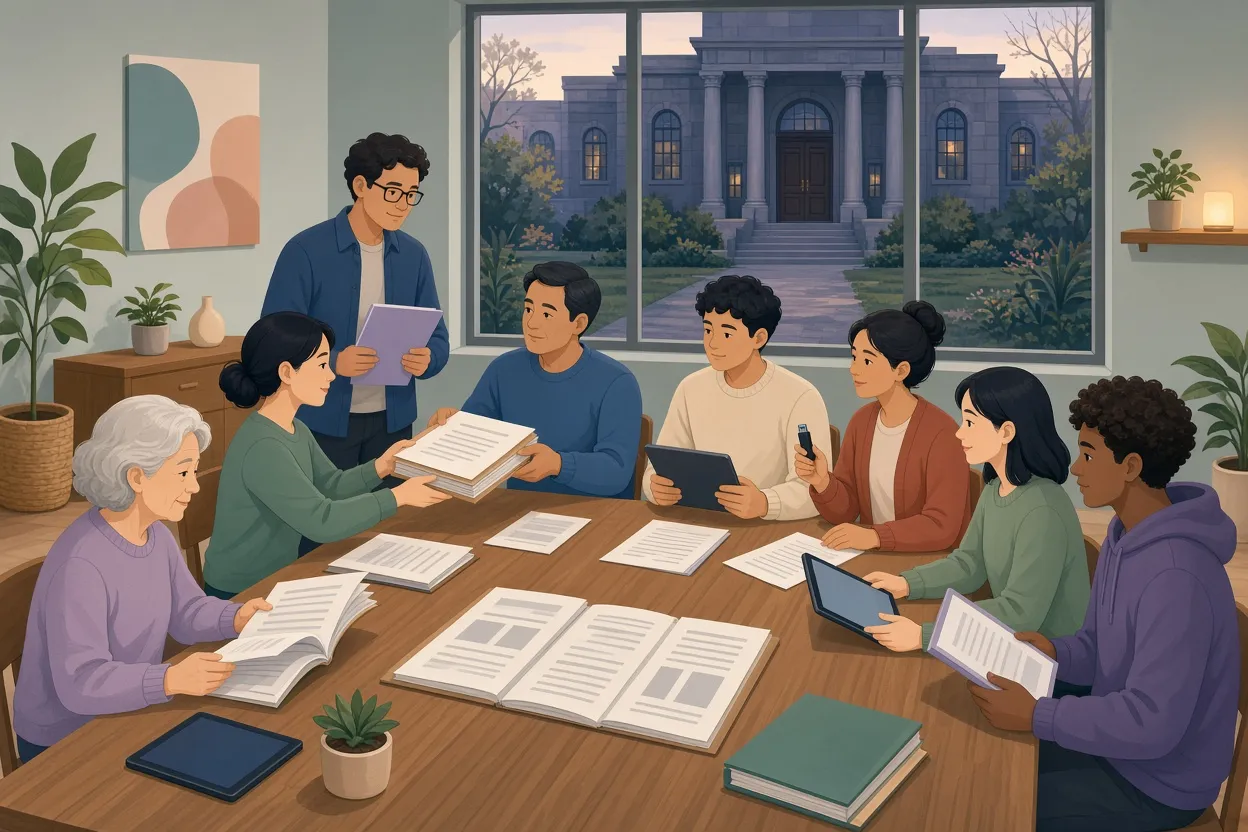
▲ Fans trading backups while the archive stays offline
How the community coped
Readers and writers improvised. People who had downloaded personal collections as insurance against exactly this kind of failure began trading files peer to peer, sharing private Google Drive links and downloaded EPUBs on Reddit and Discord. Conversation moved to Tumblr and to a dedicated megathread on the AO3 subreddit, where users swapped updates and archives.
Alternative publishing sites got a look and mostly a shrug. SpaceBattles and FanFiction.net were seen as having smaller, less active audiences. Wattpad drew the strongest rejection: writers described it as commercialized, heavy with intrusive ads, heavily censored and populated mainly by young teens. Rather than relocate, most of the community chose to wait.
Notably, almost none of the frustration was aimed at AO3, the OTW or the volunteer maintainers. Many authors and readers instead said the outage renewed their appreciation for an ad-free, noncommercial writing environment and pledged to take it less for granted once it returns.
That noncommercial structure is also part of what has kept AO3 relatively clean. Monetizing fanworks on the platform is forbidden because of intellectual property and fair use constraints. Since there is no money to extract, the site has largely avoided the automated spam and low-quality AI-generated content common on commercial networks such as X and Instagram. Community policies and volunteer oversight add another layer of protection.
The clone that appeared overnight
Almost immediately after the downtime announcement, ao3.life went live under the tagline "AO3, saved before it slips away." The site presented itself as a backup archive, but its business model told a different story.
The developer used a swarm of AI agents running across 40 virtual machines to systematically scrape fanfiction from shared internet drives and repositories, including Google Drive and Google Docs links that readers had been circulating during the outage. The scraped text was converted into EPUB files and into audiobooks narrated by synthetic voice models. Listeners got the first three minutes of an audiobook free, after which they had to pay. The site claimed authors would receive 91% of proceeds and the platform would keep 9% for processing, yet it had taken the works without asking anyone.
| Detail | ao3.life |
|---|---|
| Scraping setup | AI agent swarm across 40 virtual machines |
| Sources ingested | More than 70,000 Google Drive and Google Docs URLs |
| Product | AI-generated audiobooks and EPUBs |
| Pricing | 3 free minutes, then paid |
| Claimed revenue split | 91% to authors, 9% to platform |
| Lifespan | Roughly one day |
| Complaints received | About 2,000 takedown notices and complaints |
The collision with fanfiction culture was direct. Fanworks are shared noncommercially within community bounds, and on AO3 authors have nuanced privacy controls, including the ability to archive-lock a work so only logged-in members can read it. Downloading those collections and mass-circulating links stripped those boundaries away. Monetizing fanfiction also creates serious intellectual property exposure, since the underlying franchises belong to major rights holders.
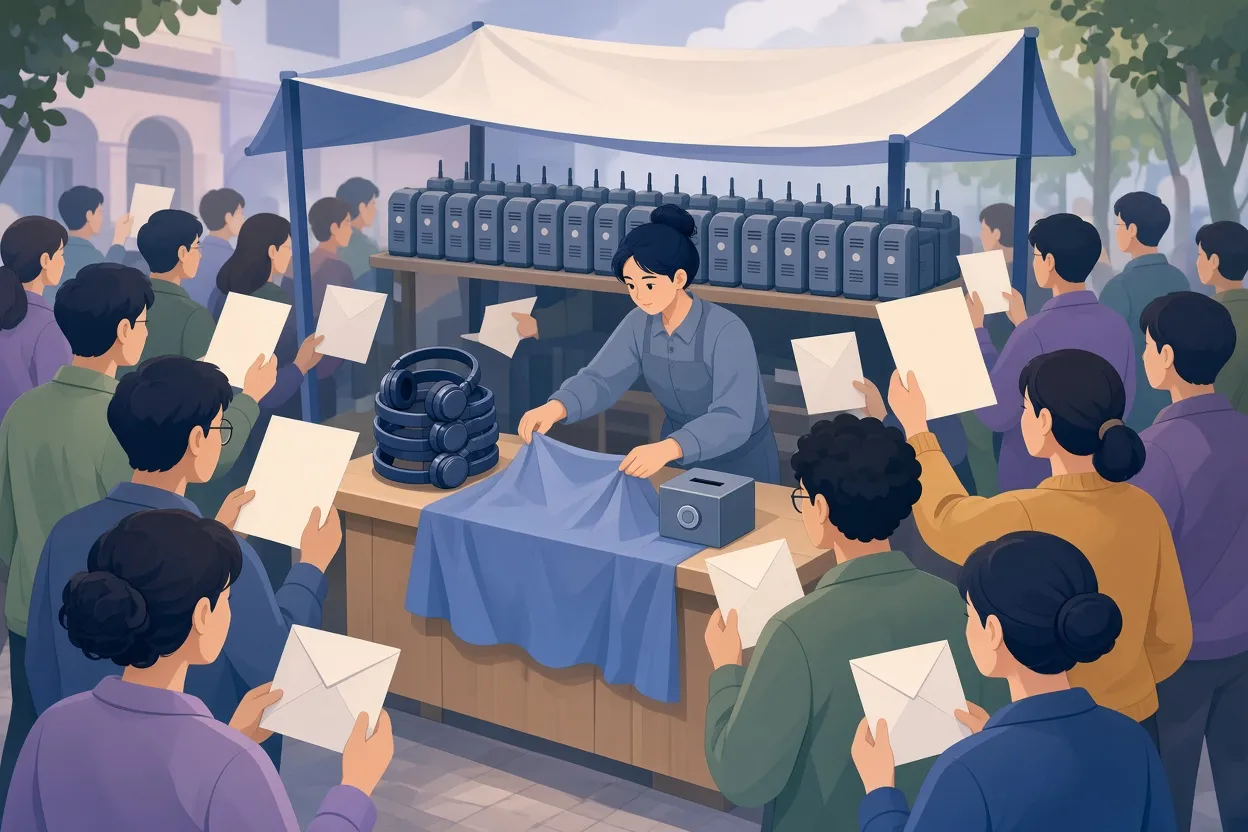
▲ Takedown notices shutting down the AI audiobook clone
A takedown process that could not work
The removal mechanism made things worse. Authors were first told to email a dedicated legal address to request removal, which meant sharing personal details with an unknown party. An alternative verification method asked creators to edit their AO3 profile and add a specific tag. AO3 was offline, so that was impossible. Creators were left unable to prove ownership or remove their work.
After roughly 2,000 takedown notices and complaints arrived, the operator shut the site down and posted an apology on the homepage. The note expressed regret for harming authors, acknowledged the misstep, and cited high server costs as the original reason for charging users. The developer signed off as a 17-year-old based in India who had believed the project was something positive. In a final gesture of transparency, the developer published a list of the more than 70,000 source URLs the system had ingested, so affected authors could check whether their work was in the dataset.
Choosing full deletion and a direct apology rather than doubling down appears to have kept the situation from escalating further. At the same time, the complaint about expensive server bills for a service nobody had asked for underlines how little the project understood the community it targeted.
What this episode suggests about the agent era
The broader pattern looks like the generative AI "slop" economy, the same dynamic that produced viral AI imagery such as "Shrimp Jesus" on Facebook and Instagram: quickly assembled automated tools aimed at online spaces for fast monetization, without grasping cultural norms, consent expectations or legal risk. Modern AI tooling lowers the barrier so far that an experienced person could plausibly spin up a comparable scraping and synthesis pipeline in about 20 minutes.
Fandom, however, has unusually fierce collective boundaries against AI generation, scraping and commercial exploitation, and it mobilizes fast. Viral visibility can bring instant, intense and, in this case, justified backlash that ends a project within a day.
The deeper cost falls on the shared resource itself. AO3's technical core is relatively lightweight, since it mostly serves text and templates, yet it carries an enormous, culturally intricate community on volunteer labor and donations. When that archive goes dark, the content spills into less protected channels, where agents can harvest it in bulk. The community's own backups, meant as resilience, became the scraper's feed. That is the bill a noncommercial commons pays in an era when anyone can deploy a fleet of agents against it.
AO3 has carried this load for a long time. The archive launched around 2008 and stayed in open beta for roughly 16 years, removing the label on April 1 as an apparent joke before confirming on April 2 that it had truly graduated.
Key points and what to do
- AO3 is down because of a security incident, not routine maintenance, and the OTW says no works or data were deleted. Follow the official status page rather than social feeds for verified updates, and change your password as a precaution when a platform reports a security event.
- Keep personal backups of your own writing and reading lists, such as EPUB downloads or cloud archives, so a multi-week outage does not cut you off.
- Be deliberate about where you share those backups. Mass-posted links to shared drives are exactly what automated scrapers look for.
- Use AO3's archive-lock feature if you want a work visible only to logged-in members rather than open crawlers.
- If you find your work on an unauthorized AI monetization site, file copyright takedown notices promptly. In this case, about 2,000 notices ended the clone within a day.
- Developers tempted to build on someone else's archive should recognize that consent, privacy controls and community norms are part of the system, not optional features. If you get it wrong, taking the service down immediately and apologizing transparently is the right move.
- The OTW handles both the archiving and the legal defense of fanworks. Supporting it directly, especially during its fundraising drives, is the most concrete way to keep a noncommercial public resource running.