AI coding agents, tools that write and edit code with little human input, are pushing the cost of producing software toward zero. When an agent can help decompile an existing application, rebuilding its code structure from the finished program, and a rival product can ship in record time, the pricing power software companies have long relied on starts to look fragile. The leading counterargument is that cheaper software will simply be used far more. Read together, the two views point to the same shift: writing code is becoming a commodity, and lasting value is moving to assets that are hard to copy, such as proprietary data, exclusive rights, and physical infrastructure.
The deflation case against software
AI is putting deflationary pressure on traditional software from several directions at once. Open-source models and cloned utilities are eating into pricing power, and at the extreme, a video game was built and launched with generative AI help for just $5.
The bigger question is whether the same thing happens to large, complex products. If coding agents make it possible to reverse-engineer or rapidly rebuild an application suite as complex as Adobe Photoshop, years of accumulated features may stop working as a barrier to entry. Software businesses have long enjoyed gross margins above 80%, meaning that most of every sales dollar is left over after the direct cost of delivering the product. Whether those margins can survive once code can be reproduced at almost no cost is an open question. In a pessimistic reading, cheap and fast replication could strip away as much as 90% of the value the market has assigned to software.
The pressure reaches venture capital too. As the barrier to writing software falls, more competitors pile into every market, and it becomes harder to judge whether a portfolio company can hold its position long enough to return cash to the fund’s investors.
Why cheaper software may mean more software
Ben Horowitz, co-founder of the venture firm Andreessen Horowitz, rejects the idea of a software apocalypse. His argument rests on the Jevons paradox, the pattern in which making something cheaper to produce raises total consumption instead of lowering it. As the unit cost of software falls, he expects software usage and demand to grow exponentially.
That does not mean every software company is safe. Horowitz expects that writing code, on its own, will lose its standalone value, much as easy internet publishing turned the physical magazine business into a commodity. To survive, AI companies will have to offer far more than generic code and combine deep domain expertise with assets nobody else has.
Bespoke software becomes worth building
The clearest new source of demand appears to be bespoke enterprise software. Commercial software used to need a huge, horizontal customer base to justify its large development budget, so vendors built one product for everyone. Coding agents change that math: a tool tailored to one company’s niche workflow can now pay for itself. Custom internal software can fill the gaps that one-size-fits-all SaaS, subscription software delivered over the internet, could never address economically.
More code, more work for engineers
A popular narrative holds that AI coding assistants will wipe out software engineers. The volume of code being written, however, is growing by orders of magnitude. Even if agents generate 95% of a codebase, the remaining 5% still needs people: designing the architecture, orchestrating prompts, and maintaining what gets built. Because the total is so much larger, that 5% may add up to more work in absolute terms than engineers have today.
| Concern | Counterpoint |
|---|---|
| Agents can clone or rebuild apps quickly, eroding pricing power | Lower unit costs push total software demand up |
| Gross margins above 80% may not hold | Bespoke internal tools open a market that never paid off before |
| Coding agents will replace engineers | More code means more architecture and maintenance work |
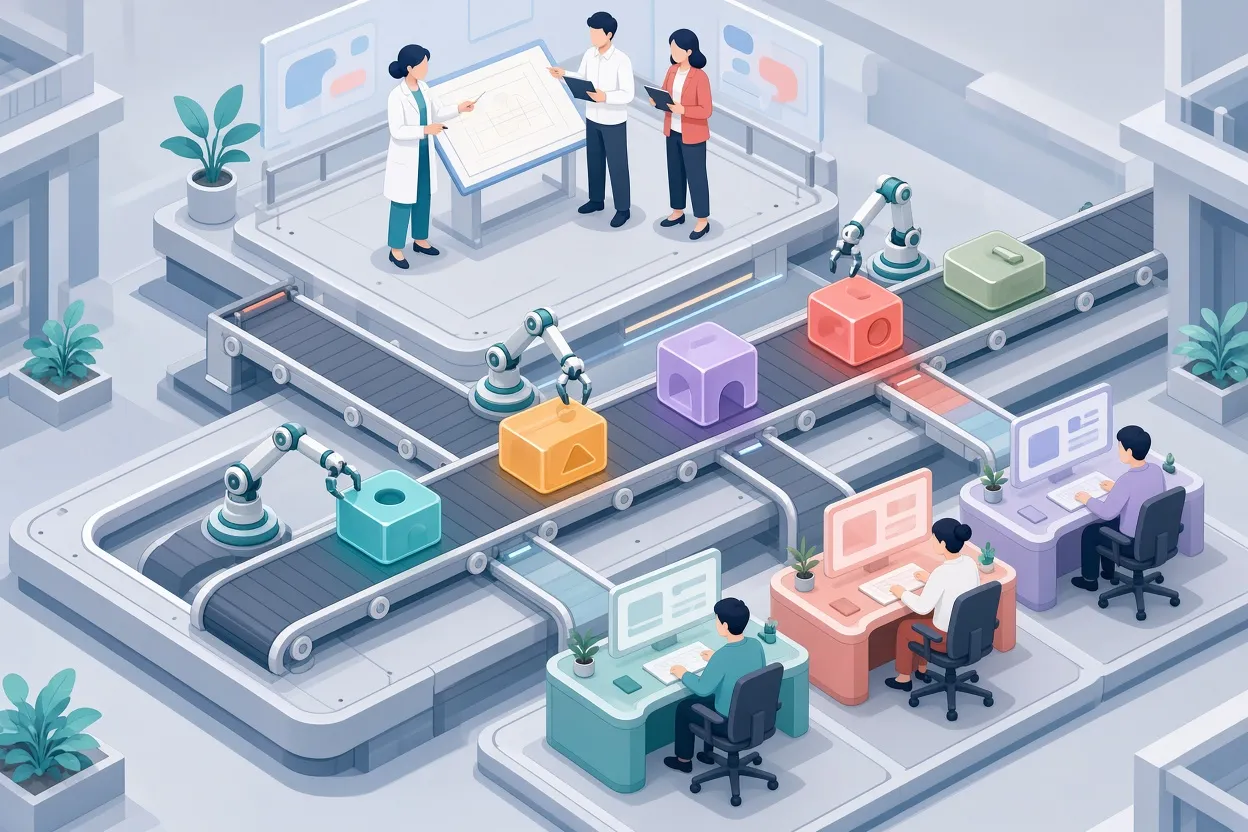
▲ The rise of bespoke internal software
Where the moats are moving
If anyone can produce code cheaply, something else has to keep competitors out. The cases below suggest that the moat, the durable advantage that protects a business from rivals, is moving outside the code itself.
Exclusive rights and carefully built training data
Horowitz points to ElevenLabs as an example of a defensible AI company. ElevenLabs secures exclusive voice licensing deals with celebrities, such as the rights to Burt Reynolds’ voice for audiobook narration, and trains its models on nuanced edge cases. The payoff is high-fidelity localization, such as movie dubbing that sounds like natural acting in another language rather than a mechanical conversion. Code can be cloned, but an exclusive contract and carefully gathered training data cannot be copied the same way.
Data that improves with every user
A second moat is the feedback loop between users and models. When an AI startup wins an early user base in a specific industry, everyday use generates reinforcement learning signals, feedback that teaches the model what worked, and competitors cannot replicate them. Harvey, the legal AI company, is the model case. By signing up top law firms, it gains access to legal drafting data, real workflows, and custom training loops. Each turn of that flywheel makes the model sharper and more deeply embedded in its customers’ work.
Small models trained on private data
The same logic applies to companies that buy software. Coinbase CEO Brian Armstrong said the company fine-tuned a 9-billion-parameter version of Qwen 2.5 on its internal data. Qwen 2.5 is an open-weight model, meaning its weights are published for anyone to download, and fine-tuning means further training an existing model for a specific task. According to Armstrong, the result beat top frontier models such as Claude Opus 4.5 at fraud prevention, cutting fraudulent transactions by roughly 30% while running faster and at far lower compute cost. For routine corporate workloads, an expensive frontier model may be unnecessary, and running a huge general model on a narrow task can be wasteful.
Cheap code, expensive infrastructure
The physical layer of AI is moving in the opposite direction. According to Horowitz, AI token prices have fallen, but GPU and data center construction costs keep rising. Labor shortages and local political opposition make new data centers harder to build, which keeps supply tight and protects whoever already owns capacity. Horowitz said Amazon CEO Andy Jassy told him that compute and data center capacity is fully booked through 2028 and beyond.
Older chips are also earning longer lives. GPUs once expected to last three to five years can now stay productive for six to eight years when they handle only inference, the work of generating answers from an already trained model. Previous-generation NVIDIA H100 and A100 chips still rent at premium prices instead of depreciating to zero. Demand shows no sign of slowing: frontier model builders and startups remain short of compute, and some venture firms buy compute capacity directly to offer to their portfolio startups.
A recent sell-off in the shares and bonds of AI-focused cloud providers has stirred talk of an AI bubble. Horowitz sees a key difference from the dot-com crash. Around 2000, telecom companies built massive bandwidth before consumer demand and broadband adoption caught up, while demand for AI today looks insatiable. He adds that heavy debt can still bring down individual companies.
Over the longer term, power generation and grid capacity, rather than algorithms or data, may become the industry’s tightest bottleneck. That makes owning land, power, and data center buildings a scarce advantage that is hard to replace.

▲ Scarce power and data center capacity
Pricing may move from tokens to outcomes
AI’s own pricing model may change as well. Frontier labs are cutting token prices aggressively to compete with commoditized open-source alternatives. Charging per million tokens resembles the way internet advertising was sold in 1999 and 2000, at a cost per thousand impressions, or CPM. The ad market expanded dramatically once Google scaled cost-per-click and cost-per-acquisition pricing through AdWords and AdSense. AI pricing appears likely to follow a similar path, charging for measurable outcomes rather than raw token consumption.
What software companies and developers should do now
AI is cutting the cost of writing and cloning code, but it does not appear to be shrinking demand for software. What changes is where the value sits.
- Companies that sell software: Features alone may no longer command a premium. Check whether your product accumulates industry-specific data and user feedback, and whether you hold assets such as exclusive licenses. Consider pricing AI features on the results customers get rather than on token usage.
- Companies that buy software: Look at internal workflows that off-the-shelf SaaS never served well, because a custom tool may now be worth building. For repetitive tasks, compare fine-tuning a small open-weight model on your own data with defaulting to an expensive frontier model API.
- Developers: Expect the center of the job to move from typing code to designing, reviewing, and maintaining code that agents write.
As code becomes abundant, what cannot be copied will likely decide who keeps an edge.