ChatGPT helped reorganize a multipurpose hobby room without making new decor the starting point. A photo of items already on hand produced a plan for the desk, a seated recording corner, and display shelves. The most useful part was not an exact blueprint: it was a way to decide where things belonged before testing each placement in the room.
Give ChatGPT the inventory, not a shopping list
The room’s furniture had already been rearranged, but its wall art remained difficult to place. An earlier attempt to hang small signs by eye left them uneven and disconnected. Instead of continuing to move pieces one at a time, the owner spread her available canvases, framed prints, signs, and decorative objects across the floor and photographed them together.

▲ Existing decor gathered for layout planning
She submitted that photo to ChatGPT and requested a cohesive layout. That approach conveyed the practical constraint: the design needed to make sense of pieces she already had. ChatGPT returned a visual plan organized around a desk area, a gallery wall, and a shelf wall. The plan offered a starting point for grouping objects by purpose, not a reason to copy every placement unchanged.
That distinction mattered because the room served several uses. The desk supported journaling, writing, and light makeup; a chair in the corner marked out a place for seated recording; and shelves and cube storage held books, sewing materials, and other supplies. Assigning each area a role made the existing collection easier to sort.
Where the proposed zones worked
At the desk, four matching spiritual affirmation plaques went into a horizontal row above the work surface. A small square frame reading “Trust your journey” went below them. On the desk, a mirror, lamp, stationery organizer, and decorative globe formed a compact arrangement, while books moved to a lower shelf. The result kept writing and makeup supplies close without giving the entire desktop over to decoration.
The recording corner became the strongest example of the gallery-wall idea. A colorful portrait of Jesus served as its focal point, with smaller framed art and a personal photograph nearby. An illuminated sign occupied the adjoining wall. These objects gave the chair a distinct backdrop, and although someone had suggested moving the smaller frames closer to the portrait, the owner preferred the slightly looser spacing.
On the adjacent wall, a sign above three floating shelves helped tie together books and small decorative objects. The shelves brought items off other surfaces and gave them a place within the room’s wider layout. ChatGPT’s categories were useful here: they helped separate the desk’s everyday tools from objects meant primarily for display.
The wall that needed less art
The limits of a generated layout became clear near the curtained window and storage unit. After placing art around that part of the room, the owner tried a landscape canvas in the narrow section between the curtain and the shelving. From a distance, it made the wall feel crowded. She took it down and left the gap open.
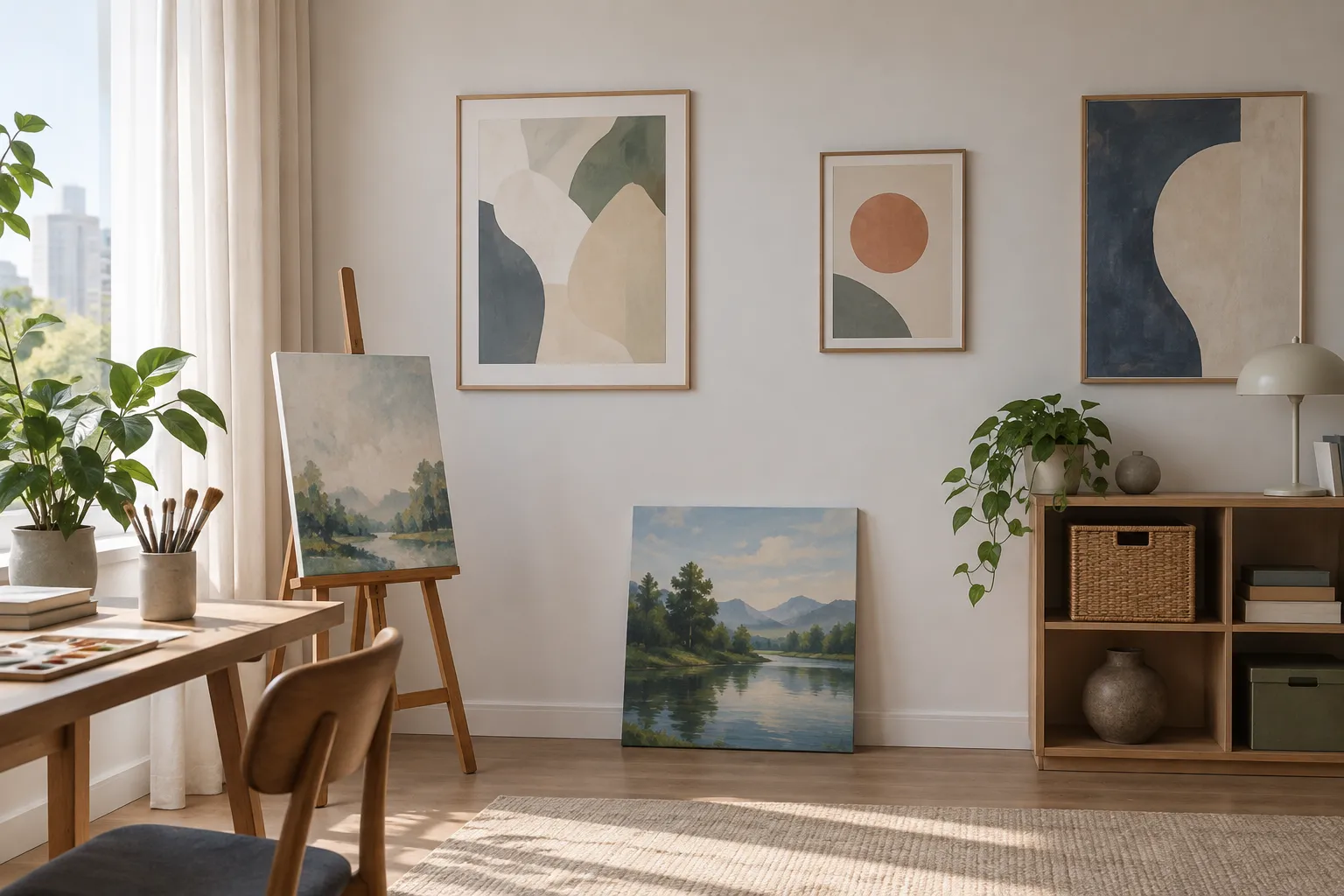
▲ Open space beside the window
That removal is the clearest test of whether the plan worked in the actual room. A picture of available decor can help ChatGPT propose groups, but the owner still had to judge spacing against the window, furniture, and other wall pieces. Leaving a piece unhung was a design decision, not a failure to use the inventory.
The same restraint carried into storage. Some compartments of the cube organizer stayed empty to reduce visual clutter and avoid overloading the unit. Other spaces remained practical rather than display-ready: bags under the desk were a temporary storage compromise. The finished room still had to hold sewing equipment, craft materials, books, and daily supplies.
Use the plan as a draft
This makeover suggests a way to use ChatGPT when buying more is not the goal: show it the items available, ask for a layout across the room’s functional areas, and then test those groups against the real walls and furniture. Laying art out on the floor can help with proportions before hanging it. Once pieces are up, stepping back may reveal that one crowded section looks better with less.
The room ultimately combined ChatGPT’s organizing suggestions with the owner’s preferences, including personal artwork and faith-based decor. For a similar project, start with a photo of what you own, give each part of the room a job, and treat every proposed placement as adjustable. Keep the arrangements that make the space useful, and be willing to leave out pieces that do not fit. There is little reason to avoid AI tools for this kind of planning, but the result feels personal only when your own taste and judgment shape the final choices.