Meta CTO Andrew Bosworth describes a version of “private AI” built around a specific boundary: a person should be able to use cloud-based AI without giving server administrators access to their queries. That proposal sits alongside a separate safeguard for camera-equipped glasses—a visible recording light. Neither measure, on its own, settles every question about whether an AI product deserves trust. Bosworth’s broader case is that privacy protections, dependable behavior and measured assessment of risks all matter.
A recording light addresses a different concern
Camera-equipped wearables raise a question for people nearby: can they tell when recording is taking place? Bosworth says Meta’s camera-equipped glasses include a visible physical LED indicator that lights up when they record. The light gives bystanders a cue about capture; it does not explain how an AI service handles a wearer’s data after the device sends it to the cloud.
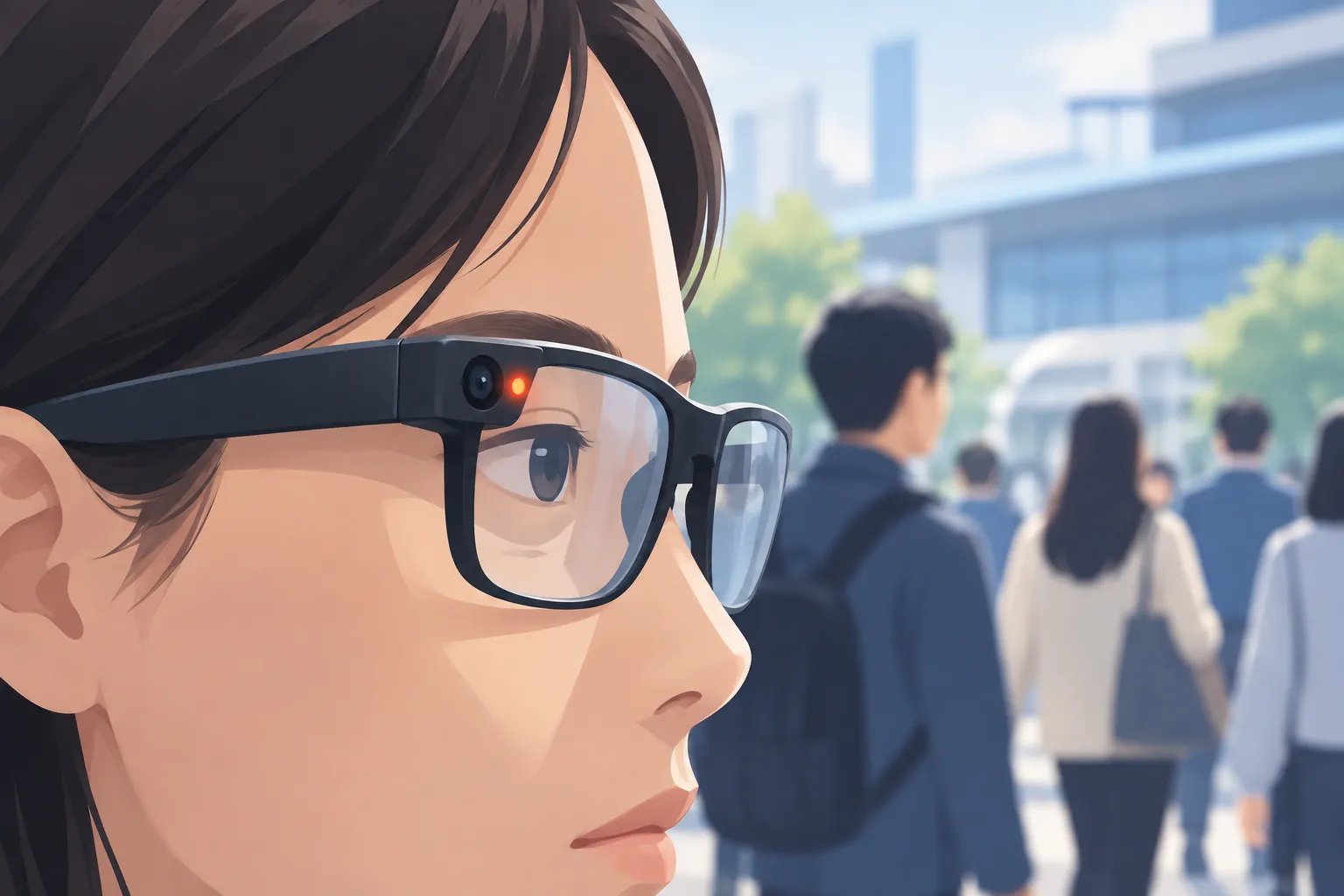
▲ Visible recording indicator on smart glasses
Meta also offers audio-only glasses without cameras. Bosworth describes them as lighter and less expensive, with longer battery life. For someone who wants calls and music but not a wearable camera, leaving the camera out changes the privacy question rather than relying on an indicator to address it.
The distinction matters because “privacy” can describe different protections. A visible light concerns people in the wearer’s surroundings. Cloud safeguards concern the wearer’s interaction with an AI service. Evaluating one should not stand in for evaluating the other.
What Private Cloud Processing is designed to protect
Bosworth describes Meta’s Private Cloud Processing as a way to keep AI queries from being exposed to people who operate cloud servers. In this design, data traveling between a device and the cloud uses Signal Protocol end-to-end encryption, which protects the data in transit between the endpoints. The cloud processes it inside a Trusted Execution Environment, or TEE: a hardware-isolated area intended to separate the work from ordinary server access.
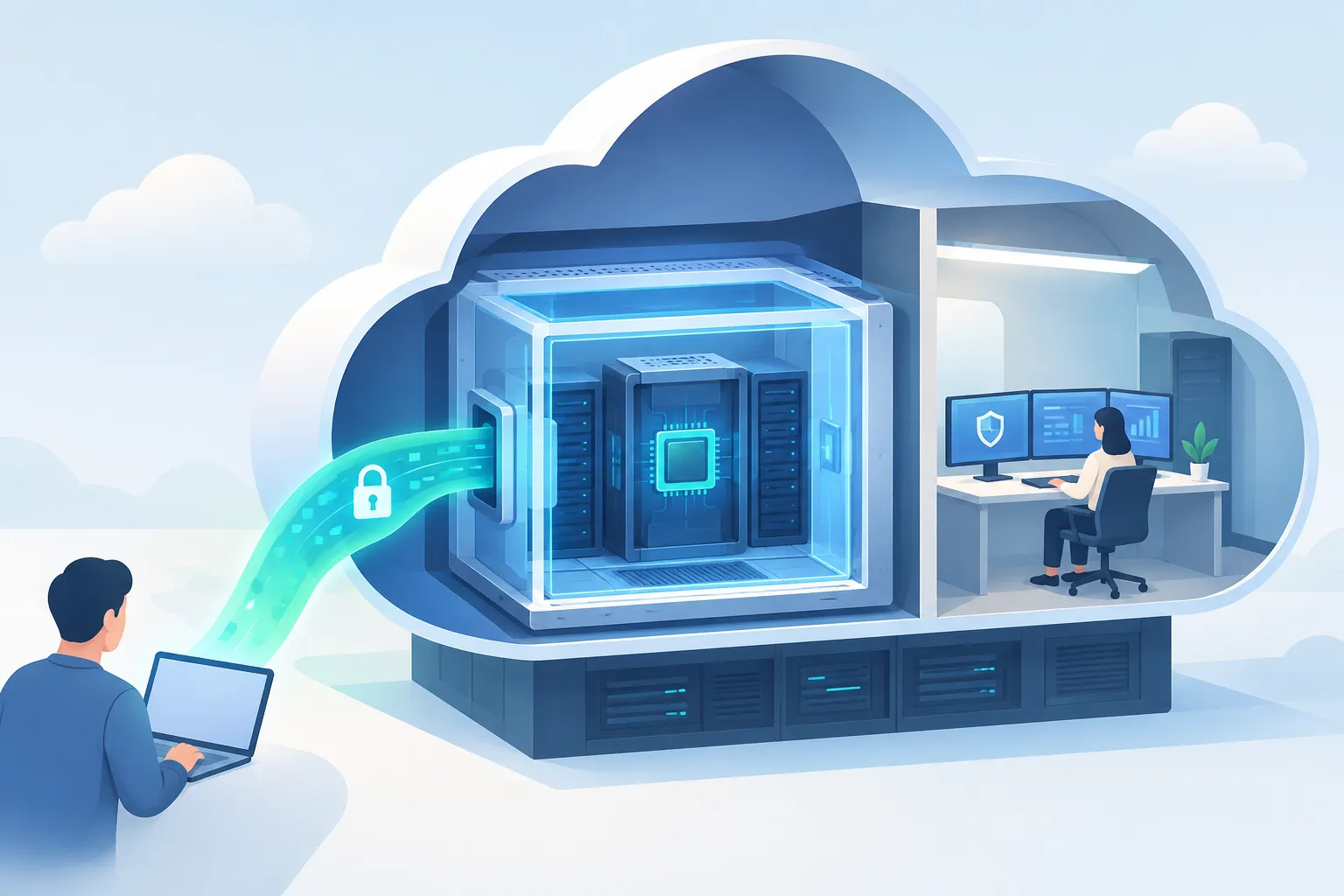
▲ Hardware-isolated cloud processing
Bosworth says that, under this architecture, even server administrators cannot view or retain user queries. Meta co-designed the system with the creator of Signal Protocol. It also publishes white papers about the architecture and offers bug bounties to encourage external security researchers to examine it.
Those details make the privacy proposal more specific than a general promise to handle data carefully. The stated protection concerns access to AI queries during cloud processing. It is distinct from the recording indicator, which addresses what people near a camera-equipped device can see. Readers assessing the claim can look for the published architecture and the opportunity for external security testing, rather than treating a broad “private AI” label as an explanation by itself.
Privacy does not make an assistant dependable
An AI assistant can keep a query private and still misunderstand what a person wants. Bosworth frames AI alignment—getting an AI system to act in line with a user’s intentions—in practical terms: the tool should do what the user wants and avoid unwanted actions. That question becomes more important when an agent can carry out tasks, rather than merely display information.
Meta’s newly released Muse assistant illustrates the difference between a capability claim and a usable product. Employees used it for work before its public release to find bugs and points of friction. Bosworth also emphasizes conversational qualities, such as an interactive persona that makes people comfortable collaborating with the agent, and Muse is noted for offering counterpoints instead of simply agreeing. He argues that a 10% to 20% improvement on an academic test may say less about everyday trust than how the assistant behaves during actual use.
In Bosworth’s view, AI agents in wearable devices could let people express their intent in natural language rather than navigate every task through windows and precise clicks. That convenience creates another reason to test whether an assistant follows intent reliably. Encryption protects a different part of the experience.
Risk calls for judgment, not a blanket answer
Bosworth’s views on larger AI risks should be distinguished from the mechanics of Private Cloud Processing. He believes today’s conversational models are not conscious and that artificial general intelligence, or AGI—AI with broad, general abilities—remains some distance away. He does not assign catastrophic outcomes a mathematical probability of zero, but he regards extinction scenarios as unwarranted on his understanding of current models.
His preferred response is methodical engineering: test products, refine them and delay releases when privacy protections need more work. He also argues that existing liability rules and users’ willingness to adopt a product create incentives to avoid harmful failures. These are his judgments about how to weigh and manage risks, not technical properties of the encryption or the isolated processing environment.
What to check before placing trust
A practical assessment starts by separating the promises. For camera-equipped glasses, look for the visible recording indicator; if a camera is unnecessary, consider whether an audio-only design better fits the intended use. For cloud AI, examine what the published architecture says encryption and hardware isolation protect, and whether external researchers have a route to test those claims. For an assistant, judge whether it follows instructions, handles mistakes and offers useful responses in real tasks—not only how it scores on tests.
Private Cloud Processing offers an account of who should be able to access AI queries. Recording indicators address people around a wearable device. Careful testing addresses whether an AI tool behaves as intended. Trust depends on asking which of those problems each safeguard is meant to solve.