A working AI prototype is not yet a business. The more practical opportunity may be an ordinary task someone already handles every day: sorting requests, tracking decisions, or moving information between people. Lovable can help turn that work into software, but the path to a paid product starts with understanding the process, finding customers who value a solution, and making the resulting app dependable.
Start with work you understand
Lovable lets people build applications through natural-language instructions rather than writing every part of the software themselves. That lowers the barrier to making a prototype, but it does not establish which problems deserve a product. Familiarity with a workflow can be more useful than a long list of app ideas: the person doing the work knows where delays occur, what information is missing, and which exceptions complicate an apparently simple task.
Lovable’s most successful users average more than 11 years of professional experience. Across the platform, more than a third of founders building businesses are already generating revenue. Those figures describe Lovable users, not the odds that any new app will succeed. They suggest a useful starting point: look closely at a problem you have encountered often enough to recognize its less obvious details.
Turn the manual process into a system
Consider an opportunity-intake app for incoming commercial proposals. A person can read each submission, judge its relevance, decide who should handle it, and draft a reply. The software version needs more than a form. It must retain submissions, organize them, support review, and connect decisions to outgoing messages.
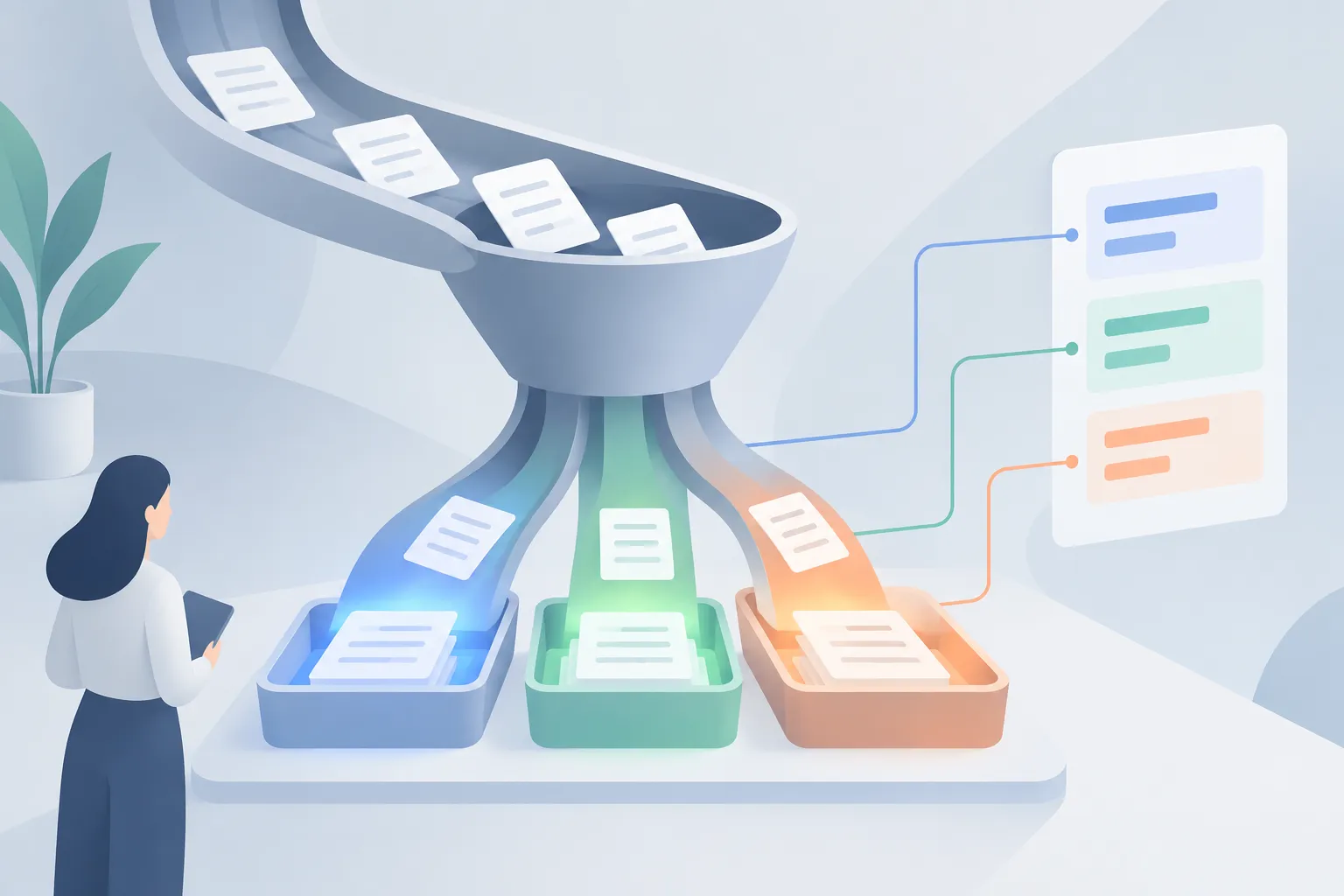
▲ A staged intake workflow
A manageable build starts by separating those jobs. One workable sequence is:
- Handle the work manually first. Record what arrives, what you check, what you decide, and which unusual cases require judgment.
- Divide the process into testable stages. Intake, categorization, prioritization, review, and reply drafting should each have a clear purpose. This makes failures easier to locate than a single, elaborate automation does.
- Keep a record people can inspect. An application can store submissions and their status in a database, or organized collection of persistent information, and display them in a dashboard. An AI agent, by contrast, carries out tasks within that system. The two can work together rather than compete as product choices.
- Leave room for human decisions. A free-form proposal field can capture ideas that rigid menus might miss. AI can then suggest categories, relevance scores, and replies for a person to review and approve.
- Test the complete route. A successful form submission alone does not prove that an alert reaches the right inbox or that a draft appears where someone can use it. Check the path from entry through notification and review, then run security checks before launch.
In one intake-system test, an automated process submitted a fabricated sponsorship proposal with a $25,000 budget. The app routed it through the pipeline, assigned a relevance score of 90/100, and produced a reply draft. The amount was test data, not a sale; the important result was that the connected steps could be checked together.
Ask for payment before you perfect the product
Building the workflow is only one test. The other is whether it solves a problem people consider worth paying to remove. The proposed customer-discovery method is direct: speak with at least ten prospective customers about specific frustrations, current workarounds, and budgets. Aim to get at least one financial commitment before investing heavily in software. A free user may find a tool interesting; payment gives a stronger signal that the problem matters.

▲ Direct customer discovery
These conversations should stay human rather than become another automated step. A customer’s account of why a workaround persists, or why a proposed fix does not fit, can change what the founder builds. After launch, weak traction also needs diagnosis: distribution, marketing, product bugs, and retention are different problems. If considerable effort produces little excitement, moving to another idea may be more useful than adding features.
Two Lovable-built businesses illustrate different ways a product can extend beyond an AI prompt:
- A pet-portrait business turns pet photos into royal-style portraits and connects image generation to canvas printing, framing, and home delivery. Its reported revenue is $300,000 per month. That is this business’s figure, not a result other founders should expect.
- A background-check startup offers relationship background checks and has reached tens of thousands of dollars in monthly recurring revenue. Its offering addresses a specific customer concern rather than presenting AI output as the whole product.
In both cases, the relevant question is what customers receive and pay for, not merely how quickly someone can generate an initial app.
Build for operation, not just appearance
Lovable can assemble a web interface alongside its supporting database and operational tools. Its application controls include file storage, email settings, connections to other software, and security scanners. Its Agent Integrations can connect an app to tools such as Claude or ChatGPT, allowing an agent to work with information the app maintains. That makes the division of labor clearer: the app provides a durable place to manage work, while the agent can perform selected tasks within it.
Presentation still matters, but it should not displace function. Lovable can inspect an existing site for design cues, generate alternative layouts without overwriting an earlier draft, and adjust a page’s search settings. Answer Engine Optimization, or AEO, aims to make content easier for AI answer tools to find and summarize; Generative Engine Optimization, or GEO, addresses its presentation in generated answers. Those settings may help people discover a product, but they do not replace customer demand.
Lovable offers a free daily tier, and its paid production plans start at $25 per month. The platform is intended to support many conventional commercial web apps, but its co-founder draws a boundary at enormous, globally distributed services. Easier software creation removes some technical work; it does not remove the need to choose a worthwhile problem or run the business around the app.
Choose one workflow and test its value
The next step is not to automate everything you do. Pick one recurring task you know well, perform and map it manually, and ask ten likely customers how they handle the same problem. Seek a paid commitment, then build the smallest system that records the work, assists with selected steps, and lets a person review important decisions. Test the full process and its security before inviting real users. A dependable, paid solution to a modest problem is a stronger foundation than a polished prototype without customers.