On October 6, 2026, OpenAI released 722 mathematical manuscripts written by an unreleased internal frontier model, its most advanced model in development. The output has grown about tenfold each month, from roughly 10 results in August to more than 100 in September and 722 in the first week of October. The bigger story may not be the count. In frontier mathematics, the hard part is starting to shift from finding proofs to checking and understanding them.
What OpenAI published
The announcement, titled “Sharing AI progress in mathematics,” came with an open GitHub repository holding the 722 manuscripts, the model’s reasoning traces, new conjectures and Lean formalizations. Lean is a formal proof language that turns a proof into code a computer can check line by line. The repository groups the manuscripts into 372 families.
Before the release, OpenAI consulted the Advisory Group on Mathematics and Artificial Intelligence, an independent group at the Institute for Advanced Study, to shape standards and public recommendations for sharing the findings.
| Period | Results published |
|---|---|
| August 2026 | About 10 results on 10 problems |
| September 2026 | A Navier-Stokes result plus more than 100 other problem results |
| October 6, 2026 | 722 manuscripts across 17 fields |
According to OpenAI, each result took compute roughly equal to three hours of ChatGPT Pro thinking time. The manuscripts span 17 areas of mathematics, from the distribution of prime numbers and algebra to plasma physics and quantum circuits. Compare that with a human mathematician who might spend four decades pushing forward one corner of algebraic geometry.
Just as notable, the system is not a narrow math engine. It is a general-purpose large language model, the same kind of model that drafts emails, writes code and composes short poems, and it worked across these fields without domain-specific tuning.
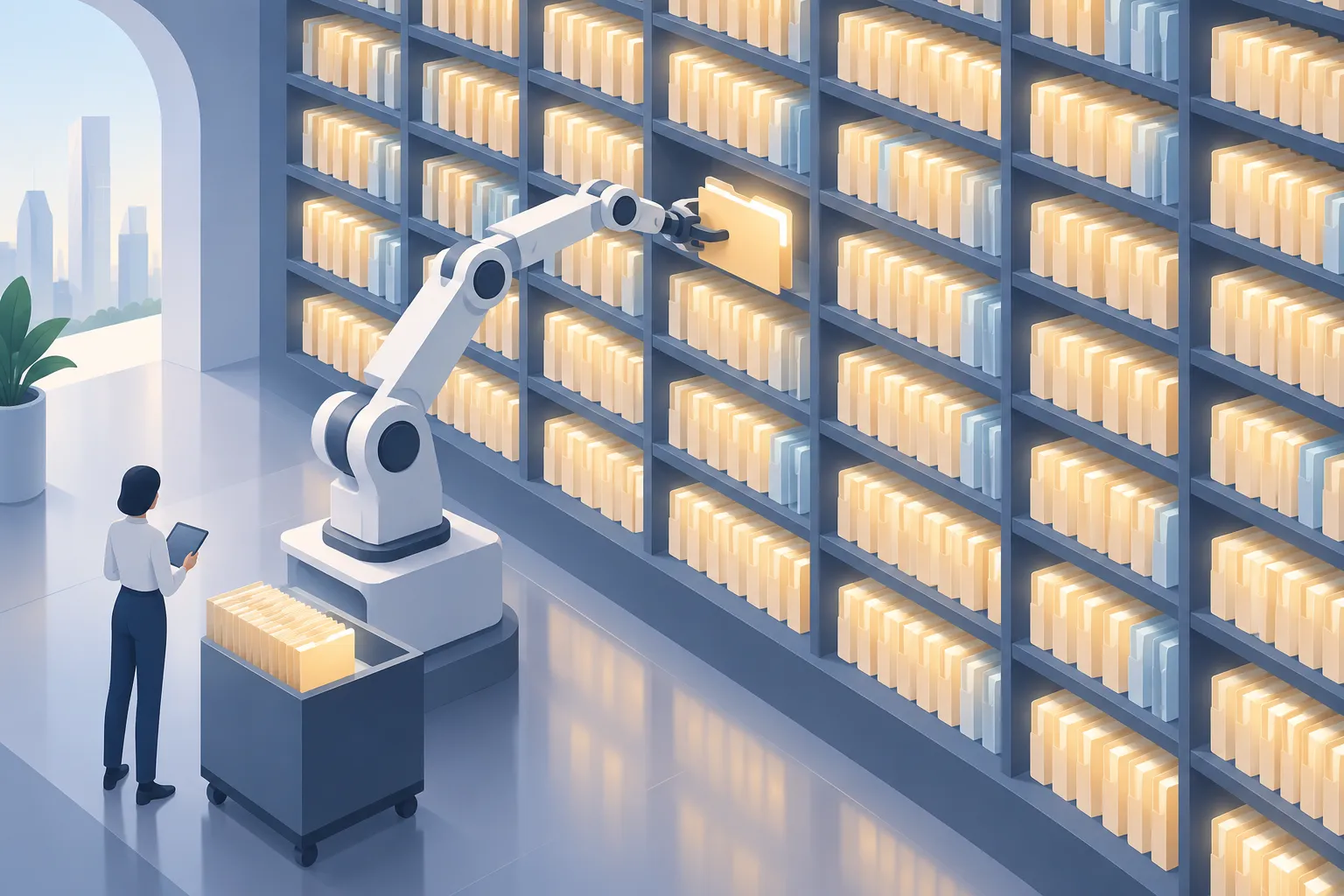
▲ Hundreds of AI-written math manuscripts
Three results that stand out
The model did not fully solve the Riemann Hypothesis or P versus NP. What it produced is a set of partial advances on long-standing problems.
A 0.875 boundary for the quasi-Riemann hypothesis
The Riemann Hypothesis concerns where the zeros of the zeta function lie, which ties directly to how prime numbers are distributed. Bernhard Riemann’s 1859 target is the critical line at 0.5. Human mathematicians had excluded the 1.0 line and gradually narrowed the region where zeros could sit. The model established a fixed boundary at 0.875 that holds everywhere for the zeta function and for all Dirichlet L-functions.
A mountain in fog is a useful way to picture this kind of bound. Climbers cannot see the summit, but by reaching a certain point they prove the mountain is at least that tall. The 0.875 line is a height that has now been firmly reached.
The Birch-Swinnerton-Dyer conjecture
The Birch-Swinnerton-Dyer (BSD) conjecture deals with solutions to elliptic curves. The model produced a complete formula for a broad class of curves defined by Selmer corank zero or one.
Goldfeld’s conjecture
Goldfeld’s conjecture holds that elliptic curves over the rational numbers split 50-50 between those with finitely many and those with infinitely many rational solutions. The model completed the bridge to the predicted 50-50 split in analytic rank.
None of these results claims a $1 million Millennium Prize from the Clay Mathematics Institute, since the prizes require complete proofs. Still, they may be the largest structural advances on these problems since the late 1970s and 1980s.
The new bottleneck is verification
Releasing 722 deep papers in one day creates an immediate problem. Only a few hundred to perhaps a thousand mathematicians worldwide have the expertise to evaluate work like this, and reviewing a single human-written manuscript usually takes weeks or months.
Lean changes part of that equation. Wherever a proof has been formalized, a machine can check its logic automatically. That is why the central question in mathematics is moving from “Can we prove it?” to “Can we verify and understand it?”
The caveats matter. The 722 manuscripts have not gone through full peer review by the mathematics community. Some may contain subtle flaws or hallucinations, meaning plausible but incorrect content. Even those errors would be useful, because they show where the model’s reasoning breaks down. If the proofs hold up at a rate of 90% or higher, the release could rank as the biggest breakthrough in the history of mathematics.
Not everyone welcomes the approach. Critics in the mathematics community objected strongly to posting 722 automated findings online without the usual academic process. Twenty-five Fields Medalists signed an open letter warning that AI could turn mathematics from a human pursuit into an industrial verification task. The letter asks whether the goal of mathematics is to sustain a human community that builds understanding across generations, or simply to feed verified conjectures into AI systems. Computer scientist Scott Aaronson has also noted rumors among mathematicians that OpenAI holds solutions to other major open problems, including the Navier-Stokes existence and smoothness problem.

▲ Manuscripts waiting for human review
Why mathematics, and why now
OpenAI appears to be pushing on mathematics because conventional benchmarks, the standard tests used to compare models, have become saturated. Unproven mathematics offers something rare: results that can be checked objectively. That makes it a strong testbed for frontier intelligence.
The gains can also loop back into AI itself. An OpenAI researcher has argued that breakthroughs in pure mathematics feed improvements in machine learning algorithms, matrix multiplication and AI chip design. Google’s AlphaEvolve and research from Sakana AI already show automated discovery shaping the design of future AI systems. If output keeps growing tenfold a month, applying the same approach to machine learning research could speed up AI labs’ own work.
Biology and medicine may be next
Mathematics is affected first because proofs are formal and can be verified by computers. Biology and medicine depend on real-world testing, which is slower and harder to automate. That makes mathematics a possible early signal of what empirical sciences will face.
Imagine a future model that proposes 722 new drug compounds aimed at major diseases. The verification challenge would be far heavier than checking proofs. Society may have to choose between slowing AI discovery to match the speed of human understanding and moving ahead even when people lack a deep grasp of how the results work. Researchers are also divided over whether advanced AI research should pause until safety guarantees exist.
A deeper question sits underneath. Will AI lift human understanding, or move past the point where people can follow? Chimpanzees can grasp sticks and bones used as tools, but their understanding stops at fire, wheels and helicopters. Today only a tiny share of people understand frontier mathematics. Tools like ChatGPT can explain dense ideas, yet there is a real risk that AI discoveries cross a horizon humans can no longer track or verify.
What to watch and what to do
AI is now producing mathematical results far faster than humans can check them, and verification has become the limiting step. A few practical takeaways:
- Watch the growth curve over months, not just the quality of any single paper.
- If a field interests you, browse OpenAI’s public repository for the manuscripts, reasoning traces and Lean code.
- Use tools like ChatGPT to break dense papers into plain language, and check whether a result has a formal Lean verification behind it.
- Follow how the mathematics community’s verification turns out. The share of proofs that hold up will likely decide how much this release really means.
- Treat changes in mathematics as an early indicator for biology, medicine and AI research itself.