OpenAI has repackaged features from Codex, its developer tool, into Dots, a conversational agent meant for everyday users. An agent here is an AI system that carries out multistep tasks on a user’s behalf. Meta’s Muse and the startup Instinct are winning users with similar chat-style assistants. The trouble is that these products increasingly do the same things, and moving from one to another costs users almost nothing. If speed to market is not enough, what could become a moat, a barrier that keeps rivals from easily taking your customers? The candidates fall into three groups: exclusive partnerships and vertical integration, networks between agents and focus on a single domain, and physical infrastructure and private data.
Agents that look alike, apart from packaging
Developers liked the power features in Codex, such as running several tasks in parallel. Mainstream users, though, prefer handing work to an assistant through a single conversation, which appears to be why OpenAI rebuilt those capabilities under the Dots name. Muse and Instinct also won early fans by acting like a conversational companion rather than a developer console.
Seen this way, the core functions of the major agents are nearly identical, and the differences come down to packaging and interface. Packaging still matters. ChatGPT is estimated to have about 1 billion users, but roughly 1.5 billion more people are thought to have tried it without forming a habit. Getting people to come back regularly is the hard part.
Everyday chores may be a better test of usefulness than coding benchmarks. One example: log in to a school’s administrative portal, update after-school schedules for three children, sync them to Google Calendar and then book tennis court number two, all without human help. Muse completes about 90% of that job.
A market with almost no switching costs
When writing code and wiring up APIs, the interfaces that let software services talk to each other, costs next to nothing, having those integrations in place stops being a moat. Users can also leave at almost no cost. Someone who keeps a personal database in a GitHub repository and points it at whichever model is cheapest or best that day can move on the moment Claude, or any other daily tool, goes down.
The model layer shows a similar pattern. On one AI gateway, a service that routes requests across many models, open-weights models that anyone can download accounted for 55.8% of token volume from July 2024 to October 2025, ahead of 44.2% for closed models. Tokens are the small units of text a model processes. As cheap open models become good enough for routine work, the pricing power of closed models appears to be weakening.
User attention is limited too. Even people who try many agents can realistically manage only about three directly, leaving the rest of the work to sub-agents running underneath. Personal agents are effectively competing for a handful of slots that users call on themselves.
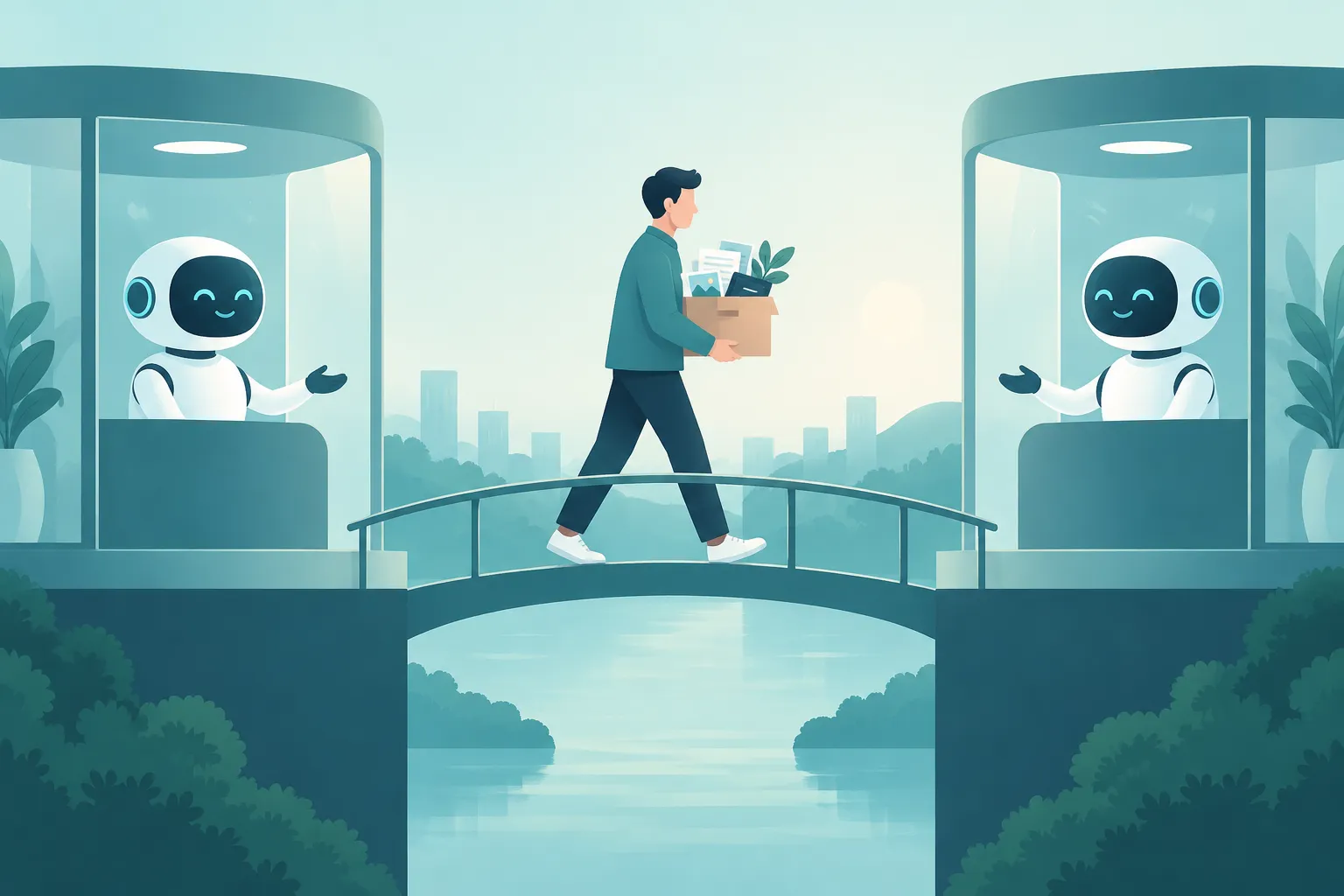
▲ Agents that are easy to switch
Moat candidate one: exclusive deals and vertical integration
If technology alone cannot keep users, business partnerships are what remain. Exclusive deals with large retailers such as Walmart or Amazon could become the strongest way to lock in an agent’s users, and the business development people who land those deals could command very high pay.
Exclusivity may not last, though. The advantage from the early exclusive partnership between Microsoft and OpenAI faded within six to twelve months.
Vertical integration is another option. A company that owns the device and the operating system, such as Apple, could gather a user’s context all day and decline to share it with outside agents. Even so, Apple and Google have not yet taken over the conversational agent market. In one case, Siri repeatedly failed a simple request to call a colleague, a reminder that owning the platform does not guarantee a lead.
Moat candidate two: agent networks and domain focus
Instinct lets a user’s agent coordinate plans directly with another person’s agent. In one example, two people’s agents arranged a dinner while the two never had to text each other all day. The open question is whether the first agents to establish ways of talking to other agents could enjoy network effects. Handing all scheduling to agents could strip warmth and context out of relationships. On the other hand, social norms may adjust, as they did when people moved from meeting in person to phone calls and then texting.
Rather than one agent doing everything, the future may involve many agents, each strong in its own domain. Instinct, which leans toward travel, has processed $1 billion in gross merchandise value, about half of it from travel bookings. Measured against the whole travel market, though, $1 billion may not be large yet. Incumbents are moving as well: DoorDash has launched its own AI agent that takes orders by text message. Pure software apps are vulnerable to agents, but marketplaces like DoorDash that coordinate real goods and deliveries appear much harder to replace.
Moat candidate three: physical infrastructure and private data
AI software gets copied fast. When a new architecture or method appears, the developer community often rebuilds and publishes it within 24 to 48 hours. At that pace, software alone struggles to protect profits for long, and value may shift to three places.
| Moat candidate | What it means |
|---|---|
| Physical infrastructure | Compute, energy and real-world production such as vaccine manufacturing |
| Private data | Data that never leaves a company, like the internal trading data of the trading firm Jane Street |
| Secrecy | Companies stop publishing research papers and guard their algorithms |
If the third trend takes hold, companies could wall themselves off behind black-box APIs in a far more closed era. Then again, open developer culture may be strong enough to keep things from closing up that far.

▲ Physical infrastructure and data as a moat
What founders and users should watch
Differences in interface and features between personal agents are shrinking quickly. Lasting advantages look more likely to come from places that are hard to copy, such as partnerships, real transactions and data.
- Founders should assume that packaging and interface advantages will be copied, and design in foundations such as exclusive partnerships or real transaction handling.
- Since an exclusive deal’s advantage can fade within six to twelve months, use that window to build user habits.
- Agents that go deep on real transactions in one domain, such as travel or delivery, can build domain-specific strength.
- Users should test agents on real multistep tasks that require logins, such as signing in to a school portal and syncing schedules.
- Keep notes and personal data in your own external storage, such as GitHub, so you can move to another model at any time.
- Limit yourself to about three agents you deal with directly, and leave the rest of the work to sub-agents.