Seedance 2.5 handled the widest range of AI video tasks in a five-scene comparison, from spoken dialogue to animated combat and a collapsing card structure. But the overall leader is not automatically the right choice for every shot: Kling 3.0 delivered especially convincing acting and stable animation from a starting image at a much lower credit cost. The useful question is which model holds up under the particular demands of a scene.
Four models, four practical tiers
The tiers below are an editorial reading of one evaluator’s subjective results, not a separate measured score. Credit costs are for a 10-second generation in the Higgsfield testing setup.
| Tier | Model | Credits | Strongest fit | Main limitation in these tests |
|---|---|---|---|---|
| S | Seedance 2.5 | 65 | Precise directions across realistic and animated scenes | Highest credit cost; a slightly tighter crop in the starting-image test |
| A | Kling 3.0 | 17.5 | Emotional dialogue and stable starting-image animation | Weak anime action and card-collision results |
| B | Happy Horse | 25 | Hand-drawn-style visuals and candlelit atmosphere | Trouble chaining actions and preserving motion from a starting image |
| C | Gemini Omni Flash | 30 | Card-collapse physics and functional lip sync | Missed explicit instructions and could not use a starting image |
These grades reflect different kinds of failure as well as visual appeal. Seedance 2.5 gave the most complete results across the five prompts. Kling 3.0 was the cheapest to generate with in this setup and may be the more practical choice when a shot needs several drafts. Gemini Omni Flash’s C tier does not mean every output failed: its card collision was one of its better results.
Exact instructions exposed the biggest gaps
Two scenes made it relatively easy to distinguish an attractive image from a faithful sequence. In one, a person had to light only the red center candle among three, extinguish the match by shaking it, and leave the two white candles dark. This tested negative constraints: instructions specifying what must not happen.
Seedance 2.5 completed that sequence, including the dark setting and spent match. Kling 3.0 lit only the red candle but made the room too bright and had the person blow out the match. Happy Horse created a strong transition from darkness to candlelight, then set down a match that was still burning. Gemini Omni Flash began with both white candles lit. For a shot with exact prop or lighting requirements, the difference matters more than atmosphere alone.
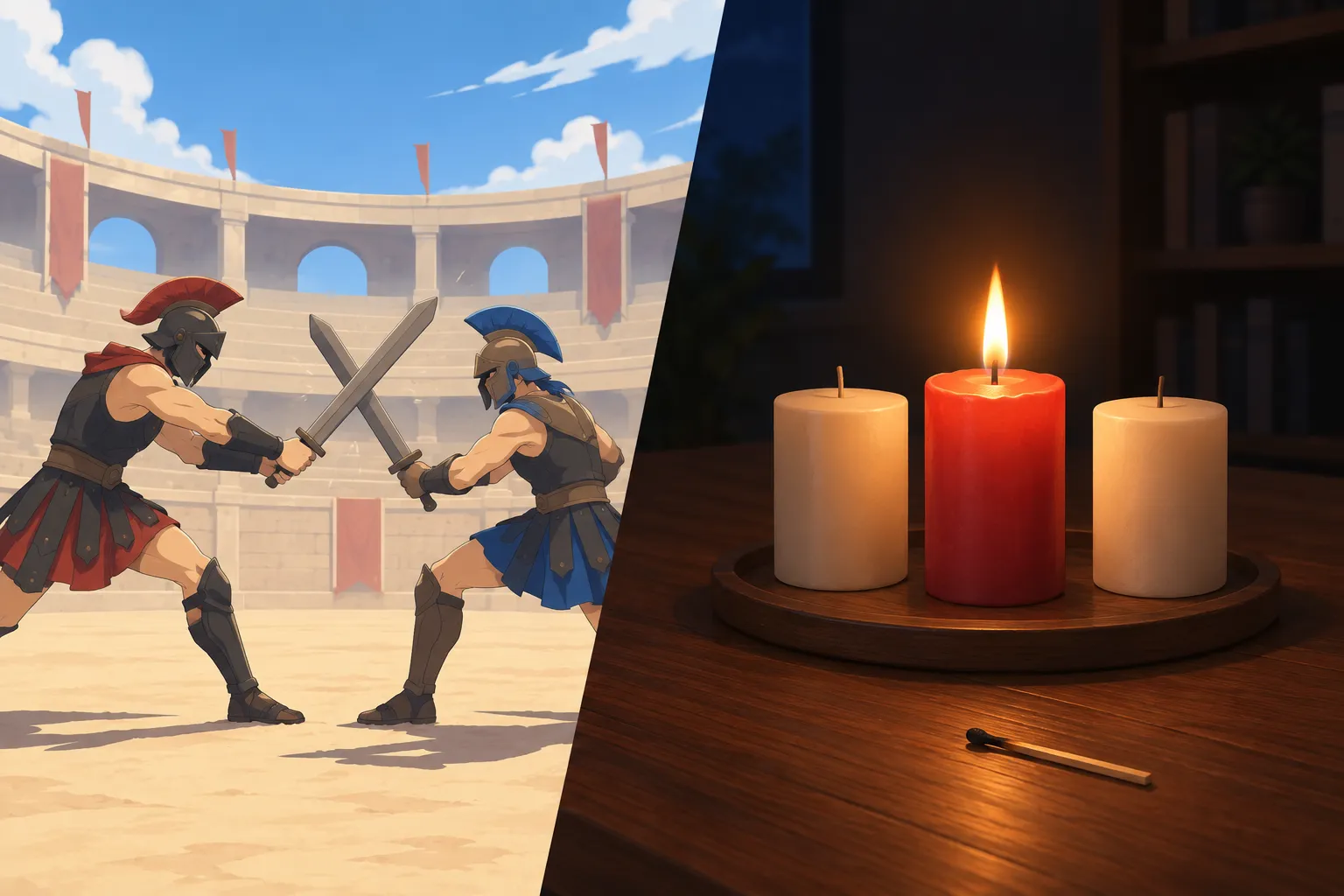
▲ Anime action and single-candle precision
The other scene demanded cel-shaded animation—a flat-color, two-tone drawing style—of armored gladiators sparring in one continuous arena shot. Seedance 2.5 kept the 2D look and produced fluid combat while maintaining the fighters’ relative scale. Happy Horse had appealing hand-drawn styling, but the clashes became repetitive. Kling 3.0 produced jerky action and indistinct figures. Gemini Omni Flash shifted toward a 3D look, removed the armor, and populated stands meant to be empty. A model that performs well with realistic faces may therefore be a poor fit for stylized action.
Dialogue and starting images favor a different trade-off
The dialogue prompt placed a woman in a parked car at night during a difficult phone conversation. It specified her lines, restrained emotion, a passenger-seat camera position, and multiple narrative beats. All four models produced functional lip synchronization, meaning mouth movement aligned with speech, but they did not follow the directing instructions equally well.
Seedance 2.5 placed the camera inside the car as requested and combined speech with natural breathing, rain, and streetlight. Kling 3.0 gave the strongest impression of emotional acting, though it moved the camera outside the driver-side window. Happy Horse put the camera outside the windshield and played the dialogue through the phone rather than having the woman speak. Gemini Omni Flash placed the camera correctly but showed her openly weeping from the start and put the car in motion.
For a dialogue-led ad or dramatic draft, Kling 3.0 may be an efficient first choice if performance matters more than exact camera placement. If the framing and scripted beats must also hold, the car test favors Seedance 2.5.
The rooftop scene tested image-to-video, which animates a supplied still rather than building the entire shot from text. A 4K starting image made with GPT Image 2 showed a woman in a tan trench coat at dusk. The requested motion added a rising helicopter, a searchlight, rotor wind, and the woman’s reaction.
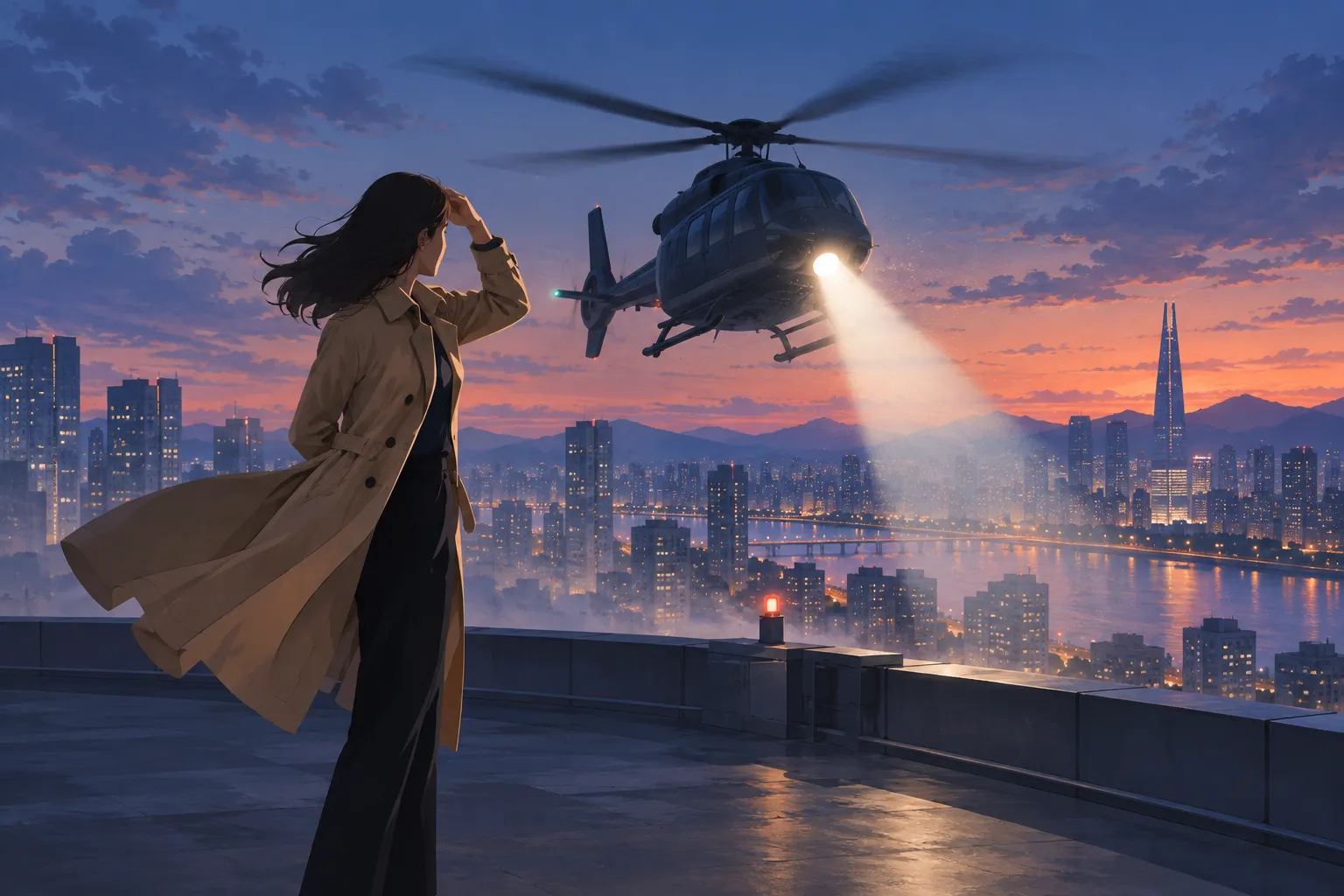
▲ Rooftop starting-image continuity
Kling 3.0 kept the woman’s appearance, wardrobe, and city backdrop particularly steady while adding smooth camera motion. Seedance 2.5 retained her likeness and carried out the action, though it framed her a little closer. Happy Horse began consistently but distorted her face during motion and missed the turn toward the helicopter. Gemini Omni Flash could not enter this round because it did not accept a starting-image upload. That limitation matters when a production needs to preserve a specific character or wardrobe across shots.
Physics remains its own test
A spinning playing card had to strike the base of a two-tier card structure and trigger a continuous collapse. Seedance 2.5 showed a clear strike and natural dispersal; Gemini Omni Flash also produced a convincing cascading collapse. Kling 3.0 missed the structure, then introduced cards that appeared to cause the fall. Happy Horse showed distorted card shapes and a delayed collapse. The results suggest that convincing acting or visual style does not, by itself, predict convincing object collisions.
How to use these results
The comparison kept the prompts, 16:9 aspect ratio, 10-second duration, and 720p output baseline consistent across models on Higgsfield. Model names were hidden during evaluation. Even with those controls, these tiers remain one evaluator’s judgment on five scenes, not a guarantee for every prompt or later model build. A Higgsfield referral offer was associated with the comparison; that promotional tie is worth considering when weighing the case for using one platform to access multiple models.
Choose by the constraint your shot cannot afford to lose. Use Kling 3.0 to draft dialogue or starting-image shots when credit cost matters, and consider Seedance 2.5 for a final shot that needs exact instructions, stylized motion, or reliable object contact. Before committing to either, run the same prompt at a common duration and resolution, then check camera placement, forbidden actions, character continuity, and the physical event—not just how polished the first frame looks.