AI agents and retrieval-augmented generation (RAG), a method that adds retrieved material to a model’s response context, create more places for sensitive data to travel than an answer alone reveals. A document can move into a search store, a prompt, a model’s working context and a connected tool without appearing in the final response. The first security question is therefore not just what an AI system says, but where its data came from and where it went.
Follow the data before evaluating the answer
AI workflows can take in proprietary material at several points. Training datasets may contain internal records or source code. People can enter confidential snippets in prompts, the instructions they send to a model. System instructions and policy documents can also supply internal context that may not be meant for every user. RAG pulls material from internal documentation, spreadsheets or databases into the context a model uses to generate a response. AI agents—systems that use models to select and invoke tools—can query databases, run code or call external services. One agent may set additional agents in motion.
Each path creates a different exposure question. Did an employee paste sensitive material into an unapproved chatbot, where it might be used for model training? Did a retrieval system make restricted files available to an application? Did an agent pass information to another tool or agent? Unauthorized internal AI deployments, often called shadow AI, add another challenge when they bypass established review and controls. A study found that 31% of organizations had experienced a data privacy violation linked directly to an AI incident.
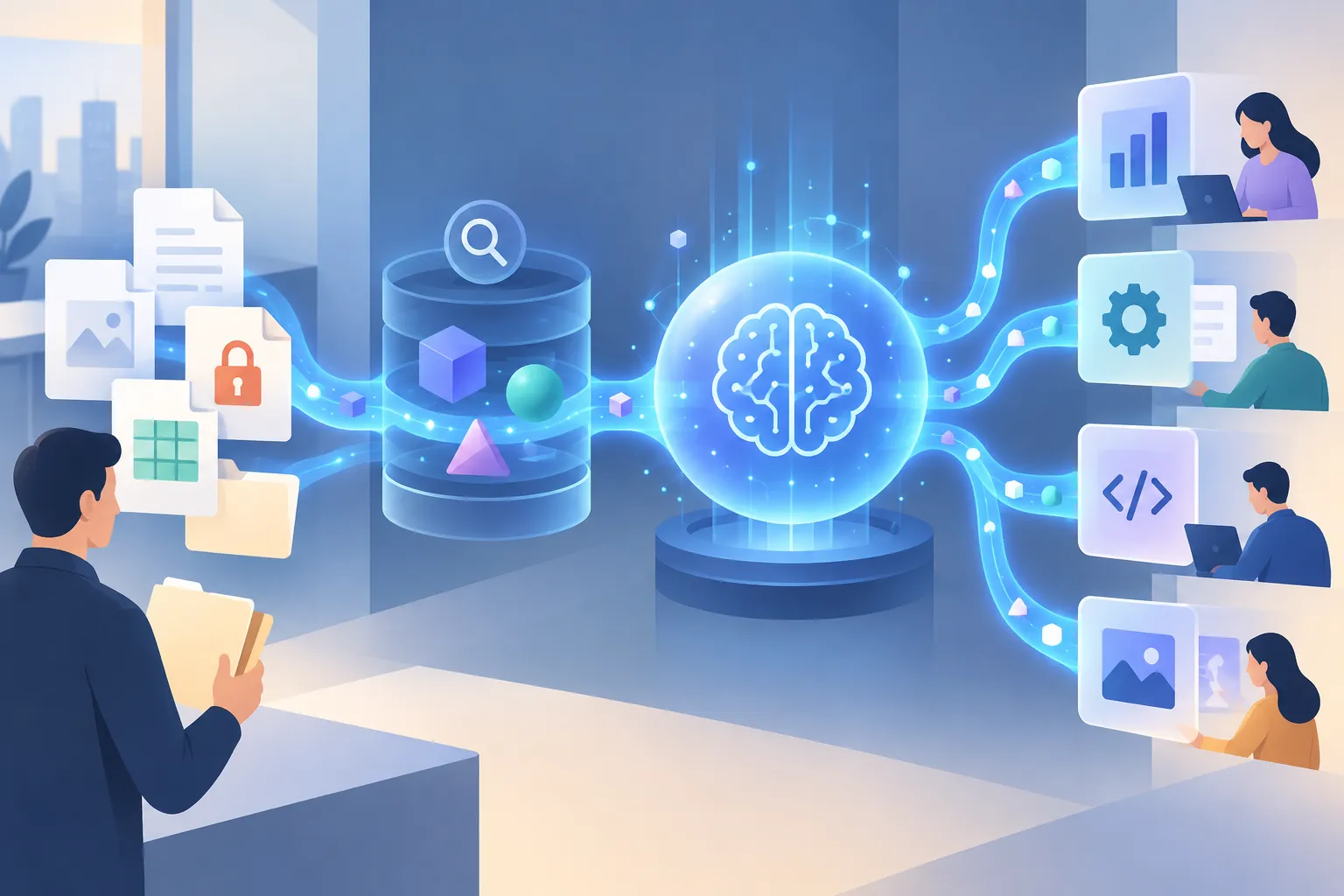
▲ Data continuity across retrieval and tools
Traditional Data Loss Prevention (DLP) tools monitor sensitive information in files and conventional network traffic. They may miss what happens when source text becomes an embedding—a numerical representation stored in a vector database—or when data moves through successive agent actions. Simply finding the AI applications in use does not establish which sensitive records reached them or what happened next.
Two paths to visibility
A practical check separates AI workloads, meaning the applications and data-processing systems, from the workforce, meaning employees interacting with those systems. Both need monitoring, tracking and a readable account of results.
| Stream | Monitor | Track | Show |
|---|---|---|---|
| Workload | AI applications, RAG ingestion and vector databases | Changes from source text to vectors and later transfers | A map of sources, transformations and destinations |
| Workforce | Uploads and downloads involving AI applications | Copy-and-paste activity and relationships between original and derived files | How employees use and share AI outputs |
For workloads, inspect RAG ingestion, AI applications and vector stores as connected parts of one flow. Link a source document to its transformed representation and to any downstream destination. For the workforce, observe movement between trusted files and AI applications. Preserve parent-child relationships when someone creates a new document from a sensitive original, rather than losing sight of the original file’s classification.
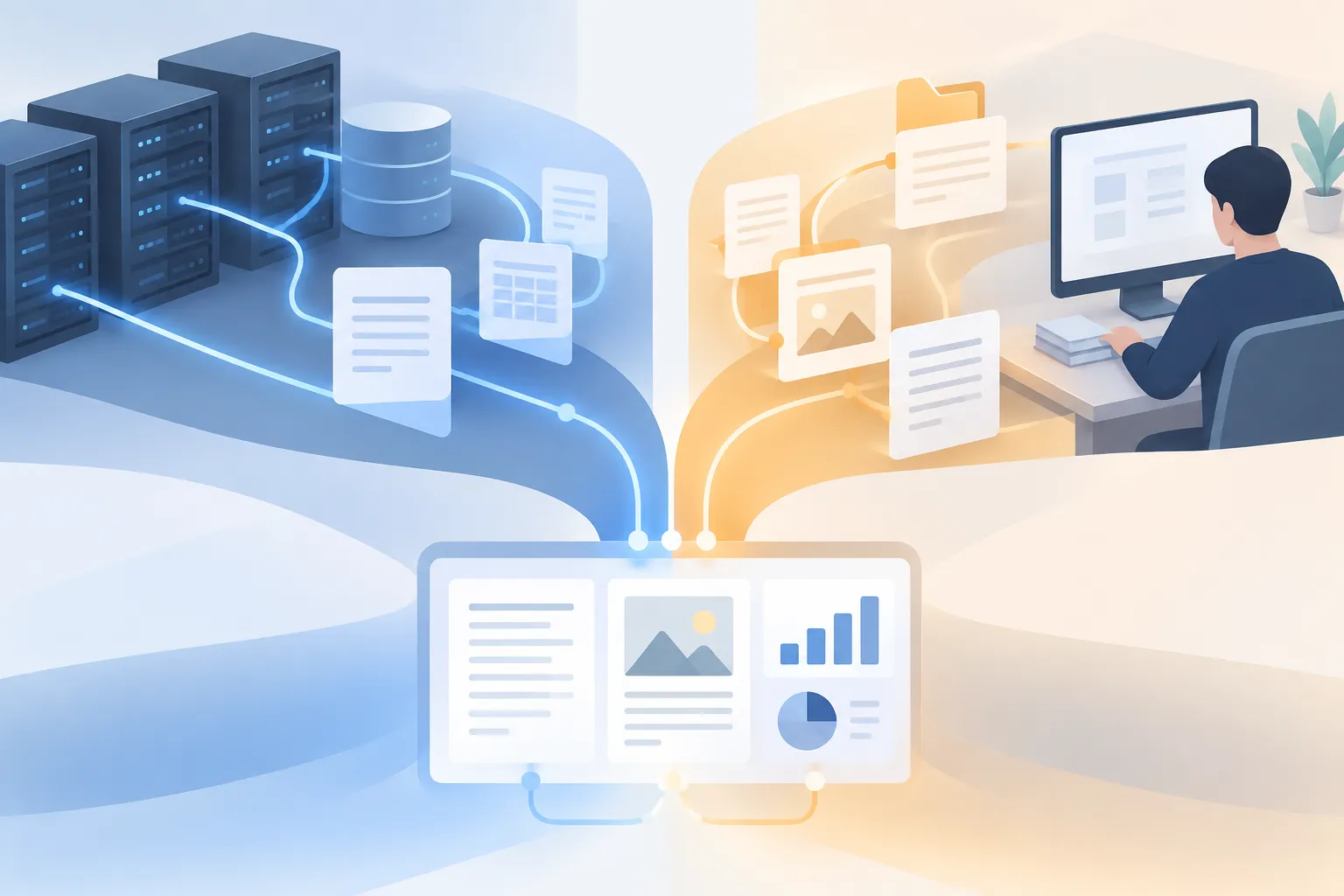
▲ Combined system and workforce monitoring
Neither stream is complete on its own. Agent discovery can identify models, prompts and invoked tools without showing the sensitivity of the underlying files. Endpoint DLP may see activity on a worker’s device but not the full RAG pipeline. Cloud and on-premises data discovery can classify repositories yet miss later interactions that carry data into AI systems. The goal is to connect these views, not treat any one dashboard as a complete account.
What an investigation needs to connect
A unified view of data lineage—the record of where information originated, how it changed and where it landed—supports three related capabilities:
- Continuous discovery and classification: Identify personally identifiable information, protected health information, financial data and intellectual property across relevant sources.
- End-to-end tracking: Retain links through retrieval, conversion into vector representations, model use, agent tools and derivative files.
- Context-aware investigation: Correlate a user’s role, the sensitivity of the data and the destination of a transfer to assess possible exposure.
Cross-system policy enforcement and a shared console help bring these capabilities together. Automated, context-aware investigation can shorten analysis from weeks to minutes. Reporting based on the same data-flow evidence can support work related to the EU AI Act, GDPR, SOC 2, HIPAA and ISO 27001.
Start with a flow map
List sensitive inputs to training datasets, prompts, retrieval repositories and system instructions. Then connect each input to the applications, employees and agent tools that can handle it, recording transformations and destinations rather than only final answers. Check whether existing agent, endpoint and repository tools can provide a joined-up view and apply consistent policies. A traceable route from source to destination gives security teams a starting point for finding exposure while continuing to use AI.